Winterising glamping tents: strike, store or stand through the cold
To winterise a glamping site, decide tent by tent whether to strike it or leave it standing. Bell tents and tipis are usually struck, dried and stored; yurts and framed safari tents or cottages can stand if someone clears snow after every fall, keeps them ventilated and checks tension. Drain plumbing, isolate power, take soft furnishings to a dry store and remove anything that attracts rodents.
6 min read · Updated
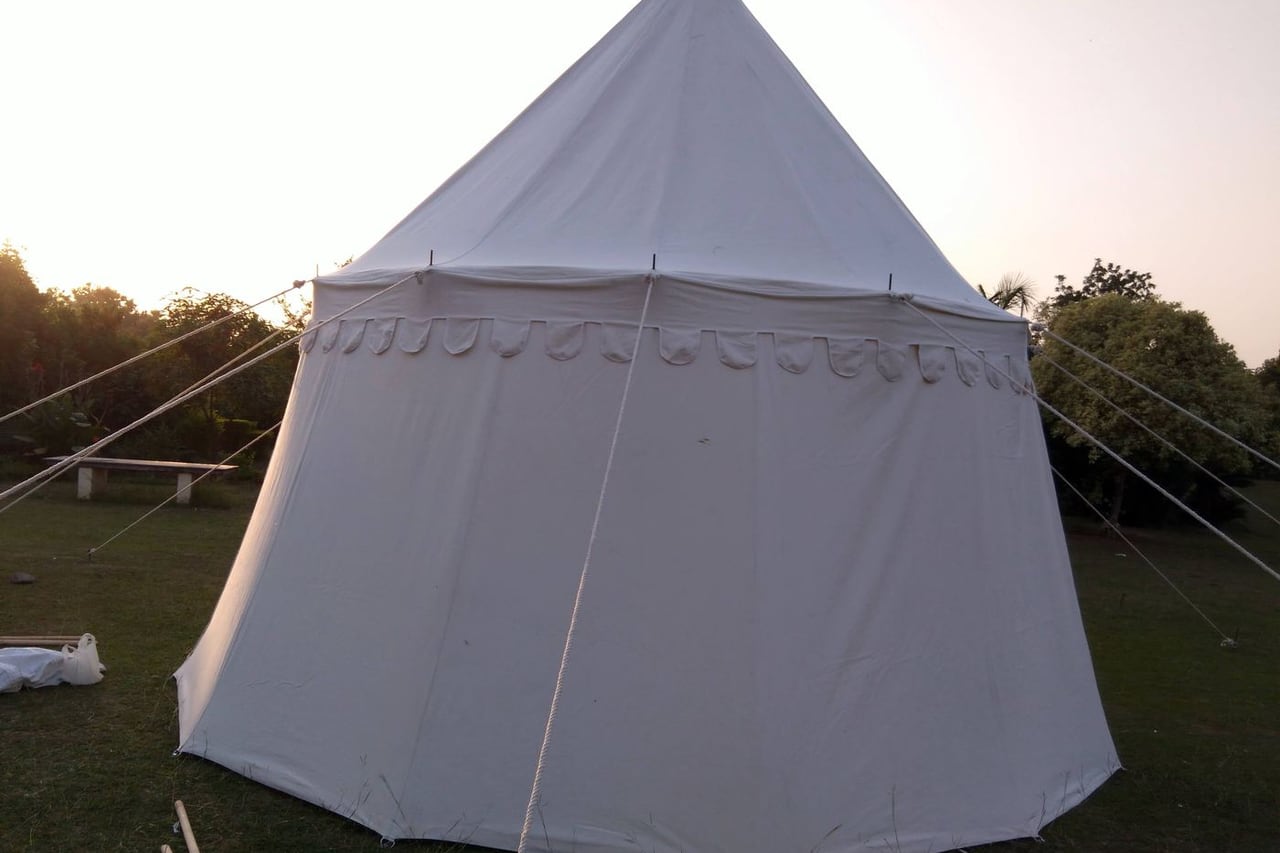
Which glamping tents to strike and which to leave standing
Treated cotton and poly-cotton handle cold well; our heavier yurts and the Winterised Relief Tent are built for it. What decides it is whether someone will be watching the structures. Snow on a roof, a gale on slack guys or a blocked vent does its damage in a night, and an unattended site finds out in spring.
Base the decision on the structure, your local snow and wind, and whether staff are on site. Any snow and wind loading figures for your particular structures should come from us or your engineer for that site, and any insurer or local authority requirement comes first.
| Structure | Usual winter approach | Notes |
|---|---|---|
| Bell tents, 4 to 6 m | Strike, dry and store | Snow sits on the shallow lower cone and loads the centre pole |
| Tipis, 16 to 20 ft | Strike if unattended | Steep cone sheds snow better, but smoke flaps and poles need watching |
| Yurts, 16 to 20 ft | Can stand if attended | Lattice, rafters and wool-blend liner suit cold; clear the roof after snowfall |
| Safari tents and cottages | Can stand if attended | Framed, but roof canvas must be kept clear and evenly tensioned |
| Staff and storage tents | Strike or stand by use | Treat like the guest units of the same type |
Striking and storing tents for winter
Strike in the last dry spell of autumn, not the first frost. Brush the canvas, take out the groundsheet, let everything dry thoroughly, and pack it loosely in breathable bags with poles, pegs and guys labelled per unit. Then store it raised, cool and dry. The full process is in how to store a canvas tent. Use the downtime: winter is when repairs, re-proofing preparation and replacement orders should happen, because anything ordered in spring arrives when you need to be open.
Look after what stays on site. Timber decks benefit from a sweep and a check of fixings; deck surfaces left bare where a tent stood will weather differently from the rest, and anchor points should be capped so they do not fill with water and freeze. Our guide to platforms and decks covers deck detailing.
Clearing snow and ice from tents left standing
Snow is heavy, wet snow particularly, and it does not slide off canvas reliably. Someone has to clear it after every significant fall, and during long falls more than once.
- Clear from outside with a soft broom, working from the eaves upwards so you are not pulling a load down onto yourself.
- From inside, gently push the canvas upwards with a soft broom head to shed snow from sagging sections. Never use a shovel, rake or anything with an edge.
- Do not chip ice off canvas. Let it melt, or leave it if it is not loading the roof.
- Keep valleys, eaves and the ground around the walls clear so meltwater can drain away.
- After a heavy fall, check frame joints, guy points and the centre pole or crown for movement.
Wind, guy tension and frozen ground
Cotton canvas and cotton guy ropes tighten as they absorb water and loosen as they dry. In a wet winter that cycle never stops. Slacken guys a touch before prolonged rain, re-tension afterwards, and look at every guy point after a storm. A tent left with flapping canvas will wear at the seams and eyelets far faster than one kept taut.
Freeze and thaw lifts pegs out of the ground. Walk the site after a hard frost and re-seat any that have risen. On exposed sites, ground anchors and the guying layout matter more than the canvas; our guide to wind-rated tents and guying goes into this.
Preventing condensation in tents over winter
A closed tent in cold weather is a condensation trap. Damp air inside meets cold canvas, water forms on the inner face, and within weeks you have mould on the liner and the walls. For empty units, leave vents and mesh windows open and doors zipped. For units still let to guests, heating and ventilation work together: the warmer the tent, the more air it needs to move. Our guides to insulating a canvas tent for winter and using a wood stove safely cover this for operating tents.
Draining plumbing, isolating power and clearing the interior
En-suite tents carry the risks of any building left empty in the cold. Follow your plumber’s winterising procedure for the site: shut off and drain supply lines, drain water heaters and expose or protect any pipework that cannot be drained. Isolate electrical circuits to units that are closed, and have an electrician confirm what stays live for frost protection or lighting.
Take out mattresses, bedding, curtains, rugs, cushions and anything upholstered. They absorb moisture, they feed mould and they are the first thing rodents nest in. Store them in a dry building. Leave hard furniture standing clear of the walls, or remove it too.
Pests and winter inspection rounds
Mice and rats look for warm, dry shelter as temperatures drop, and an empty tent with a crumb of food in it is ideal. Remove all food and toiletries, close zips fully and see our guide to keeping pests out of tents.
Then set a rota. Weekly in quiet weather and after every storm or snowfall, someone walks each standing unit and checks roof load, tension, vents, signs of water inside and signs of animals. Write it down with the date. In spring, those notes become the list of repairs and replacement parts to order before opening.
Questions buyers ask
Can I leave my glamping tents up all winter?
Yurts and framed safari tents or cottages can stand if someone clears snow after every fall, keeps them ventilated and checks tension. Bell tents and tipis are usually better struck and stored if the site is unattended.
How much snow can a canvas tent hold?
It depends on the structure, the frame and the site, so ask the manufacturer or an engineer for your specific units. In practice, snow should be cleared before it builds up rather than relied on to slide off.
Should I take the liner out of a yurt for winter?
If the yurt is closed and empty, take out soft furnishings and air the liner on a dry day. If it is staying in use, keep the liner in and ventilate well.
How do I stop condensation in a tent left standing over winter?
Keep vents and mesh windows open, remove soft furnishings and anything damp, and keep the doors closed against snow and animals.
Should I loosen guy ropes in winter?
Slacken them a little before long spells of rain, because cotton canvas and rope tighten as they get wet, then re-tension once dry. Never leave a tent slack in wind.
When should I strike tents for winter?
In the last reliable dry spell of autumn, so they can be packed completely dry. Striking after the first frosts usually means packing them damp.