Using a wood stove in a canvas tent safely
A wood stove is safe in a canvas tent only with the right fittings and habits: a fire-resistant stove jack sewn into the canvas, a flue with a spark arrestor rising clear of the roof, a non-combustible hearth, the stove maker’s clearances to canvas and furniture, constant ventilation, and working carbon monoxide and smoke alarms. Never cut a flue hole yourself, never use an unflued heater and never bring a barbecue inside.
6 min read · Updated
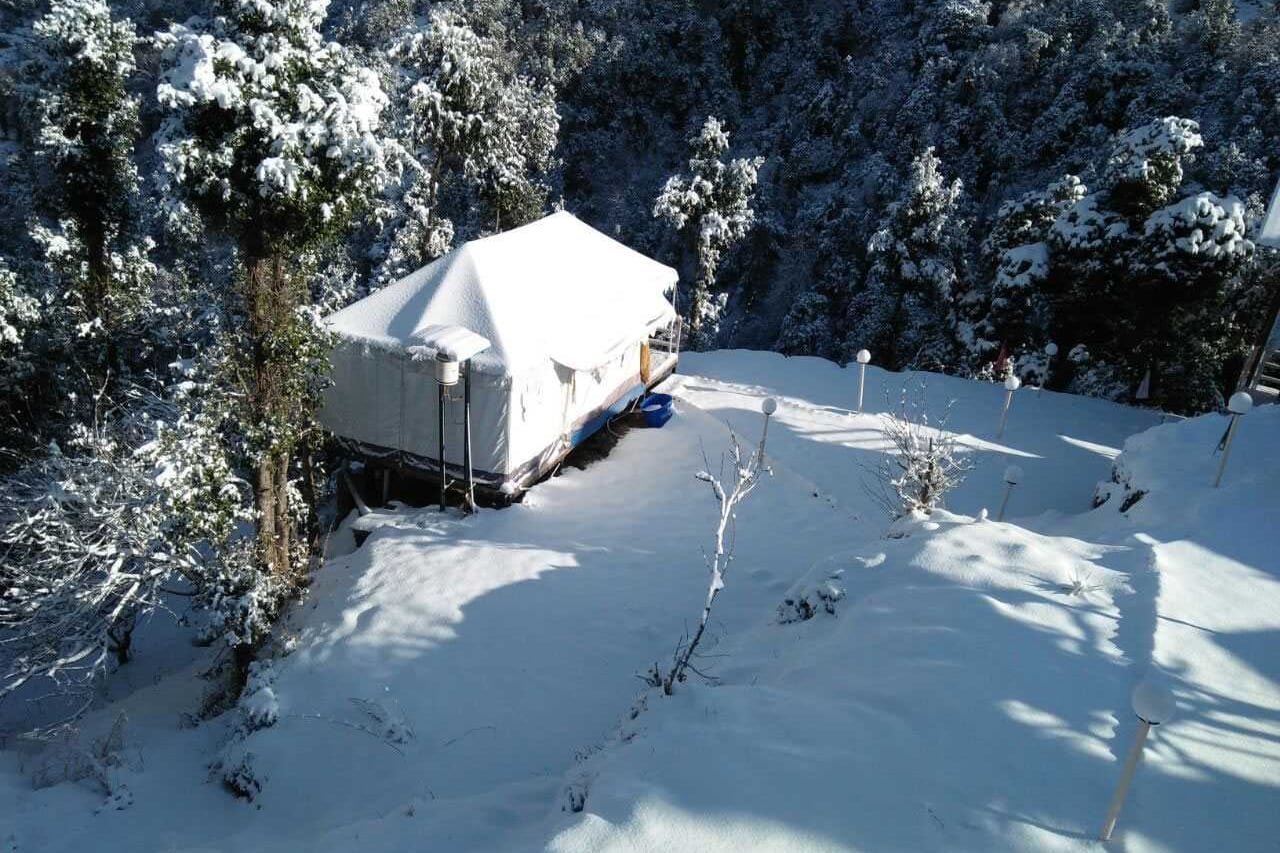
What can go wrong with a stove in a tent
The two serious risks are fire and carbon monoxide. Canvas, bedding, rugs and clothing all burn, and a stove pipe runs hot enough to scorch or ignite them. Sparks leaving the top of the flue can land on the roof. Carbon monoxide comes from incomplete combustion, has no smell or colour, and in a closed tent can build up while people sleep.
Both risks are well understood and can be controlled, which is why stoves have been used in canvas tents for generations. Each of the measures below covers a different way things go wrong, and leaving one out is how accidents happen.
The stove jack
A stove jack is a fire-resistant panel, usually silicone-coated fibreglass or a similar high-temperature cloth, often with a metal collar, sewn into the canvas where the flue passes through. It protects the tent from the heat of the pipe and seals around it against rain. It must be sewn and reinforced into the tent as part of the making. Never cut a hole and push a flue through, and never let a flue touch ordinary canvas, even treated or fire-retardant canvas.
We can sew a stove jack in at the making stage when asked, positioned for the stove you intend to use, and the Winterised Relief Tent has a flued stove port with a heat-shield collar as standard. Bell tents, tipis and yurts can all take one. Tell us when you order, through the custom tent configurator or our contact page, and include the stove model and flue diameter.
Choosing a stove and flue
The stove and flue should be chosen together, and to suit the tent. What to look for:
- A stove designed for tent use, with a door that closes and latches and an air control to slow the burn.
- The flue diameter and length the stove maker specifies, with a spark arrestor at the top, rising clear of the roof by the distance the stove or tent maker recommends so sparks and smoke clear the canvas.
- Support for the flue so it cannot lean onto the canvas, with guy lines kept well away from it.
- A flue guard wherever people might brush against the pipe inside.
- Dry, seasoned hardwood as fuel. Wet wood smokes, deposits more creosote and burns less cleanly.
Placing the stove inside the tent
Follow the stove maker’s minimum clearances to combustible material, and treat canvas walls, liners, beds and furniture as combustible. Stand the stove on a non-combustible hearth, such as a stove board or fireproof mat, large enough to catch embers when the door opens. Keep a clear zone around it, make it obvious to guests, and store firewood, kindling and clothing outside it.
The stove’s position follows the jack, so decide both together, away from beds and the main walkway. In a yurt the flue often rises beside the crown. In a tipi, the adjustable smoke flaps are made to draw smoke out at the top, but for paying guests a stove with a proper flue is a far safer choice than an open fire. Fire-retardant cloth such as our fire-retardant canvas slows the spread of flame, but it does not make a tent fireproof.
Carbon monoxide and smoke alarms
Fit a carbon monoxide alarm in every tent with a stove, and a smoke alarm as well. Use alarms certified to a recognised standard, such as EN 50291 for CO alarms in Europe and the UK or UL 2034 in the United States, position them as the maker instructs, and test them before every stay. Battery alarms are fine; replace batteries on a schedule rather than waiting for the warning chirp.
Keep a high vent open whenever the stove is lit. A stove draws its air from inside the tent, so a sealed tent starves the fire and encourages incomplete combustion. Symptoms of CO poisoning include headache, dizziness, nausea, breathlessness and confusion. If anyone feels unwell, get everyone into fresh air, let the stove go out and seek medical help.
Safe habits for operators and guests
The right fittings are only half of it. These habits belong in every guest briefing and staff checklist:
- Keep a suitable fire extinguisher and a fire blanket by the door of every heated tent, and show guests where they are.
- Do not load the stove heavily before sleeping or leaving the tent. Let it burn down, and close the air control only as far as the maker allows.
- Never use petrol, paraffin or any accelerant to light it.
- Never bring a barbecue, fire pit or brazier inside, even when the coals look dead; they go on producing carbon monoxide.
- Empty ash into a lidded metal bin, outside and away from canvas, and leave it for at least a day.
- Sweep the flue regularly, and check the jack, flue joints and spark arrestor at every changeover.
Rules for commercial glamping sites
If you run a glamping site, your insurer and local fire authority will have requirements, and you may need a fire risk assessment. Ask both before installing stoves, keep a record of your checks, and train staff to light stoves and brief guests. Many operators light the stove for guests on arrival and leave written instructions; some choose electric heating for guest tents and keep stoves for staff-run spaces.
Our guide to insulating a canvas tent for winter compares the heating options. The 5M Bell Tent starts at $350 ex-works in the catalogue, with a stove jack and other finishing quoted on top; freight and duties change the landed cost.
Questions buyers ask
Is it safe to have a wood stove in a canvas tent?
Yes, with a proper stove jack, a flue with a spark arrestor, a hearth, correct clearances, ventilation and working carbon monoxide and smoke alarms. Without those, it is dangerous.
Can I cut a hole in my tent for a stove pipe?
No. The flue must pass through a fire-resistant stove jack sewn into the canvas. Ask the manufacturer to fit one, or to supply a properly made panel for a sailmaker or canvas workshop to sew in.
Can I sleep with a wood stove burning in a tent?
The safest practice is to let the stove burn down before sleeping and rely on bedding overnight. If it stays lit, you must have a tested CO alarm and an open vent.
What is a stove jack made of?
Usually silicone-coated fibreglass or a similar high-temperature fabric, often with a metal collar around the flue. It must be rated for the flue temperature of your stove.
Does fire-retardant canvas make a stove safe?
It helps by slowing the spread of flame, but it is not fireproof. You still need a stove jack, proper clearances and alarms.