How to clean a canvas tent without stripping its proofing
Clean a canvas tent with a soft brush and cold, clean water, working on a dry, pitched tent and letting it dry completely before it is packed. Never use detergent, washing-up liquid, bleach or a pressure washer: they strip the water-repellent and rot treatment from the cotton and leave residue that holds damp. Most dirt comes off dry once it has been left to harden; spot-treat the rest and re-proof any patch you have had to scrub.
6 min read · Updated
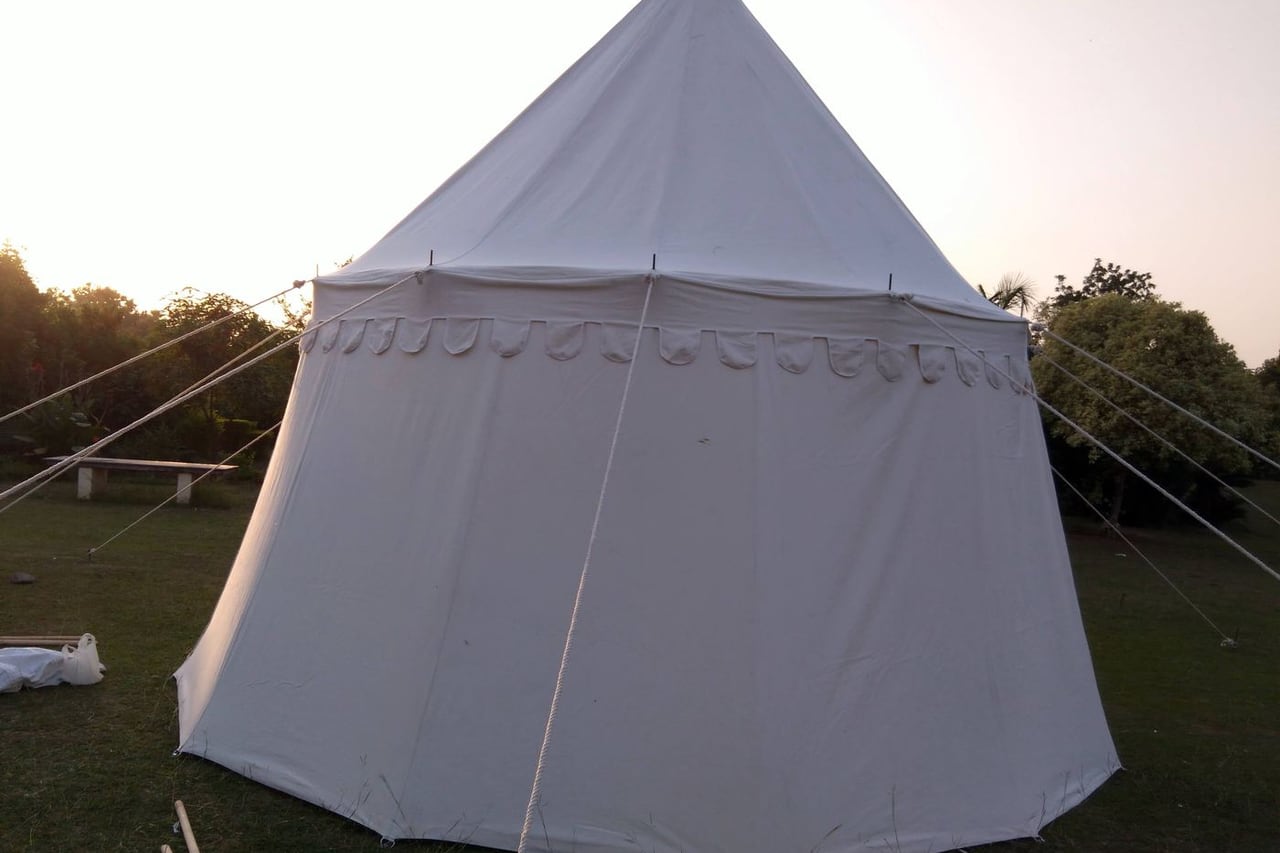
What treated canvas can and cannot take when cleaning
A treated cotton tent is a woven cloth plus the treatment carried in its fibres. On our bell tents that treatment is applied at the mill, so it goes through the yarn rather than sitting on the surface. It is what gives the canvas its water repellency and its resistance to rot, mould and ultraviolet. Any cleaning method that removes it leaves you with a tent that looks cleaner and performs worse.
Detergents are the main offender. They are designed to lift oils and finishes out of fabric, which is exactly what the proofing is. They also leave a film behind that attracts dirt and holds moisture against the cloth, and moisture plus residue is what mould feeds on. Bleach is worse again: it weakens cotton fibre and fades colour as well as stripping the finish.
Clean mechanically and gently: brush first, use water second, and keep chemistry as a last resort for a specific mark. The treated tent canvas our bell tents are cut from is a heavy cloth, and it will put up with brushing far better than it puts up with soap.
How to clean a canvas tent step by step
Do it with the tent pitched and taut, on a dry day with enough breeze and sun for it to dry before evening. A pitched tent gives you a firm surface to brush against and lets you see the whole roof.
- Let mud dry completely, then knock and brush it off with a soft or medium-bristle brush. Wet mud smears into the weave; dry mud flakes off.
- Brush the roof and walls from the top down so loosened dirt falls onto areas you have not cleaned yet.
- For what remains, use cold or lukewarm clean water and a soft sponge or brush. Work in small areas and do not soak the cloth more than you need to.
- Rinse with a gentle hose if needed. A garden hose at normal pressure is fine; a jet or pressure washer is not.
- Leave the tent pitched until every part is dry, including the seams, the storm skirt and the folds around doors.
How to remove common stains from canvas
Most marks on canvas are cosmetic and do not affect performance. Treat them only if they bother you, and accept that some, rust and mould stains especially, will fade rather than disappear. Test anything other than water on a small, low area first, and re-proof any patch you have worked hard on.
| Mark | What to do | Avoid |
|---|---|---|
| Dried mud | Let it harden, brush off, sponge the residue with cold water | Scrubbing it wet; hot water |
| Bird droppings | Remove promptly once dry, then sponge with clean water; droppings are acidic and mark if left | Leaving it for weeks; scraping with metal |
| Tree sap or resin | Let it harden and lift it off gently; a dab of surface spirit on the spot only, then re-proof that spot | Solvents over large areas |
| Green algae or pollen film | Dry-brush, then sponge with water; move the pitch out from under dripping trees | Bleach or chlorine products |
| Rust marks from pegs or poles | Usually permanent; treat as cosmetic and stop the source | Abrasives that thin the cloth |
| Mould spots | Dry thoroughly, brush off outdoors, then spot-treat as in our mould guide | Bleach; packing it away again |
Cleaning groundsheets, zips and mesh panels
The zip-in groundsheet on our bell tents is 540 gsm PVC, a different material from the walls, and it can take a mild soap solution. Unzip it, take it out of the tent and wash it on clean ground, then rinse well and dry both faces. Keep the soapy water off the canvas walls and storm skirt. A separate tent groundsheet under the floor takes most of the dirt and abrasion and is much cheaper to scrub or replace.
Zips collect grit, and grit wears sliders. Brush the teeth with an old toothbrush and rinse with clean water. A zip lubricant made for outdoor gear helps a stiff zip, but keep it on the teeth. Mesh panels should be brushed or vacuumed gently from the outside; pushing hard stretches the mesh out of its frame.
Cleaning safari tents and Swiss cottages at a resort
Framed structures such as the Safari Suite Tent and our Swiss cottages are cut from ripstop or plain poly-cotton at 440 to 480 gsm. The blend is more forgiving than pure cotton, but the same rules apply: brush, clean water, no detergent, no jet wash.
Dirt settles on the roof. Use a soft broom on an extension handle from a stable platform, never by climbing on the fabric, and work with the fall of the roof so water runs off rather than pooling. Leaf litter in valleys and along the ridge holds moisture against the canvas and should be cleared weekly in the wet season. Interior cleaning is normal housekeeping, with one addition: wet towels, swimwear and damp bedding should not be left inside a closed tent overnight in humid weather.
Drying a canvas tent before you pack it
Cleaning wets the tent, and a wet tent packed away will grow mould within days no matter how well it was treated at the mill. Leave it standing until it is dry to the touch everywhere, then give it another few hours. Check the seams, the doubled cloth at the eaves and the storm skirt, which dry last. If the weather turns, open the doors and vents and wait for the next dry day rather than packing it. Our storage guide covers what to do if you have no choice.
Signs a tent needs more than cleaning
If water no longer beads on the roof after cleaning, or the cloth darkens and wets through quickly in rain, the proofing has worn and the tent needs re-waterproofing. Black spots that come back after brushing are mould, which has its own treatment. Cloth that tears when you pinch and pull it gently has rotted, and only a replacement panel will fix that. Send us photographs through the contact page and we will tell you which it is.
Questions buyers ask
Can I use soap or washing-up liquid on a canvas tent?
Not on the canvas. Soap and detergent strip the water-repellent and rot treatment and leave a residue that holds damp. Use clean water, and keep mild soap for the PVC groundsheet only.
Can I pressure wash a canvas tent?
No. A pressure washer drives water and grit into the weave, damages the proofing and can open stitching. A garden hose at normal pressure is the most force canvas should see.
Can a canvas tent go in a washing machine?
No. Agitation and detergent will strip the treatment, and a tent-sized panel can be creased and stressed in ways it was never cut for. Children’s play tents are a different product and come with their own instructions.
How often should I clean a canvas tent?
Brush it down whenever it is struck and before it is stored. A wet clean once or twice a season is plenty for most tents; glamping units in busy or wooded sites may need roof brushing weekly.
Are specialist canvas cleaners safe to use?
Cleaners sold specifically for proofed cotton canvas are formulated not to strip the finish and are reasonable for heavy soiling. Follow their instructions, rinse thoroughly and re-proof afterwards if the label advises it.