How to re-waterproof a canvas tent
Re-waterproof canvas when water stops beading and the cloth wets through quickly in rain, usually after several seasons of sun. Clean the tent, pitch it and let it dry, then brush or spray on a water-based proofer made for cotton canvas, working it into seams and stitching, and leave it to cure in dry weather. Do not re-proof a brand-new tent that leaks; it needs weathering instead.
6 min read · Updated
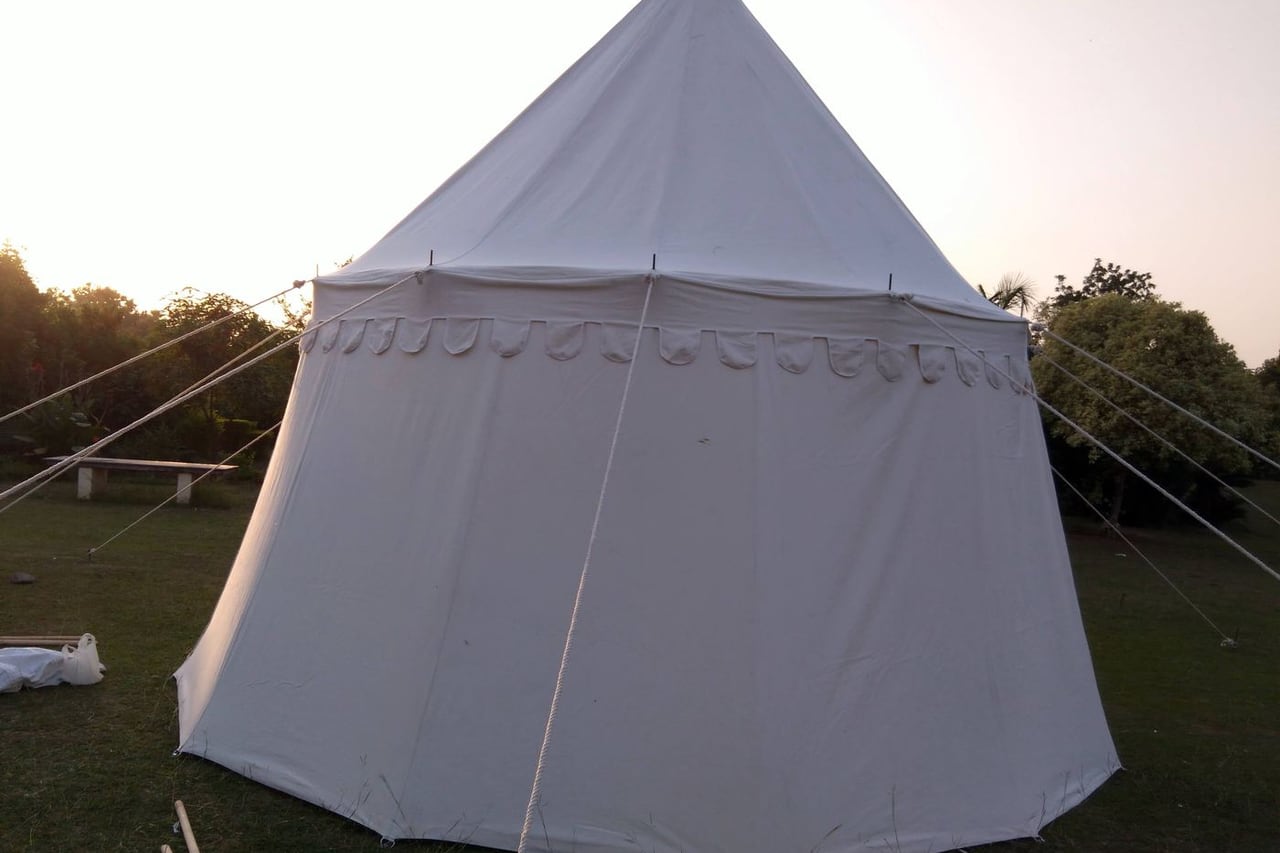
Does your canvas need re-proofing?
Treated cotton keeps water out in two ways. The fibres swell when wet and close the gaps in the weave, and the water-repellent finish makes rain bead and run off before it soaks in. Swelling lasts the life of the cloth. The finish does not: ultraviolet light, abrasion and cleaning wear it down, most quickly on the roof and around folds.
Look for water soaking in and darkening the cloth instead of beading, a fine mist inside during heavy rain, or damp patches where the canvas is under tension. Test it by flicking a little water onto the roof of a dry tent. If the drops sit as beads, the finish is working. If they flatten and spread within seconds, the canvas needs re-proofing.
A new tent that drips at the seams on its first outing is a different problem. It has not been weathered yet, and re-proofing will not help. Read why new canvas tents leak first.
Which proofer to use on canvas
Buy a product made for the cloth you have. Proofers for nylon and polyester tents are designed for coated synthetics and do not always bond to cotton. On treated cotton and poly-cotton, use a water-based, breathable canvas proofer. Many also contain a mould inhibitor or UV protection, which is worth having on a tent that lives outdoors.
Avoid wax on tent canvas. Waxed cotton has its uses, and our tool roll is waxed duck, but on a tent wax cuts breathability, adds weight, goes unevenly and attracts dirt. Avoid solvent-heavy sprays indoors or near guests.
| Material | Typical use in our range | Proofer |
|---|---|---|
| Treated cotton canvas, 360 to 520 gsm | Bell tents, tipis, yurts, medieval tents | Water-based canvas proofer for cotton |
| Ripstop poly-cotton, 440 to 480 gsm | Safari tents, Swiss cottages, marquees | Water-based canvas proofer; check the label covers poly-cotton |
| Solution-dyed acrylic | Pergola covers, parasols, cushions | Fluorocarbon-free fabric guard for acrylic |
| PVC groundsheets and tarpaulins | Floors, truck covers | None needed; patch and seal instead |
Preparing a tent for re-proofing
Proofer applied over dirt bonds to the dirt. Clean the tent first, as in our cleaning guide: brush, cold water, no detergent. Detergent residue is a particular problem here, because it can stop the new proofer bonding and leave the cloth more absorbent than before.
Pitch the tent taut and let it dry completely. Most proofers want dry cloth, though a few are designed for damp application, so read the label. Pick a forecast with at least a full day, ideally two, of dry, mild weather. Hot sun dries the product before it soaks in; cold slows curing.
How to apply canvas proofer step by step
A roof on a safari tent or cottage needs a stable platform or access tower. Do not lean ladders against the canvas or the frame where it is not designed to take load.
- Test on a small, low patch first. Some proofers darken or slightly change the colour of natural canvas.
- Work from the top down, in panels, so runs go onto areas you have not treated.
- Apply with a wide soft brush or a low-pressure garden sprayer. A brush pushes product into the weave better; a sprayer is faster on large roofs.
- Wet the cloth evenly without flooding it. Wipe away drips and runs before they dry.
- Give the seams, stitching lines, eaves and roof a second pass. These wear first and leak first.
- Treat the outside face only unless the product says otherwise.
- Keep doors open while it cures and keep people and animals out until it is dry.
Re-proofing seams, patches and worn spots
You do not always need to treat the whole tent. Roofs wear faster than walls, and the cloth around a door that is handled every day loses its finish before the back panel does. A spot re-proof on a worn roof or a repaired area is a perfectly good approach, as long as the cloth is clean and you feather the edges of the treated patch so there is no hard line.
Seams need their own attention. On cotton, stitch holes close as the thread and cloth swell, so a seam that has been weathered rarely needs a separate sealer; a second coat of proofer along the stitching is usually enough. Poly-cotton swells less, and seams on framed safari tents and cottages, especially along the ridge and valleys, can benefit from a brush-on seam sealer compatible with the proofer you are using. Patches sewn on during a repair always need treating, because new stitching has punched fresh holes through the cloth.
Curing the proofer and checking the result
Leave the tent pitched until the proofer has cured fully. The label gives a time; plan on a day or more and keep it out of rain until then. Then test it with the water flick again, and if you can, with a gentle hose on the roof while someone watches the inside. Patchy beading means a second light coat on the patches.
How often to re-proof a canvas tent
There is no fixed interval. Our tent canvas is mill-treated, which lasts much longer than a coating sprayed on after cutting. As a rule of thumb, a tent used a few weeks a year may go several seasons before it needs attention, while a glamping tent standing in strong sun all season will want checking every year and its roof re-proofing more often than its walls. Use the water test rather than the calendar.
Re-proofing restores water repellency. It does not restore cloth that has been weakened by UV or rot. If the canvas tears easily, it is a panel replacement, and you can buy matching treated tent canvas or ripstop poly-cotton by the metre, or ask us for a panel cut to the original pattern.
Questions buyers ask
Should I re-proof a new canvas tent?
No. A new cotton tent needs weathering, wetting and drying a few times so the fibres swell into the stitch holes. Re-proofing too early adds nothing.
Can I use a silicone spray meant for nylon tents on canvas?
It is not the right product. Use a proofer labelled for cotton or poly-cotton canvas so it bonds to the fibre and the cloth keeps breathing.
Will re-proofing change the colour of my tent?
Some proofers darken natural canvas slightly, especially if applied heavily. Test on a hidden area first.
Can I re-proof the inside of the tent?
Treat the outside face unless the product instructs otherwise. Proofing the inside adds little and reduces breathability, which makes condensation worse.
How long does re-proofing take?
Allow a dry day for cleaning and drying, a few hours to apply, and a day or more for the proofer to cure before rain. Large framed tents take longer and are easier with two people.
Do I need to re-proof after removing mould?
Usually yes, on the treated area. Cleaning and spot treatments reduce the finish, and a mould inhibitor in the proofer helps stop the spots returning.