How to choose the right glamping tent for your site
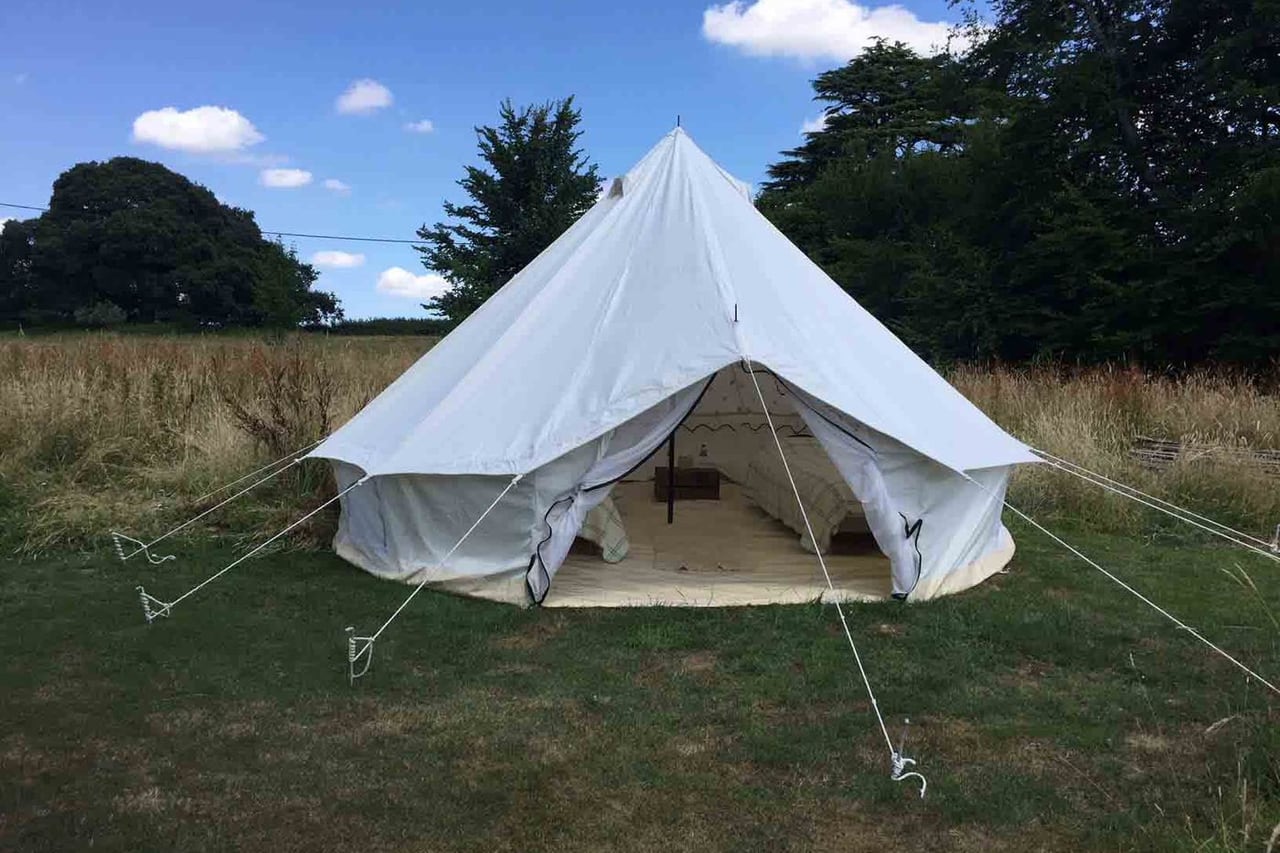
Choose a glamping tent by working back from the guest and the nightly rate you want, then your climate and season, then your ground and budget. Bell tents and tipis suit seasonal, lower-cost sites with shared facilities; safari tents and Swiss cottages suit en-suite, year-round rooms; yurts suit cold climates and retreats. Our catalogue runs from $275 for a 4m bell tent to $780 for a two-room Swiss cottage, ex-works.
6 min read · Updated
Start with the guest and the rate
The tent is the product you sell, so start with who will buy it. Couples on short breaks, families in school holidays, wedding parties, corporate groups and wellness guests all want different rooms. Then decide what you want to charge, and look at what comparable sites near you charge for similar rooms.
As a broad rule, guests pay more for a private bathroom, standing height to the walls, a door that locks and climate control. If your business plan needs a hotel-level rate, you need a tent that can hold a hotel-level room: a safari tent or a Swiss cottage. If you are selling a relaxed, back-to-nature stay with a shared shower block, bell tents and tipis do the job at a fraction of the build cost. Our guide to how to price glamping tents per night goes further.
Glamping tent types at a glance
Catalogue guide prices are ex-works for the tent alone. Freight, duties, platforms, bathrooms, power and furnishing are extra and often cost more than the tent. See how much a glamping tent costs for the full picture.
| Type | From | Structure | En-suite | Best for |
|---|---|---|---|---|
| Bell tent | $275 (4m) to $450 (6m) | Centre pole, guy ropes | No | Seasonal sites, couples, festivals |
| Tipi | $295 (16 ft), $435 (20 ft), cover only | Pole cone | No | Dining, events, statement rooms |
| Yurt | On enquiry | Hardwood lattice and crown | Rarely inside | Cold climates, retreats, wellness |
| Safari tent | From $1,200 (Safari Suite), $1,385 (Luxury) | Galvanised steel frame on deck | Yes, rear annexe | Premium, year-round rooms |
| Swiss cottage | $530 to $780 | Galvanised tubular frame | Pod or rear block | Larger resorts, plinth bases |
| Glamping dome | Quoted per project | Steel geodesic frame | Pod in larger sizes | View-led sites with climate control |
Match the tent to your climate and season
Cotton canvas breathes, which keeps bell tents, tipis and yurts comfortable in dry heat and limits condensation in cool weather. It must be weathered when new and dried before it is packed. Poly-cotton, used on our safari tents and Swiss cottages, is more stable and dries faster, which suits wet seasons and tents that stay pitched for years.
- Spring to autumn only, temperate climate: bell tents or tipis, struck for winter.
- Year-round in a cold climate: yurts, or insulated safari tents with heating.
- Hot and dry: safari tents with a double roof, or Swiss cottages with a fan or air conditioning.
- Monsoon or long wet season: framed poly-cotton tents on raised bases.
- High wind or snow: framed structures or yurts, specified and anchored for the site.
Match the tent to your ground
Level grass with good drainage suits any tent. Slopes, rock, wet ground and sensitive sites suit framed tents on raised decks, because the deck takes up the unevenness and keeps the floor dry. Swiss cottages also work on a simple concrete plinth thanks to their floor tray, which can be the cheapest base on a large site.
Think about access too. A 5m bell tent packs into a single vehicle load and can be carried to a pitch. A safari tent arrives as a frame kit and canvas bales that need a vehicle close by. Our glamping site layout guide covers spacing, paths and services.
Budget for the finished room
A $350 bell tent on grass with a shared shower block and a $1,385 safari tent on an engineered deck with its own bathroom are both reasonable investments for different business plans. Price each option as a finished room: tent, freight, duty, base, services, furniture, linen and installation labour. Then set that against the nightly rate and occupancy you can realistically achieve.
If you are unsure of demand, start with a few lower-cost tents, trade a season and expand. Many sites add framed tents later as a premium category.
Check planning and safety rules early
The tent type can change how a local authority sees your project. A field of bell tents pitched for the summer is often treated differently from decked safari tents with plumbing that stand all year, though the rules vary widely between countries and districts. Speak to your planning office before you order, and read our guide to glamping planning permission and permits.
Ask your insurer and fire authority the same question about fabric. Some require fire-retardant canvas tested to a named standard, such as CPAI-84 or NFPA 701 in the US, BS 5438 in the UK or AS 1530 in Australia. Fire-retardant cloth can be specified on most of our tents; find out what is needed before production starts, since it cannot be added afterwards to the same standard.
Think about operations and staff
Bell tents and tipis need pitching and striking every season, drying after rain and storing over winter. That is labour twice a year, but nothing is left on the land. Framed tents stay up, so the work shifts to cleaning, re-proofing and occasional canvas replacement. Yurts sit between the two.
Do not forget back-of-house space for staff, linen and stores. Our Staff Quarter Tent is a plain, durable framed tent made for exactly that.
Mixing types and buying as a package
Many sites use two or three types: a core of standard rooms, a premium category and a communal tent for dining or events. Using one type for each category keeps furniture packs and spares simple.
Our Five-Tent Resort Package, quoted to your site, bundles five matched safari or Swiss cottage structures with deck detailing, interiors and one consolidated freight. The Ten-Tent Resort Package, also quoted, adds back-of-house staff tents and a phased installation programme. To discuss a mix, send your site plan, guest profile and season through the contact page.
Questions buyers ask
What is the best tent for a glamping business?
There is no single best type. The 5m bell tent is the most common starting point; safari tents and Swiss cottages are the choice for en-suite rooms; yurts for cold climates and retreats.
What is the cheapest glamping tent to start with?
A bell tent. Our 4M Bell Tent starts at $275 ex-works and the 5m at $350, and both pitch on level ground without a platform.
Which glamping tent is best for year-round use?
Yurts and insulated, heated safari tents or Swiss cottages. Bell tents and tipis are usually struck for the coldest months.
Can I mix different tent types on one site?
Yes, and many successful sites do, using each type for a different room category or purpose. We can ship a mixed order in one consolidated load.
How many tents should a new site start with?
It depends on your land, budget and market. Our guide on how many tents a glamping site needs works through the numbers.
Do glamping tents need planning permission?
Often they do, especially framed tents on fixed platforms with services. Rules vary by country and district, so speak to your local planning authority early.