Tipi vs bell tent: height, space and cost compared
A bell tent has a short vertical wall and one centre pole, so more of its floor is usable for beds and furniture; a 5m bell costs from $350. A tipi is a steep cone on several poles, so it is far taller and more dramatic but loses floor at the edges; a 20 ft tipi cover costs from $435. Bell tents make the better sleeping room; tipis work better as a statement piece, a dining space or an event tent.
6 min read · Updated
The basic difference in shape
Both are round canvas tents, and from a distance people confuse them, but they are built in opposite ways.
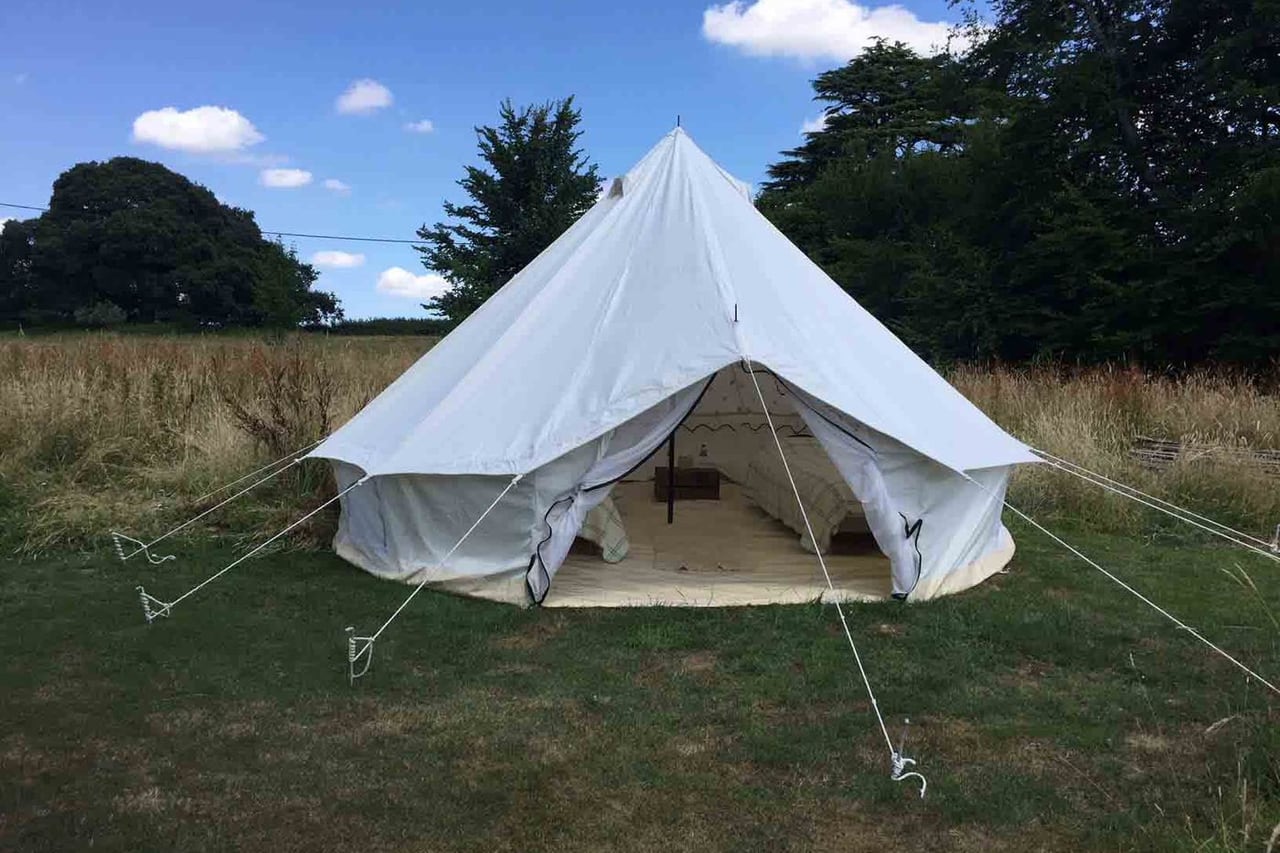
A bell tent puts its height into a single centre pole and spreads its canvas wide and fairly low. A short wall, typically somewhere around knee to hip height, runs round the edge, and a ring of guy ropes holds the shape. The result is a broad, domed room with standing height across the middle. Our 5M Bell Tent is the size the hospitality trade buys most.
A tipi stands on a cone of poles with the canvas wrapped around them. It has no vertical wall at all; the canvas runs from the ground straight up to the smoke flaps at the top. The Tipi 20 FT is six metres across and nearly five and a half metres high, roughly twice the height a bell tent of similar diameter reaches.
Tipi and bell tent side by side
Prices are ex-works catalogue guide prices. Floor areas are calculated from the nominal diameter; usable standing area is lower in both, and lower still in a tipi because of its sloping walls.
| Model | Diameter | Floor area (nominal) | Canvas | From |
|---|---|---|---|---|
| 4M Bell Tent | 4 m | About 12.6 m² | 360 gsm cotton | $275 |
| 5M Bell Tent | 5 m | About 19.6 m² | 360 gsm cotton | $350 |
| 6M Bell Tent | 6 m | About 28.3 m² | 400 gsm cotton | $450 |
| Tipi 16 FT | About 4.9 m | About 18.7 m² | 360 gsm cotton | $295 (cover) |
| Tipi 20 FT | About 6.1 m | About 29.2 m² | 400 gsm cotton | $435 (cover) |
Usable floor space in a tipi and a bell tent
Because a tipi’s walls slope from the ground, the outer ring of floor is only good for low things: bedding, cushions, bags. You cannot push a bed frame or a wardrobe against the canvas the way you can in a bell tent. In practice a 16 ft tipi sleeps much like a 4m bell tent despite having more nominal floor area.
The bell tent’s short wall gives you a usable edge, and its zip-in groundsheet seals floor to wall. That is why bell tents dominate sleeping accommodation on glamping sites: a king bed, two chairs and a luggage rack fit in the 5m without anyone ducking.
The tipi has far more volume. All that height makes a room feel open and is the reason the 20 ft size is ordered as a dining tipi, seating a long table under a canopy of poles. Event companies frequently link two together for weddings.
Wind, rain and ventilation
A tipi’s steep cone sheds rain fast and presents a sloping face to wind from every direction. Pitched well, with the poles bedded and the cover tensioned, it stands up to rough weather. The smoke flaps at the top are adjusted to the wind so warm air and smoke draw out.
A bell tent relies on its guy ropes. Each one needs pegging and tensioning, and on an exposed site you will want heavier pegs and periodic checks after rain, because cotton canvas tightens when wet and slackens as it dries. Ventilation comes from the roof vents, the door and the walls, which can be rolled up on hot days. See our guide to wind-rated tents and guying for anchoring detail.
Fires and stoves
Tipis were designed around a central fire, and the smoke flaps are what make that possible. On a commercial site, an open fire inside a guest tent is a serious liability question; most operators use a properly flued wood stove instead, in a tipi or a bell tent. Bell tents take a stove through a fitted flue port in the wall or roof.
Whichever you choose, follow the stove maker’s clearances, use a heat-proof base, fit a carbon monoxide alarm and check what your insurer and local fire authority require. Our guide to a wood stove in a canvas tent covers the details.
Pitching, flooring and moving
A bell tent is quicker for a beginner: lay out the canvas, raise the centre pole, set the A-pole at the door, peg out the guys. Two people manage it in about an hour once practised. A tipi asks more skill, because the poles must be set at the right spread and the cover wrapped and pinned evenly. Once a team has learnt it, the time is comparable.
Plan the floor separately for a tipi. Operators use a timber deck, matting or rugs over a groundsheet. The bell tent’s zipped groundsheet is part of the tent, which keeps out draughts and insects with no extra work.
Both of ours are treated cotton canvas, so both need the same care. New canvas should be weathered, wetted and dried so the threads swell and close, before guests sleep in it, and it must be bone dry before it is packed away. Our guide on why new canvas tents leak explains the process.
Tipi or bell tent: which to choose
A tipi is a dwelling with a long history among the Indigenous peoples of the North American Plains. Many operators acknowledge that history and keep theming respectful, which guests notice.
Browse both in our luxury glamping tents range, or ask us for a quote on a mixed order.
- Guest bedrooms on a glamping site: bell tents.
- Dining, bar, chill-out or ceremony space: tipis, especially the 20 ft size.
- A small plot where you want height and visual impact: the Tipi 16 FT, which has a small footprint for its presence.
- Rental stock for weddings and festivals: both, since tipis draw the eye and bell tents sleep the guests.
Questions buyers ask
Is a tipi bigger than a bell tent?
Taller, yes, and a 20 ft tipi has slightly more nominal floor than a 6m bell. Usable floor for beds and furniture is usually less because the walls slope all the way to the ground.
Can a tipi be used for glamping accommodation?
Yes, many sites use them, usually with low beds or mattresses on a deck or rug-covered floor. They suit guests who want something distinctive more than a conventional room.
Do tipis leak at the top?
Rain can come through the smoke opening if the flaps are left wide open in a downpour. Close or angle the flaps in wet weather; some operators also fit a rain cap or inner liner.
Which is better in wind, a tipi or a bell tent?
A well-pitched tipi copes very well because of its steep cone. A bell tent is also stable when properly guyed and pegged, but it needs more attention to its ropes.
Can two tipis be linked together?
Yes. The 20 ft tipi is often linked in pairs for weddings, giving a long double space for dining or dancing. Plan the joint and the drainage between the two with whoever pitches them.
What poles do Canvashome tipis use?
Our tipis use powder-coated steel poles, which are consistent in length and do not need replacing like timber lodgepoles. They come with adjustable smoke-flap hardware and solid brass eyelets.