Planning permission and permits for glamping sites
Most glamping sites need permission from more than one authority. Typically that means planning or zoning consent for the change of use, a site or campground licence, building approval for decks and bathrooms, fire-safety approval that may cover the tent fabric itself, and environmental health and wastewater consents. Rules vary by country and by local authority, so speak to your planning department before you buy land or tents, and get its answers in writing.
6 min read · Updated
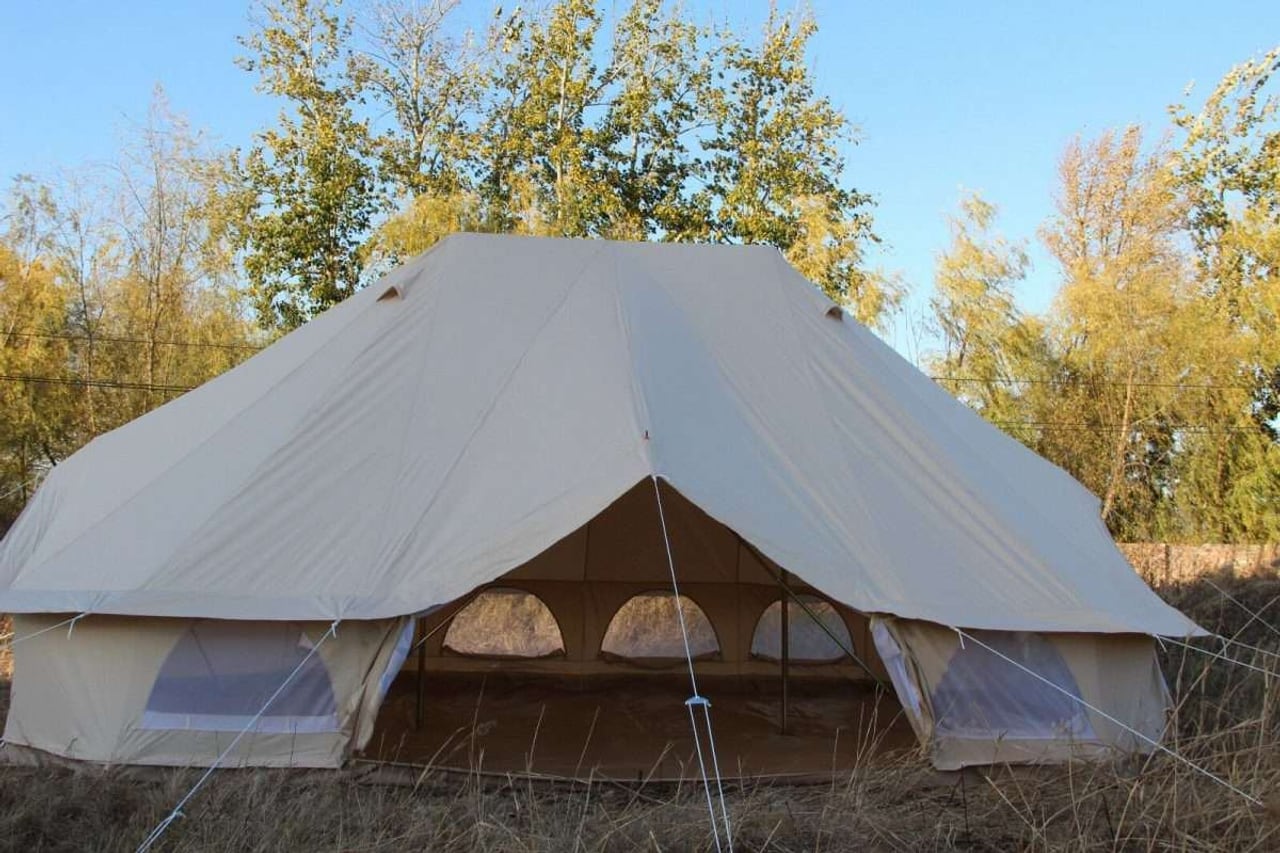
Do glamping tents need planning permission?
Many owners assume that because a tent is not a permanent building, it needs no permission. In practice, planning systems tend to look at the use of the land, not only the structure. Using a field for paid overnight accommodation is usually a change of use, whether the guest sleeps in canvas, a caravan or a cabin. Some jurisdictions allow limited temporary camping without full consent, but the limits, conditions and definitions vary, and they rarely cover a framed safari tent on a deck that stays up all year.
The further your units move towards permanence (decks, plumbing, electrics, year-round pitching), the more likely an authority is to treat them like buildings. Permission is not necessarily hard to get, because many authorities support tourism uses that bring visitors to rural areas. Find out which category your scheme falls into before you design it.
The permissions most sites need
Names and responsibilities differ between countries, but these are the areas most glamping schemes have to cover:
| Area | What it covers | Who to ask |
|---|---|---|
| Planning or zoning | Change of use, number of units, siting, access, landscape impact | Local planning or zoning department |
| Site or campground licence | Operating standards: spacing, facilities, fire points, management | Local council or county health department |
| Building approval | Decks, platforms, bathrooms, permanent structures | Building control or building department |
| Fire safety | Fabric flammability, separation, extinguishers, stoves, escape | Fire authority or fire marshal |
| Water and wastewater | Drinking-water supply, septic or treatment plant, discharge | Environmental health and environmental regulator |
| Food and alcohol | Breakfast, restaurant, bar | Food safety and licensing authorities |
| Tourism registration | Accommodation registration or grading where it is required | National or regional tourism body |
Questions to take to a pre-application meeting
Most planning departments offer some form of pre-application advice, sometimes for a fee. It is worth paying for. Go with a simple site plan, photographs of the tents you intend to use and a short written description. Ask:
- Which land-use category does this scheme fall into, and is there a policy that supports it?
- Is there a limit on unit numbers, season length or occupancy period per guest?
- Do the platforms, bathrooms or reception need separate building approval?
- What separation distances apply between tents, and from boundaries and roads?
- Is flame-retardant tent fabric required, and to which standard?
- What drainage and wastewater solution will be acceptable on this site?
- Are there landscape, heritage, flood-risk, tree or ecology designations that apply?
- Is a temporary or seasonal permission an option, and what conditions would apply?
Fire safety and tent fabric
Fire authorities usually take an interest in tents used for sleeping, especially where guests use stoves, candles or fire pits. Some require the canvas to meet a recognised flammability standard. The standards you will hear named include CPAI-84 (a North American specification for tent fabrics), NFPA 701 (US flame-propagation tests for textiles), BS 5438 (a UK test for vertically oriented textiles) and EN 13501 (the European reaction-to-fire classification). In Australia, parts of AS 1530 are often referenced. Each covers a specific test method, and an authority may accept one but not another, so ask which one it wants.
If a standard is required, specify it at the order stage. We supply fire-retardant canvas with the test certificate for the production lot, and can make any of our glamping tents in it. Treating an untreated tent after delivery is rarely as reliable as fabric treated at the mill, and it may not satisfy an inspector. Our guide to fire-retardant tent canvas explains the standards in more detail.
Decks, bathrooms and building rules
Even where the tent itself is not regulated as a building, the deck it sits on may be. Raised platforms often have guarding requirements above a certain height, and an ensuite bathroom brings plumbing, drainage and electrical rules. Use a local engineer or builder who knows the codes, and give them our installation drawing at the start.
Framed units are designed for this. The Safari Suite Tent has an optional timber deck interface and a plumbing-ready rear annexe, so the bathroom can be built to local code and the canvas fitted around it.
Where to ask in the UK, US, EU, Australia and India
We do not give legal advice, and rules change, but these pointers help you find the right office:
- United Kingdom: planning permission from the local planning authority, plus a separate site licence from the local council in many cases. Check the current national rules on temporary campsite use before relying on them.
- United States: county or municipal zoning, often a conditional or special use permit, a campground or lodging permit from the health department, and the fire marshal, who may refer to the International Fire Code’s chapter on tents and membrane structures.
- European Union: municipal planning rules, with regional tourism law often defining campsite and glamping categories.
- Australia: a development application to the local council, with state legislation governing caravan parks and camping grounds.
- India: state tourism department registration and local land-use rules, which differ widely between states.
Insurance and keeping consents on file
Insurers ask many of the same questions as fire officers: fabric certification, stove installation, wind rating, distance between units. Keep a file with the planning decision, fabric certificates, installation drawings and maintenance records. It speeds up renewals and inspections, and it helps if you sell the business, because a buyer’s solicitor will ask for every consent. Conditions attached to a permission (season dates, unit numbers, lighting, noise) are part of it too, so brief your staff on them. When you place an order, tell us which certificates your authority needs and we will confirm what we can supply. Start through the contact page.
Questions buyers ask
Do I need planning permission for a bell tent in my garden for Airbnb?
Often, yes, once you take paying guests regularly, even if the tent is temporary. Rules vary, so check with your local planning authority and any short-term rental rules first.
Can I run a glamping site for part of the year without permission?
Some jurisdictions allow limited temporary camping without full consent, with conditions. Confirm the current rules locally; framed or decked units are usually outside such allowances.
Does my tent fabric need to be fire retardant?
It depends on your fire authority and insurer. If a standard is named, order fabric tested to it and keep the certificate.
Will a yurt or safari tent count as a building?
Some authorities treat long-term, decked or plumbed units like buildings for some purposes. Ask at the pre-application stage.
Can Canvashome help with my planning application?
We can supply drawings, specifications, material data sheets and fabric certificates for your consultant to submit. We do not act as planning agents.