Indian wedding tents and mandap canopies: a planner’s guide
An Indian wedding usually needs several covered spaces over two to four days: a mandap for the pheras, a large cover for guests and dinner, and smaller dressed structures for haldi, mehndi and sangeet. Most planners buy or hire a core set and redress it between functions. As a rule of thumb, plan a mandap canopy of about 4 × 4 m, guest cover at 1.4-1.9 m² per guest for a buffet-style evening, and flame-retardant cloth anywhere near the havan.
6 min read · Updated
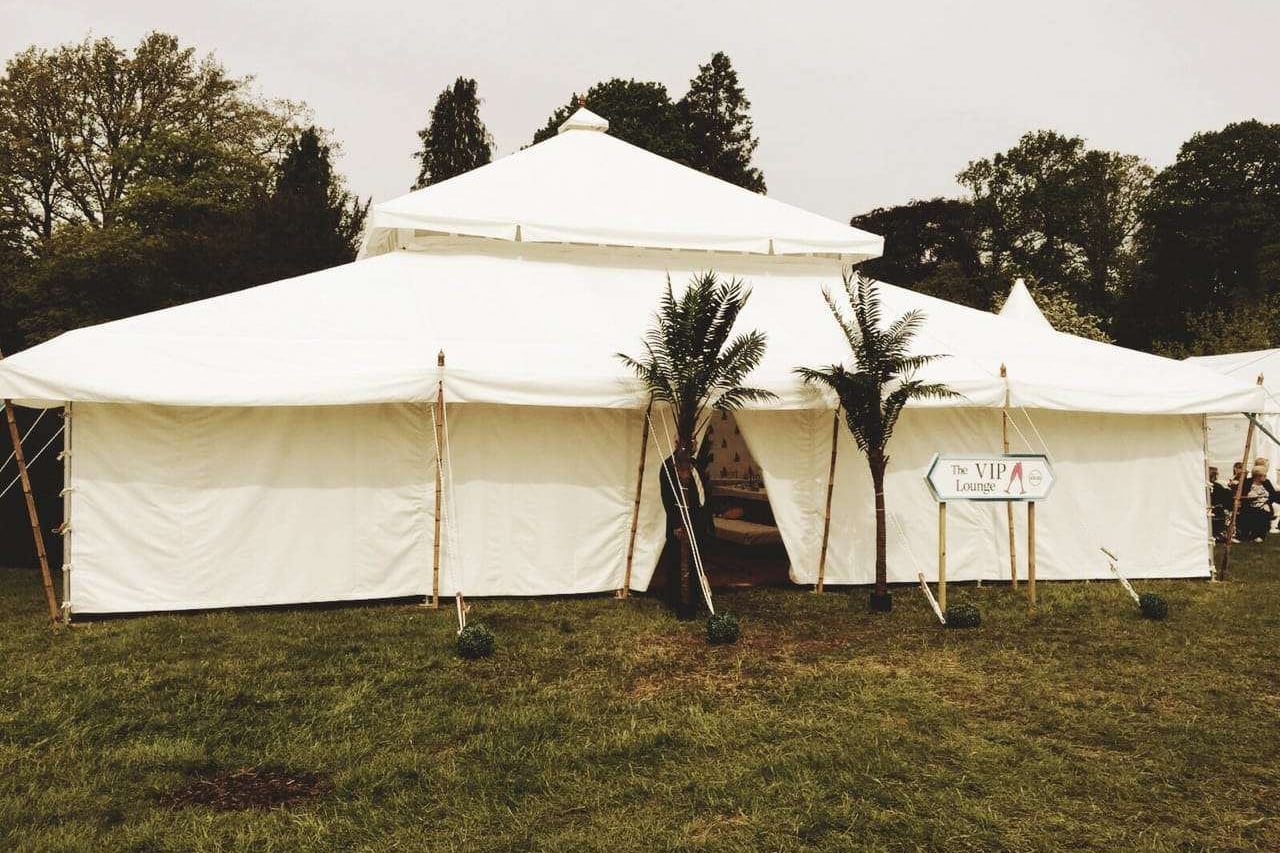
What each wedding function needs from a tent
The tent plan follows the programme. Each function has a different time of day, guest count and mood, and the structures that suit a turmeric-splashed haldi morning are not the ones you want for a reception of four hundred.
- Haldi: daytime, close family, low seating and a lot of turmeric. An open-sided canopy over floor cushions works, with covers you can wash or replace.
- Mehndi: afternoon into evening, relaxed, colourful. Shamiana bays or block-print canopies with lounge seating suit it well.
- Sangeet: evening, a stage, a dance floor and amplified sound. This is the function most likely to need walls, so the neighbours and the weather stay outside.
- Pheras: the ceremony itself, with the mandap as the focal point and guests seated facing it, able to see the fire and the couple.
- Reception: usually the largest gathering, with buffet counters, a stage for the couple and space to queue.
How big a wedding mandap should be
The mandap is a four-pillared canopy over a raised platform where the couple, the priest and close family sit around the fire. As a rule of thumb, 3 × 3 m is the practical minimum for the couple, priest and parents, and 4 × 4 m is comfortable once siblings join and the photographer needs an angle. Keep it open on all sides so the guests can see.
We make three structures that planners use as mandaps. The Wedding Lounge Canopy is 4 × 4 m with a 2.6 m eave, a scalloped valance with rope trim, four tie-back curtains and a rigging point for lighting. The Jaipuri Block-Print Canopy is also 4 × 4 m, in hand block-printed cotton from Sanganer. For a ceremony with more presence, the Mughal Darbar Pavilion brings cusped arches and a painted interior over 8 × 6 m, from $3,200 ex-works; the two canopies are priced on enquiry. Freight and duties are extra.
Havan fire safety under a mandap canopy
The havan is a real fire, fed with ghee and samagri, and it flares. Heat and smoke rise straight into the canopy, so the mandap needs more thought on fire safety than any other structure at the wedding. Untreated cotton canopies and loose drapes are the risk; the posts and platform rarely are.
Specify fire-retardant canvas or a flame-retardant lining for the mandap roof, keep the canopy as high above the fire as the design allows, keep florals and chiffon drapes back from the kund, and leave the sides open so smoke clears. Have an extinguisher and a fire blanket at the platform edge. Venues outside India often have their own rules on open flame, and some allow only a small contained fire with conditions, so ask the venue’s safety officer for their requirements early. Our guide to fire-retardant tent canvas explains the certificates they may ask for.
Covering the guests: how much space an Indian wedding takes
Indian weddings run on buffets, live counters and movement. Guests stand, sit, queue and mingle at once, so the tight seated-dinner figures used for Western banquets undersize the tent. As a rule of thumb, plan on 1.4-1.9 m² per guest for a reception with buffet counters and a stage, which puts a 300-guest reception at roughly 420-570 m². Check that figure against your local fire and egress rules, which decide the final capacity. Our marquee size guide shows the working.
There are two common ways to cover that floor. Linked shamiana bays are traditional and decorative, but bring posts at every internal corner. A clear-span frame gives a clean floor for a stage and dance floor and closes fully with walls. Many weddings use both: a clear-span hall for the sangeet and reception, and shamianas for the daytime functions. Keep live cooking counters, tandoors in particular, in a separate catering area away from guest cloth.
Reusing one set of tents across wedding functions
Buying or hiring a separate tent for every function is rarely necessary. A core set redressed between events saves money and crew time, provided the turnaround is planned. A typical multi-day plan looks like this.
| Function | Structure | What changes |
|---|---|---|
| Haldi | Block-print canopy over floor seating | Marigold dressing, washable covers, floor cushions |
| Mehndi | Shamiana bays plus lounge canopy | Low seating, bolsters, lanterns |
| Sangeet | Walled clear-span hall | Stage, dance floor, sound and lighting rig |
| Pheras | Mandap canopy with guest shamiana | Florals, platform, flame-retardant lining |
| Reception | Same clear-span hall, redressed | Buffet counters, couple’s stage, drapes |
Lighting and decorating a wedding tent safely
Warm light makes canvas glow, and it is the cheapest way to change a structure between functions. Battery LED string lights such as our ten-metre string light set run along an eave without a cable across the lawn, and LED brass lanterns give the look of an oil lamp without a flame inside the tent. Keep real diyas and candles on the ground, in holders, away from drapes. Haldi paste stains cotton badly and turmeric is hard to shift, so protect the canopy posts and any cloth at hand height with removable covers.
Should you hire, buy or commission wedding tents?
Families planning one wedding usually hire. Planners and rental firms serving Indian weddings abroad tend to buy, because the decorative mandaps and shamianas their clients want are scarce in local hire stock and command a better rate. Our guide to buying vs renting event tents sets out the arithmetic.
Order early. Stock structures ship first; made-to-order pieces such as the Mughal Darbar Pavilion take longer, and the schedule is confirmed with your quotation. Browse the traditional Indian tents range, sketch a design in the custom tent configurator, or send us the programme and guest numbers through the contact page.
Questions buyers ask
How big should a wedding mandap be?
As a rule of thumb, 3 × 3 m is the minimum for the couple, priest and parents, and 4 × 4 m is comfortable for a fuller family group and photography.
Can you have a havan fire under a tent?
Often yes, with precautions: flame-retardant cloth, open sides, the canopy well above the fire and an extinguisher at hand. The venue or local fire authority has the final say.
How much tent space do I need for 300 guests?
For a buffet reception with a stage, roughly 420-570 m² by the usual rules of thumb. Your local fire authority will confirm the capacity.
Can the same tent be used for the sangeet and the reception?
Yes, and it usually should be. Plan a turnaround of several hours with a crew to change the stage, seating and decoration.
How far ahead should we order decorative wedding tents?
As early as you can: made-to-order pieces are cut only after the drawing is approved, and the schedule is confirmed with your quotation, before shipping. Stock structures are quicker, but order well before the season starts.