How to start a glamping business
Starting a glamping business runs in a fixed order: prove there is demand, secure a site you are allowed to use, get planning and licensing advice, choose a tent type that suits the climate and the price you want to charge, then build infrastructure and order tents so they arrive when the decks are ready. Most delays come from permissions and utilities, not from the tents. Plan the opening date backwards from the season, allowing for manufacturing and sea freight.
6 min read · Updated
Step 1: Decide what you are selling, and to whom
Glamping covers everything from a field of bell tents with a shared shower block to a safari camp with private plunge pools. The tent follows the concept, so settle the concept first. Who is the guest, how far will they travel, what will they pay a night, and what will they do when they arrive?
Look at what already sells within a couple of hours’ drive of your site. Check booking platforms for occupancy hints (blocked calendars, review frequency) and note the rates being achieved at weekends and midweek. If every comparable site is a bell tent field, a smaller number of better rooms may stand out. If the area is full of high-end lodges, a well-run affordable site could fill.
Step 2: Find and test a site
A good glamping site is reachable, private, reasonably level and close to utilities. Each of those can be fixed with money, and the costs add up quickly. Running water and power 300 metres from the road to the pitches can cost more than the tents.
Walk the land in the worst weather you can. Note where water runs and pools, where the wind comes from, which slopes get afternoon sun and where you can hear the road. Ground conditions decide the anchoring: soft soil takes pegs and ground anchors, rock or a deck needs bolted base plates. If a site floods, put the tents on raised platforms or choose another site.
Step 4: Choose the tent type
Match the structure to the climate, the nightly rate and the length of season:
- Bell tents (from $275 to $450) suit seasonal sites, lower nightly rates and owners who want to start small. A 5M bell tent fits a double bed and two chairs comfortably.
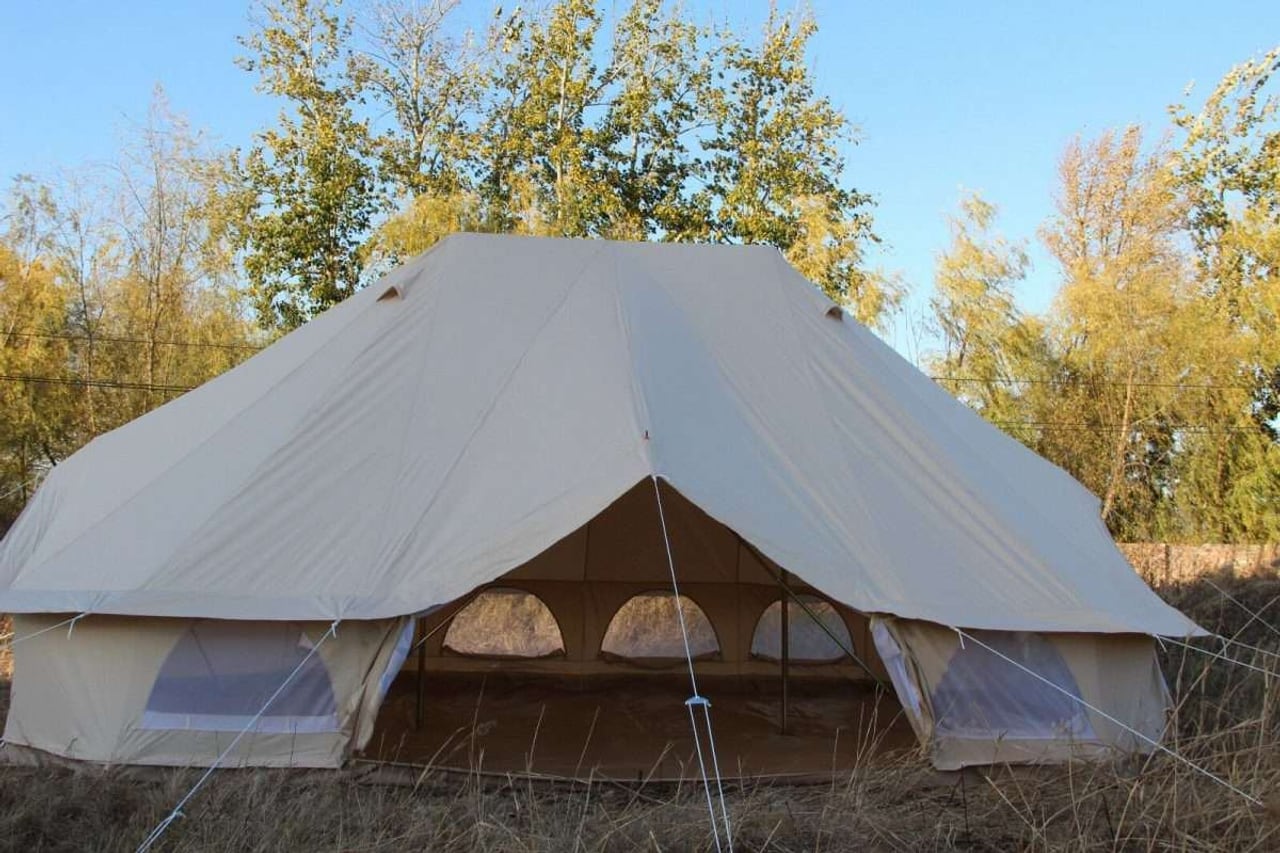
- Safari tents (from $1,200 to $1,385) work as hotel rooms in canvas, with standing height throughout, a veranda and a rear annexe that can take a bathroom.
- Swiss cottage tents ($530 to $780) have vertical walls and repeat well along a row, which is why larger resorts favour them.
- Yurts (priced on enquiry) have timber lattice walls and wool-blend liners, and suit cooler climates and longer seasons.
Step 5: Build the budget and the business case
List every cost per unit: tent, platform, bathroom, furniture, electrics, freight, duty, installation. Then add site-wide costs such as access tracks, utilities, a reception or communal tent, parking, staff space, insurance and marketing. Our glamping business plan guide walks through a worked payback calculation.
Be realistic about occupancy in your first season. Reviews, repeat guests and word of mouth take time to build, so plan for lower occupancy at first.
Step 6: Order tents to arrive with the decks, not before
Work backwards from your opening date. Standard catalogue units are usually quicker than a custom structure; confirm current lead times when you order. Add sea freight for your route, customs clearance and inland delivery, then a buffer.
Canvas should not sit in a damp container or barn for months. Plan for decks, drainage and utilities to be finished just before the tents arrive, so they go up within days of delivery. For five or ten units, a resort package gives you matched structures, deck interface drawings and one consolidated shipment.
Step 7: Install, test and open
Pitch one unit first and sleep in it. You will find the things the drawing could not tell you: the bed is in the morning sun, a guy line crosses the path, a zip faces the prevailing wind. Fix those before you pitch the rest.
New cotton canvas needs weathering. The threads swell when wet and close the needle holes, so wet the tent thoroughly and let it dry once or twice before the first guests arrive. Brief your housekeeping team on zip care, ventilation and what to do in high wind. When you are ready to talk numbers, send us your site plan through the contact page.
Step 8: Plan how the site will run day to day
Running a glamping site involves more housekeeping and maintenance than most owners expect. Each changeover means linen, cleaning, restocking, checking for damp, and opening the tent to air. Canvas rooms need a person on site who can tighten guy lines before a storm and close vents when rain is coming. Decide early who that person is and where they sleep.
Set aside space for back-of-house: a linen store, a tool and spares store, and somewhere for staff to sit out of the weather. A plain Staff Quarter Tent (priced on enquiry) is often enough at the start. Keep a spares kit on site with zips, guy lines, pegs and a canvas repair patch, so a small problem does not take a room out of sale for a week.
Questions buyers ask
How much money do I need to start a glamping business?
It depends far more on infrastructure and land than on tents. A small bell tent site on land you own with nearby utilities can start modestly; a safari camp with ensuite rooms is a building project. Cost every line before committing.
Do I need planning permission for glamping?
In most places, yes, for regular paid stays, though some jurisdictions allow limited temporary use. Ask your local planning authority before you buy anything.
How many tents should I start with?
Enough to cover fixed costs such as staff, utilities and marketing, which for many sites means at least five units. Starting with fewer is possible if the owner runs the site.
What is the easiest glamping tent to start with?
A 5 m cotton bell tent. Two people can pitch it, it needs no deck on firm level ground, and it can be struck and stored for winter.
How long does it take to open a glamping site?
Permissions are usually the longest part. Once approved, allow for manufacturing, freight, groundworks and a test pitch before your first bookings.