How long does a glamping tent last?
A glamping tent does not have a single lifespan, because its parts age at different rates. The canvas cover wears out first, mostly from sunlight, damp and wind, while a galvanised steel frame or timber yurt lattice usually outlasts several covers if maintained. How long a cover lasts depends on exposure: a cotton bell tent struck each winter and stored dry lasts far longer than the same tent left pitched year-round in strong tropical sun. Heavier cloth, good ventilation, regular cleaning and timely reproofing all extend it.
6 min read · Updated
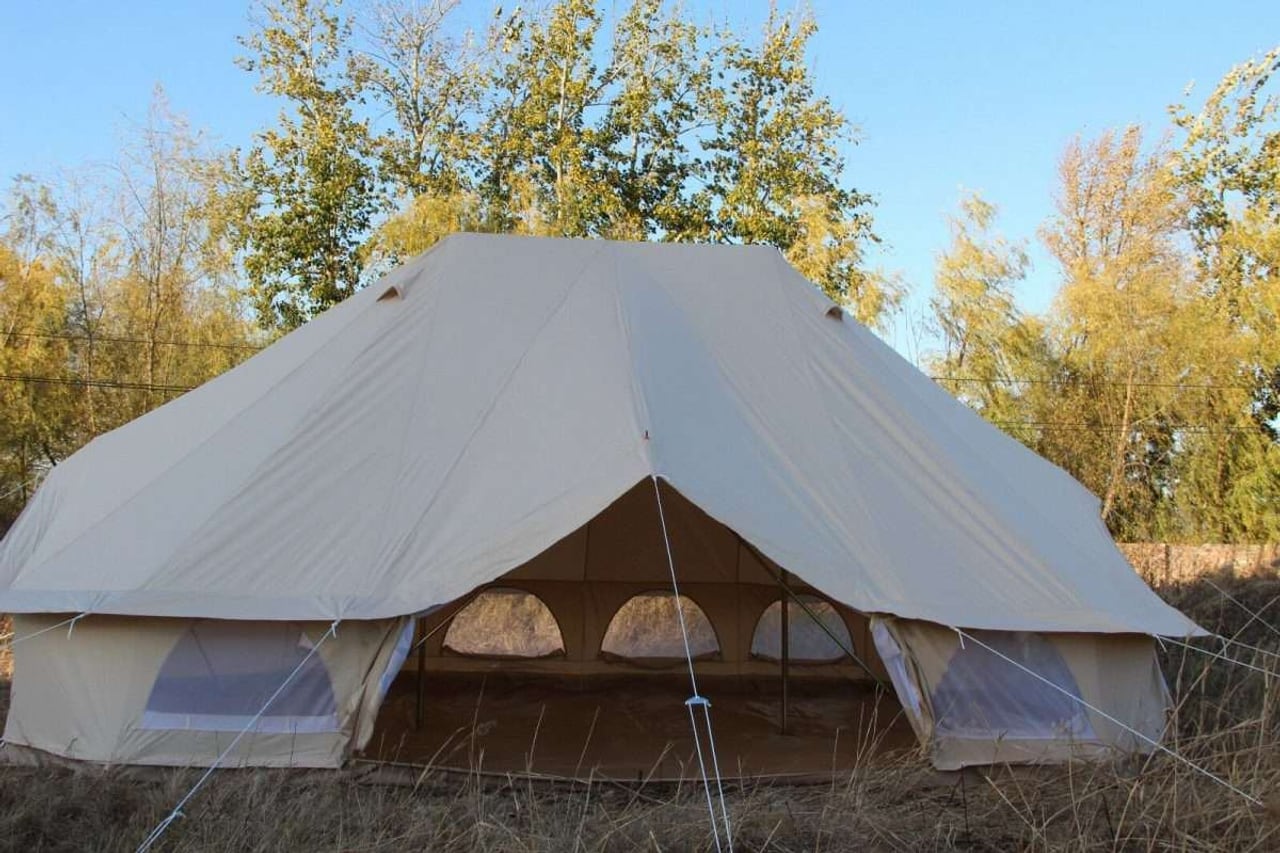
Which parts of a glamping tent wear out first
Plan for replacement component by component. On a framed safari tent or Swiss cottage, the galvanised steel frame is the long-life part; the canvas skin is the wear part, and zips, guy ropes and mesh panels are consumables. On a yurt, the seasoned hardwood lattice, rafters and crown can last many years if kept dry, while the canvas cover and liner need replacing more often. On a bell tent, the pole and hardware last longest and the canvas and groundsheet are replaced.
That is why we keep the pattern for every tent we make. A replacement cover cut to the original drawing fits the original frame, so a property can renew its rooms one by one without replacing whole structures.
| Component | Main causes of wear | Signs it is due |
|---|---|---|
| Canvas roof | UV, standing water, leaf litter, wind flogging | Thin or papery feel on the sunny side, fading, leaks that reproofing does not cure |
| Canvas walls | Damp at the base, grass contact, abrasion | Mould staining that has turned to rot, weak spots near the ground |
| Zips | Grit, forcing under tension, UV on the tape | Sliders that split the teeth, broken pulls |
| Guy ropes and straps | UV, chafe at runners and pegs | Fraying, stiffness, faded and brittle fibres |
| Groundsheet or floor tray | Abrasion, punctures, trapped moisture | Splits at corners, persistent damp patches |
| Frame | Corrosion at cut ends and joints, impact damage | Rust at joints, bent members, loose fixings |
How sunlight shortens canvas life
Ultraviolet light breaks down cotton and polyester fibres over time. A tent in a high-altitude desert, a tropical resort or a Mediterranean summer receives far more UV in a year than one in northern Europe, and its cover ages faster. The roof and the sun-facing walls go first; the shaded side of the same tent can look almost new.
Heavier cloth has more fibre to lose before it loses strength, which is one reason resort units use heavier canvas. Our bell tents start at 360 gsm treated cotton, the Yurt 20 FT uses 520 gsm, and the safari range uses 440 to 480 gsm ripstop poly-cotton. Mill-applied UV treatment helps, as does a separate roof shade or fly over the main canvas on very exposed sites.
Colour plays a part too. Lighter, natural canvas reflects more heat and shows dirt sooner, which encourages cleaning; darker cloth hides wear but runs hotter. Whatever the colour, the first sign of UV damage is usually fading on the roof, followed by a drier, papery hand. When you see both, check the tear strength by pressing a thumb firmly into an inconspicuous roof panel. Sound canvas resists; tired canvas feels as if it could give way.
Damp, mould and rot
Cotton is natural fibre, and if it stays wet it can grow mould and eventually rot. Mould on the surface is a cleaning problem. Rot is structural: the fibres lose strength and the canvas tears. The causes are almost always the same: a tent packed away damp, walls in long grass, leaves piling up on the roof, or a closed-up tent in humid weather with no airflow.
Our treated tent canvas carries a mill-applied rot and mould treatment that goes through the fibre, and poly-cotton is less prone to rot than pure cotton. Neither replaces airing the tent. Our guide to mildew- and rot-resistant canvas covers this in depth.
Seasonal versus year-round pitching
Time pitched matters as much as calendar age. A bell tent up for five summer months and stored dry over winter receives less than half the exposure of one left up all year. If your season allows, striking bell tents and tipis in the off-season is the cheapest way to extend their life.
Framed units and yurts are designed to stay up, but they still benefit from a quiet-season routine: clean the roof, check tension, open the tent to air on dry days and fix small damage before winter weather turns it into large damage. See our seasonal vs year-round glamping guide for the trade-offs.
Maintenance that makes canvas last longer
A few habits make most of the difference:
- Weather new cotton canvas before the first guests arrive, so the threads swell and seal the seams.
- Brush leaves and debris off roofs weekly in autumn, and never let water pool on a sagging panel.
- Keep grass cut short around the walls and keep the base of the walls off wet ground.
- Ventilate every day, including when the tent is empty.
- Clean with water and a soft brush. Avoid detergents, which strip water repellency.
- Reproof the roof when water stops beading, using a proofer suitable for the fabric.
- Keep zips clean and close them without strain, with the walls properly tensioned.
- Put a groundsheet under bell tents to take abrasion and ground damp.
Planning for replacement covers
Assume you will replace covers during the life of the business and plan for it. Put an annual amount into the budget, and order replacements before the old covers fail, ideally in your low season so a room is not out of action at peak time. Order a few spare zips, guy ropes and a repair kit with every original order; they are cheap at the time and hard to source in a hurry.
When you reorder, give us the original order details and we will cut to the same pattern and cloth. If your site has shown that a heavier canvas or a roof shade would help, that is the time to upgrade. Contact us through the contact page.
Questions buyers ask
How many years will a canvas bell tent last on a glamping site?
It depends heavily on UV exposure, how long it stays pitched each year and how it is cared for. A tent struck and stored dry each winter lasts much longer than one left up all year in strong sun.
Does poly-cotton last longer than cotton?
Generally poly-cotton resists rot and shrinkage better, and ripstop stops small tears spreading. Pure cotton breathes very well and is easier to repair.
Can I replace just the canvas on a safari tent?
Yes. Frames usually outlast covers, and we cut replacement covers to the original pattern so they fit the existing frame.
What shortens a tent’s life fastest?
Packing it away damp, and leaving it pitched in strong sun without maintenance.
Is it worth reproofing an old tent?
If the canvas is still strong, yes. If it tears easily or feels papery, reproofing will not restore strength, and a new cover is the better spend.
Does a tent last longer on a deck?
Usually, yes. A raised deck keeps the base of the walls out of wet grass and standing water, which is where cotton canvas most often starts to rot.