Exhibition tents for trade fairs and product launches
For a stand at a trade fair, a 3 × 3 m or 5 × 5 m pagoda with printed panels is the usual choice. For a product launch or a pavilion of your own, a clear-span hall in 3 m bays gives one branded room. Whatever you buy, organisers will ask for a fire-retardant certificate for the fabric, a ballast or anchoring plan and often structural information. Our pagodas and clear-span hall are priced on enquiry, to the size and cloth you need.
6 min read · Updated
Stand, pavilion or launch venue: which exhibition tent you need
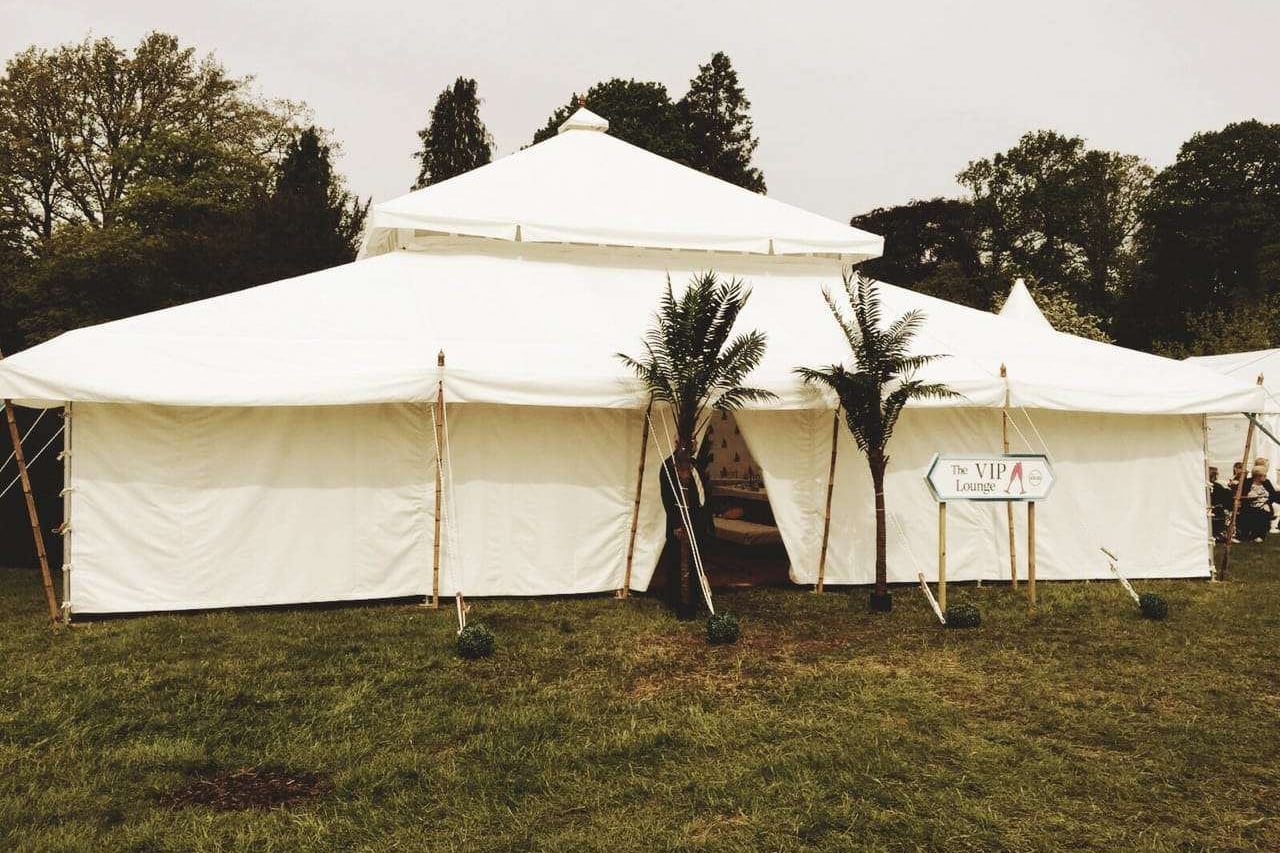
Exhibition tents get bought for three quite different briefs, and the right structure depends on which one you have. The first is a stand inside someone else’s show: an outdoor trade fair, an agricultural show, a festival village. The organiser sets the plot size and the rules, and you need something quick to build and easy to brand.
The second is a standalone pavilion: hospitality for clients beside a sporting event, a sponsor’s lounge, a demonstration space. The third is a launch venue, a temporary room that is the event, for a car, a property development or a product. Pavilions and launch venues need a single large room with walls, doors, flooring and power, which is where clear-span halls take over from pagodas.
Pagoda exhibition stands: sizes and layouts
Our Pagoda Exhibition Tent 3 × 3 matches the standard stand footprint at most Indian exhibition venues and many outdoor shows abroad. It has an anodised aluminium frame, a 2.4 m eave, a 4.0 m peak and 550 gsm PVC-coated polyester panels with fire-retardant certification. Two people build it in about twenty minutes. Price on enquiry.
The 5 × 5 m pagoda suits a full stand or a hospitality bay, with a heavier frame and a 5.0 m peak that is visible across a show ground. Price on enquiry. Both link flush to their neighbours, so a corner or island stand can be built from several units.
- Inline stand: one 3 × 3 m unit with a printed back wall and side walls, open to the aisle.
- Corner stand: one or two units with the back and one side closed, open on two aisles.
- Island stand: a 5 × 5 m unit, or a cluster of linked units, open on all sides with a counter.
- Hospitality bay: a 5 × 5 m unit with half walls, flooring and seating behind the stand.
Clear-span halls for launches and pavilions
The Exhibition Clear-Span Hall is 10 m wide with no internal supports, built from box-section aluminium in 3 m bays, with a 2.6 m eave and a 4.8 m ridge. The base size is 10 × 15 m and it extends indefinitely in further bays. The cover is 650 gsm FR-certified PVC-coated polyester, with hard walls and glazed doors as options. An installation crew and drawing are included; it is priced on enquiry.
At 150 m², the base hall holds roughly 190-250 people standing or in theatre rows, using the industry rule of thumb of 0.6-0.8 m² a head. That is a starting figure; your local fire and egress rules set the real capacity. For a vehicle launch, check the flooring as well as the tent: a car on a lawn needs a load-bearing floor and a route in. The clear-span tents guide explains the structure in more detail.
What trade fair organisers ask for: certificates and ballast
Show organisers and venue safety officers ask for paperwork before the build. Have it ready, because a stand that cannot show a fabric certificate may not be allowed to open.
- Fabric fire certificate: we supply one for our exhibition range. Which standard the organiser expects varies by country, for example NFPA 701 in much of the US or an EN 13501-1 classification in parts of Europe, so ask which one and check our certificate against it.
- Anchoring plan: stakes are rarely allowed on asphalt, paving or indoor floors, so you will need ballast calculated for the structure and the site.
- Maximum build height: indoor halls and some outdoor shows cap stand height. A 5.0 m peak can exceed it, so check before you order.
- Structural or wind information: larger structures may need calculations from the supplier and an agreed wind speed at which the tent is cleared.
- Electrical and insurance: lighting and power usually have to be installed or certified by the organiser’s contractor, and public liability cover is commonly required.
Printing your logo on exhibition tent panels
Both our pagodas have roof and wall panels that can be printed to your artwork. Supply vector logos and ask for a print proof at actual size; a design that reads well on a laptop can disappear on a 5 m peak seen from forty metres away. Large type, strong contrast and one clear message work best on canvas that people walk past.
Print the walls and keep the roof in a plain colour if your branding changes often. Wall panels are cheaper to replace than a roof, and a plain roof suits every future campaign. Printed PVC holds its colour well, but long seasons in strong sun will soften any print over time, so plan replacement panels into a multi-year budget.
Wind and ballast at outdoor shows
Pagodas are light, which is why they go up quickly and why they move in a gust if they are not held down. On hardstanding, every leg needs ballast calculated for the structure, the wall configuration and the site’s exposure; a closed wall catches much more wind than an open side. Ask us for the ballast figure for your configuration. Organisers usually set a wind speed at which stands are closed and cleared, and you should know it before the show opens. Our guide to wind-rated tents and guying covers the principles.
Transport, storage and making the stand last
The 3 × 3 m pagoda weighs 62 kg and the 5 × 5 m 118 kg, so both travel in a van with room for the counter and the brochures. The clear-span hall weighs 640 kg in its base size and needs a truck. Anodised aluminium does not rust, and PVC wipes clean, but never pack panels wet: water trapped in a folded bag marks the print and breeds mould. Dry, fold and bag every panel, and keep a spare leg and a set of fixings in the kit.
If you exhibit at more than a handful of shows a year, owning your own stand usually beats hiring; our guide to buying vs renting event tents shows how to work it out. Browse the exhibition tents range or send your show calendar through the contact page for a quote with freight.
Questions buyers ask
What size is a standard exhibition tent?
A 3 × 3 m pagoda is the standard stand footprint at most Indian exhibition venues and many outdoor shows. A 5 × 5 m unit suits a full stand or hospitality bay.
Can we print our logo on the tent?
Yes. The roof and wall panels on our pagodas are printable to your artwork. Ask for a full-size proof before production.
Do exhibition tents need a fire certificate?
Most organisers and venues ask for one. Our exhibition range is FR-certified and supplied with the certificate; confirm which standard your organiser requires.
How many people fit in a 10 × 15 m clear-span hall?
Roughly 190-250 standing or in theatre rows by the usual rule of thumb of 0.6-0.8 m² per person. The local fire authority sets the actual capacity.
Can a pagoda tent be used indoors?
Yes, with ballast instead of stakes. Check the hall’s maximum build height, since our pagodas peak at 4.0 m and 5.0 m.