Cotton vs poly-cotton vs PVC tent fabric: which should you specify?
Treated cotton canvas breathes, stays cool and quiet, and keeps rain out by swelling, but it is heavy and must be dried before storage. Poly-cotton keeps most of that comfort while adding strength, rot resistance and dimensional stability, which is why it suits framed glamping tents. PVC-coated polyester is completely waterproof and wipe-clean but does not breathe, so it belongs on exhibition halls, storage shelters, medical tents and tarpaulins rather than sleeping tents.
6 min read · Updated
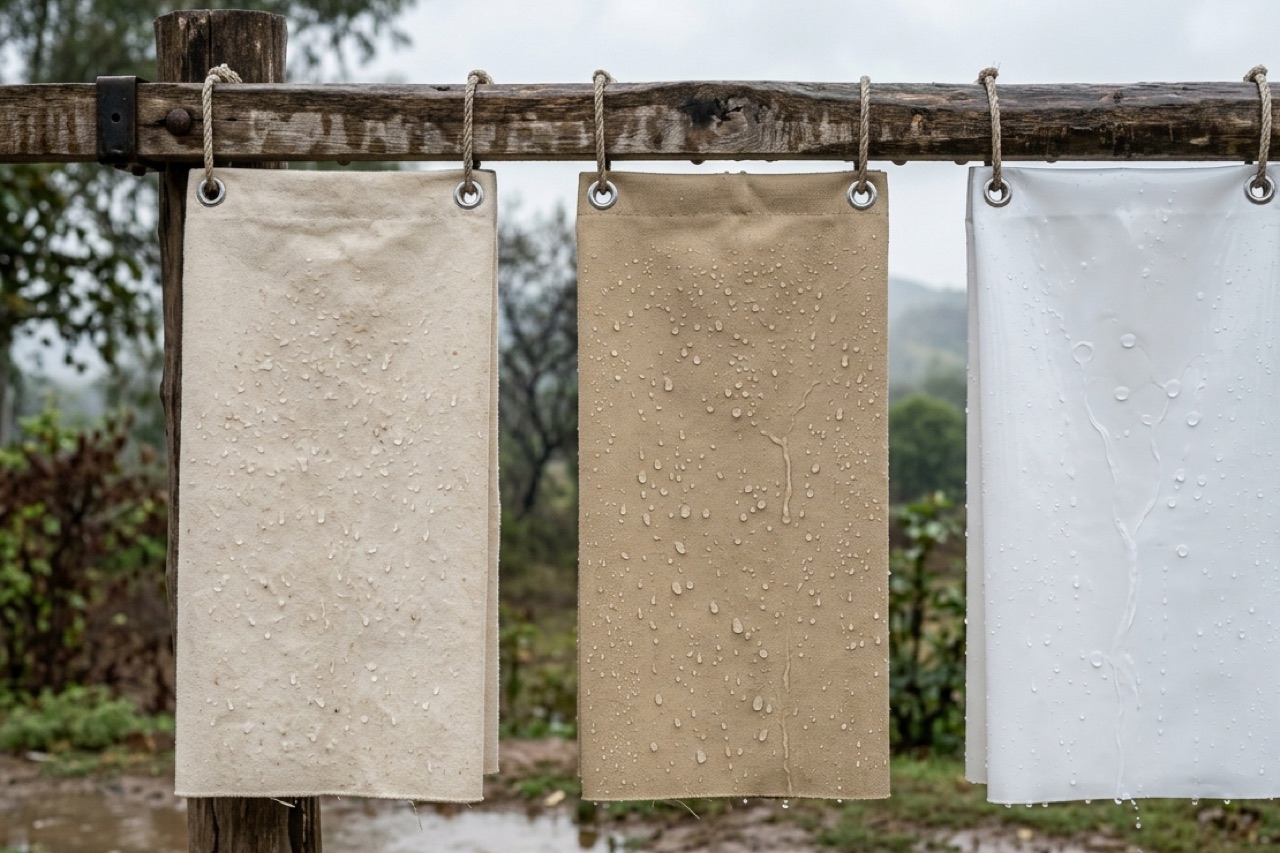
The three fabrics in brief
Treated cotton canvas is a tightly woven all-cotton cloth with a rot, mould, UV and water-repellent finish applied at the mill. Ours runs from 360 to 520 gsm and is used on bell tents, tipis, yurts and medieval pavilions.
Poly-cotton blends polyester and cotton in the yarn. The polyester adds strength and resists rot; the cotton keeps the hand, breathability and swelling behaviour of canvas. We weave ours with a ripstop grid at 440 to 480 gsm for safari suites, Swiss cottages and marquee roofs.
PVC-coated polyester is a woven or knitted polyester base cloth coated on both faces with PVC. It is a different family of material, a sealed membrane that does not breathe. We use it at 550 to 900 gsm on exhibition tents, storage shelters, medical tents and tarpaulins.
Side-by-side comparison
These are general characteristics of each fabric family, assuming a good-quality, properly treated cloth of the weights we use.
| Treated cotton | Poly-cotton | PVC-coated polyester | |
|---|---|---|---|
| Breathability | High | High | None |
| Condensation inside | Low | Low | High unless ventilated |
| How it keeps water out | Fibres swell and close the weave | Swelling plus finish | Impermeable coating |
| Needs weathering | Yes | Usually less | No |
| Strength for weight | Moderate | High | High |
| Rot risk | Present if left wet; reduced by treatment | Low | Base cloth does not rot |
| Shrink and stretch | Shrinks when wet, relaxes when dry | Stable | Very stable |
| Seams | Sewn; needle holes swell shut | Sewn | Welded (RF or hot air) |
| Temperature inside in sun | Coolest | Cool | Hot without liner or fly |
| Weight | Heavy | Heavy | Heavy |
| Price (per metre) | On enquiry | On enquiry | Quoted per job |
Water: three different ways of staying dry
Cotton keeps rain out mechanically. When the cloth first gets wet, the fibres swell and close the gaps in the weave, including around every needle hole. That is why a new cotton tent should be wetted and dried once or twice before it is trusted, a process explained in why a new canvas tent leaks. Our treated cotton is rated around 1,500 mm hydrostatic head, which in practice keeps out sustained rain on a properly tensioned tent.
Poly-cotton swells less, because only part of the fibre is cotton, so it leans more on its water-repellent finish. It is also more dimensionally stable, which matters on a framed tent: walls that shrink tight in the rain and sag in the sun put cyclic load on zips and frame joints.
PVC lets no water through at all. Welded seams make the whole roof one sealed sheet. The trade-off is that moisture from people breathing, cooking or showering stays inside too.
Comfort: breathability, heat and noise
For anything people sleep in, breathability is the deciding factor. A canvas tent passes water vapour out through the cloth, so the inside of the roof stays dry on a cold morning. A PVC tent with the same number of guests will drip condensation unless it has generous high and low vents and, ideally, a liner. Cotton and poly-cotton also absorb sound, so rain is a soft hiss rather than a drum, and they block more radiant heat than a thin coated sheet.
Strength, rot and lifespan
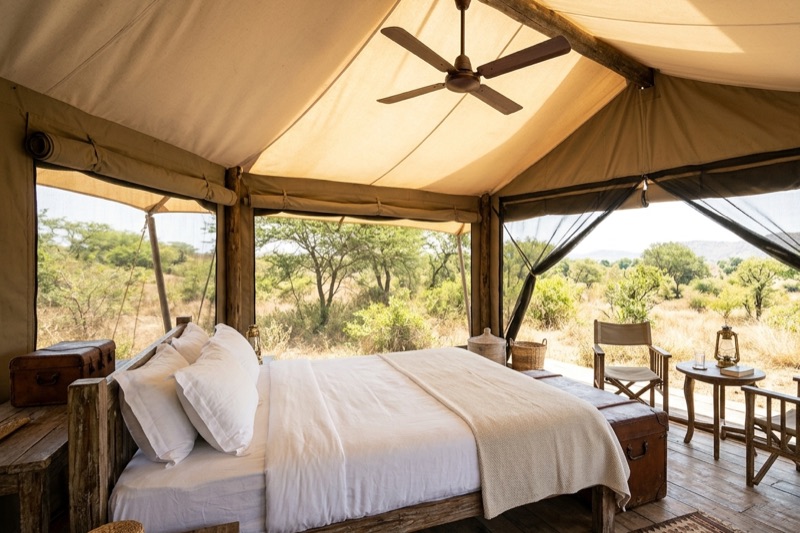
All-cotton canvas is the weakest of the three for its weight, and the only one that can rot. Mill-applied treatment slows that dramatically, but a cotton tent packed away wet will still mildew and eventually lose strength; see mildew- and rot-resistant canvas for how to specify against it. Poly-cotton is far more tolerant of damp, which is why we use it on safari and Swiss cottage structures that stay pitched through monsoon seasons.
PVC-coated polyester is strong, resists rot entirely and cleans with a wipe. Its weak points are different: UV and heat slowly drive plasticiser out of the coating, and over years it stiffens and can crack at folds, especially in cold weather. Good PVC includes UV stabilisers and a stated cold-crack temperature.
Which fabric goes on which tent
Single-pole and traditional tents, where breathability and the look of natural canvas matter most, use treated cotton: the 5M Bell Tent, tipis, yurts and medieval pavilions. Framed hospitality tents that stand for years use poly-cotton: the Safari Suite Tent and the Swiss cottage line. Structures where nobody sleeps, or where hygiene and total weatherproofing come first, use PVC: the Exhibition Clear-Span Hall, the Military Storage Shelter and the Medical Post Tent.
Groundsheets are the common exception. Even our cotton bell tents use a zip-in 540 or 610 gsm PVC groundsheet, because the floor is the one surface where breathability is a disadvantage.
Mixed constructions are common and sensible. A cotton or poly-cotton tent with a PVC sod cloth along the bottom of the walls gets breathability where people live and a rot-proof, wipe-clean strip where canvas would otherwise sit on wet ground. Military and relief tents often use the same logic.
Questions to ask a supplier
Whichever fabric you choose, ask for the finished gsm, the blend ratio for poly-cotton, the water column to ISO 811 per lot, tensile and tear figures, and what the rot, mould and UV treatment is and where it is applied. For PVC, ask for the base cloth weight, coating weight, UV stabiliser and cold-crack rating. If the structure is going into a public venue, ask for the fire certificate before anything else. We can supply data sheets for every cloth we use; ask for them here, or start a specification in the custom tent configurator.
Questions buyers ask
Is poly-cotton better than cotton canvas for a tent?
For framed tents that stay pitched for long periods, usually yes: it is stronger, more stable and more resistant to rot. For bell tents and tipis, treated cotton is still the traditional and very capable choice.
Why not make glamping tents from PVC?
PVC does not breathe, so condensation forms inside and the tent heats up in sun. It works well for halls, stores and medical shelters where ventilation and air handling are designed in.
Does poly-cotton need weathering like cotton?
It benefits from a wetting before first use but swells less than all-cotton, so it relies more on its water-repellent finish. Expect less seepage on first rain than with all-cotton canvas.
Which tent fabric lasts longest?
In damp climates, poly-cotton and PVC outlast untreated cotton because they do not rot. Lifespan depends more on UV exposure, how the tent is stored, and whether it is pitched year-round than on fabric alone.
Can PVC tent fabric be repaired?
Yes, by hot-air welding or bonding a patch of the same material, which makes a fully waterproof repair. Cotton and poly-cotton are repaired by sewing a patch and treating it.