Hydrostatic head and tent waterproofing explained
Hydrostatic head is the height of a column of water, in millimetres, that a fabric holds back before water is forced through it, measured to ISO 811. Treated cotton canvas is typically around 1,500 mm, coated polyester flysheets around 3,000 mm, and floors 5,000 to 10,000 mm because kneeling and sitting press water through. The figure measures the cloth only: seams, tension, pitch, condensation and age decide whether the tent stays dry.
6 min read · Updated
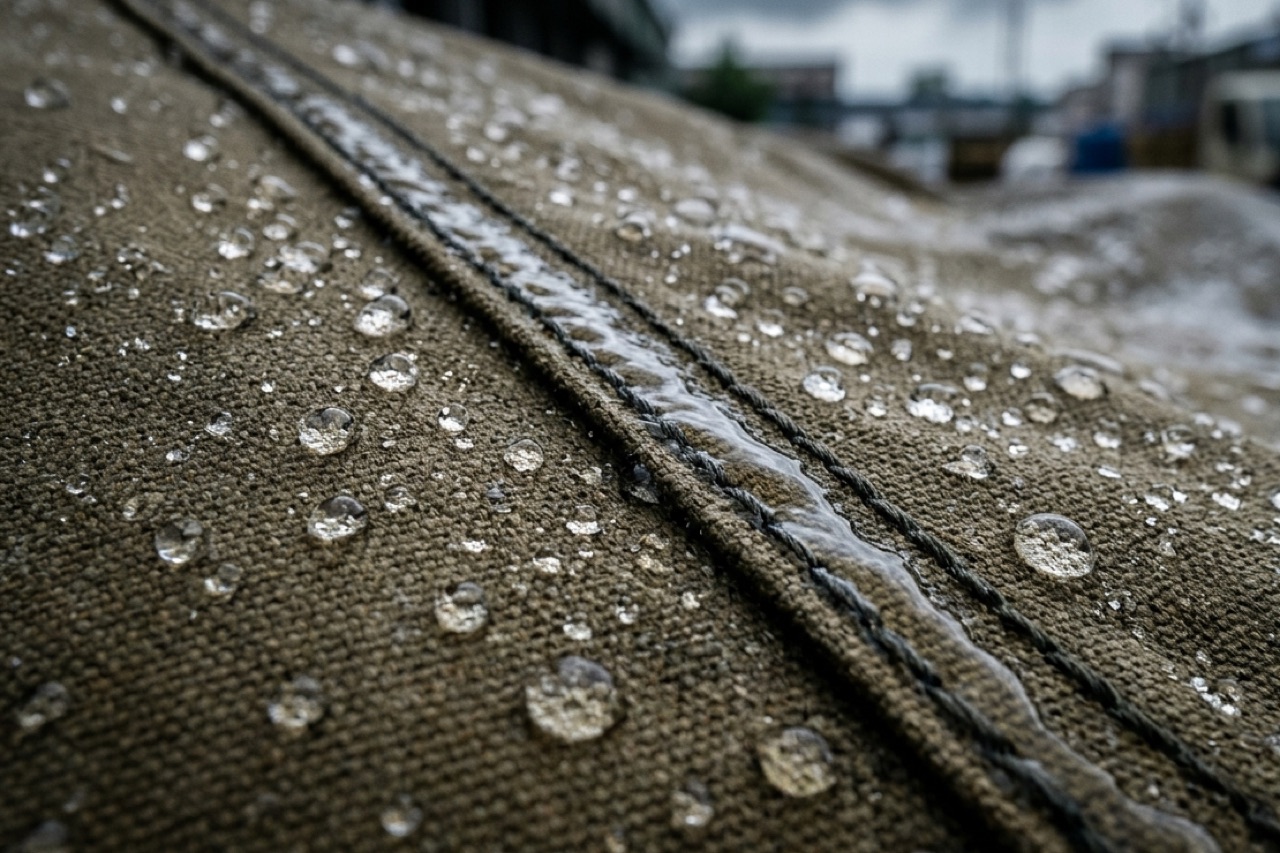
What hydrostatic head means
Imagine a tall tube clamped over a piece of fabric, filled slowly with water. The deeper the water, the more pressure it puts on the cloth. The hydrostatic head, or water column, is the depth at which water starts to come through the other side. A rating of 1,500 mm means the fabric resisted the pressure of a 1.5 metre column of water before it leaked.
In the laboratory this is done with a machine rather than a literal tube, raising water pressure under a clamped sample at a fixed rate. Under ISO 811 (also published as EN 20811), the result is the pressure at which water has appeared at three separate points on the sample. Because the rate of pressure increase affects the result, a test report should state it; ask for the report rather than a bare number.
Typical water column figures and what they are for
These are the figures we work to and publish on our quality assurance page. Each suits a different material and job, so a higher figure is not automatically better.
| Material | Water column | Where we use it |
|---|---|---|
| Treated cotton canvas | About 1,500 mm | Bell tents, tipis, yurts, pavilions |
| Coated polyester fly | 3,000 to 4,000 mm | Family tents and domes |
| Expedition silicone-PU nylon | 5,000 mm and up | Expedition shells in wind-driven rain |
| PE or nylon tent floors | 10,000 mm | Bathtub floors on family and expedition tents |
| Welded PVC or TPU | No water path at all | Groundsheets, dry bags, PVC tarpaulins |
Why a 1,500 mm cotton tent can be drier than a 3,000 mm polyester one
Buyers comparing a 5M Bell Tent with a coated polyester family tent sometimes assume the higher number wins. In real rain, often it does not. Rain falling on a tensioned, sloping roof puts very little pressure on the cloth; it runs off. Both fabrics are well above what ordinary rain demands of a pitched roof.
What makes people wet inside a tent is usually something else. Cotton swells when it gets wet, closing the weave and the stitch holes, so the seams become as watertight as the panels. A coated fabric depends on tape over every seam, and tape can lift. Cotton also breathes, so the moisture from sleeping guests passes out through the roof; a coated tent traps it, and it condenses and drips. Many polyester tents reported as "leaking" have a condensation problem.
Why floors need much higher figures
A roof sheds water. A floor has water pushed into it. A person kneeling on a wet groundsheet concentrates their weight onto a small area, and that pressure is far higher than anything rain applies to a roof. That is why tent floors are rated in the thousands: our family and expedition tents have 10,000 mm bathtub floors, and our bell tents use 540 or 610 gsm PVC groundsheets that have no water path at all. A bathtub floor, with the waterproof material turned up the walls, matters as much as the rating; a flat sheet lets surface water flow straight in at the edge.
Water repellency is a different measurement
Hydrostatic head measures resistance to water under pressure. Water repellency measures whether water beads and rolls off the surface or soaks in, and it is tested by spraying the fabric and grading the wetted pattern (ISO 4920). A canvas can have a good water column and poor repellency, in which case the surface "wets out", gets heavy and cold, and dries slowly even if no water comes through.
Repellency is the property that fades first in service, from UV, dirt and abrasion. Restoring it is the job of a reproofing treatment, covered in how to re-waterproof canvas. The water column of a good canvas changes far more slowly.
A simple field check works on any tent. Flick a few drops of water onto a dry, clean area of the roof. If they sit as beads and roll off, the finish is doing its job. If they spread and darken the cloth within a few seconds, the surface is wetting out and it is time to clean and reproof, even if the tent is not yet leaking. Test the sun-facing side of the roof first, because that is where the finish goes soonest.
What keeps a canvas tent dry in rain
None of these appear on a fabric data sheet, and each of them does more for a dry interior than an extra 500 mm of water column.
- Keep the roof taut. A taut roof sheds water; a slack panel forms a pocket, and pooled water drives through any fabric eventually. Our framed tents have the fall cut into the pattern for this reason.
- Weather the tent. New cotton must be soaked and dried at least once so the fibres swell around the stitching.
- Avoid contact. Touching the inside of a wet canvas wall breaks the surface tension and draws water through. Keep beds and bags off the walls.
- Keep the cloth clean. Dirt, leaf litter and bird droppings hold water against the canvas and wick it through.
- Ventilate. Open vents reduce condensation, which is the most common cause of wet interiors.
How to read a supplier’s waterproof claims
Treat "100% waterproof" without a number as marketing. Ask for the ISO 811 figure, the test rate, and whether it was measured on new fabric or after ageing. Ask how seams are made: welded, taped, or sewn in a swelling cloth. On cotton, ask whether the water-repellent finish is mill-applied. We test the water column on every fabric lot and can send the report with an order. If you are specifying for a wet climate, read our guide to tents for tropical and monsoon climates, or ask us directly.

Questions buyers ask
What hydrostatic head is waterproof?
There is no single legal threshold. As a rule of thumb, around 1,500 mm is enough for a tensioned roof in ordinary rain, 3,000 mm is a common three-season fly figure, and floors need far more.
Is 1,500 mm enough for a canvas tent?
For treated cotton, yes, provided the tent has been weathered and is pitched taut. Cotton’s swelling seams and breathability make it perform better than the number alone suggests.
Does hydrostatic head decrease over time?
Yes. UV, abrasion, repeated folding and dirt all reduce it, and coated fabrics lose performance as the coating ages. Repellency fades sooner and can be restored with reproofing.
Why is my tent wet inside if the fabric is waterproof?
Usually condensation, contact with the walls, a slack panel holding water, or water entering at the floor edge. Check ventilation and pitch before blaming the fabric.
What standard is used to test hydrostatic head?
ISO 811, also published as EN 20811. A proper report states the rate of pressure increase and the reading at which water appeared at three points.