Air conditioning and heating in glamping tents
Yes, you can air-condition a glamping tent, and a ductless split unit is the usual choice for framed safari and Swiss cottage tents. Canvas gains and loses heat far faster than a building, so cut the load first with a double-skin roof, shade and liners, then size equipment from a proper heat-load calculation. Heating follows the same logic: a reverse-cycle split, electric radiators or a correctly flued wood stove. Installation must be by licensed local HVAC technicians and electricians to local codes.
6 min read · Updated
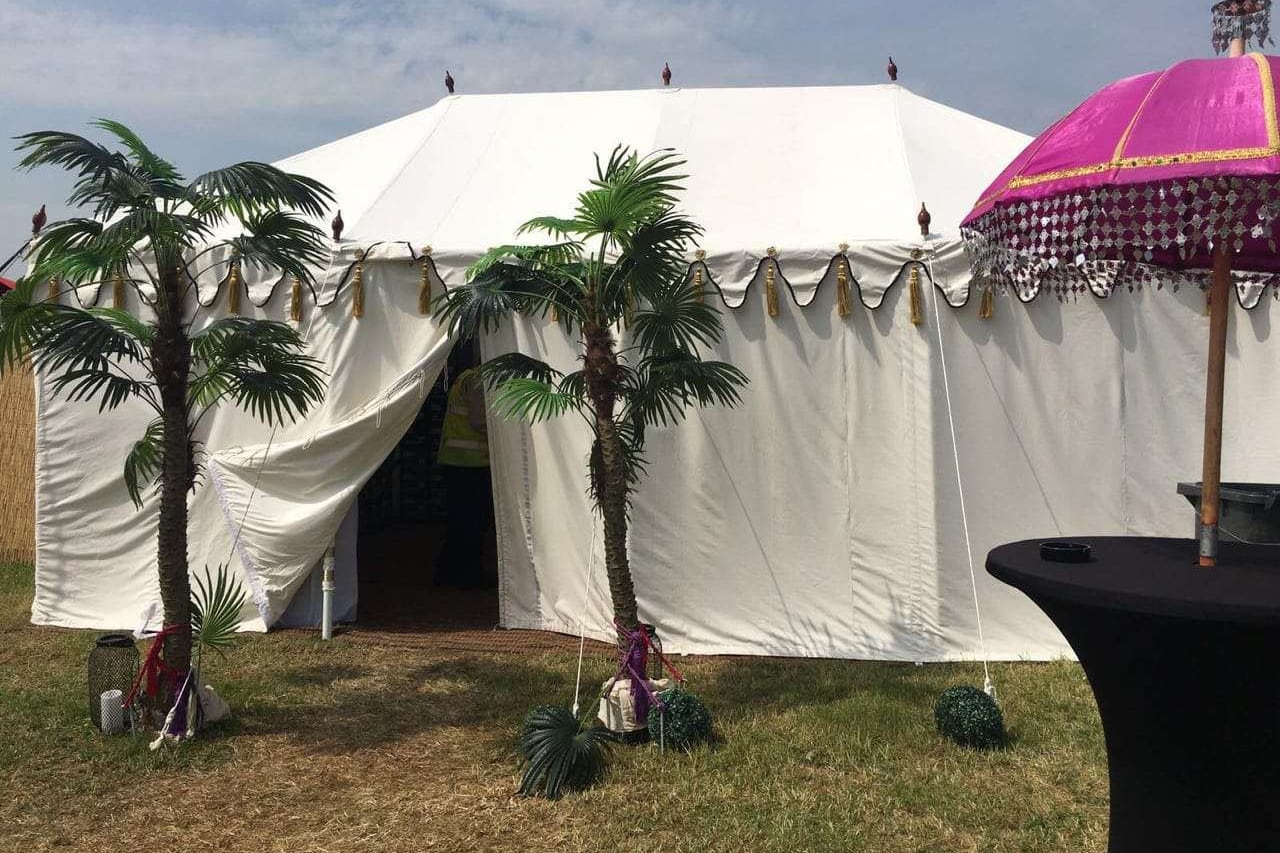
Why canvas is hard to heat and cool
A canvas wall is a few hundred grams of cloth per square metre. It has almost no thermal mass and very little insulating value, so the inside temperature follows the outside quickly. In sun, the roof absorbs heat and radiates it straight down onto the bed. At night the opposite happens and the warmth you paid to create leaks out through the fabric.
Air leakage makes it worse. Zips, eaves, mesh windows and the gap at the floor all let conditioned air escape. The result is that a tent needs considerably more cooling or heating capacity than a hotel room of the same floor area, and that every measure which reduces heat gain saves money on equipment and electricity for the life of the site.
Cut the load before you buy equipment
Keeping heat out costs less than buying the capacity to remove it. On hot sites, start with these measures.
- Fit a double roof, a fly or second skin over the roof with an air gap between the two. Our Luxury Safari Tent has a double-skin roof and a blackout roof liner for this reason.
- Shade the roof and west wall with trees, a pergola or a shade sail. Shading the cloth works better than insulating behind it.
- Orient the tent to keep the largest wall and the door out of the afternoon sun. Our guide to glamping site layout covers this per plot.
- Ventilate at night: roll the walls up or open mesh panels after sunset to purge stored heat, then close up before the unit starts.
- In cold climates, an insulating inner liner and a rug-covered floor make heating practical. Yurts with a wool-blend liner hold heat far better than single-skin pole tents.
Cooling options for a glamping tent compared
Which system is right depends mainly on humidity and on how sealed the tent can be made.
| Option | Works best | Strengths | Watch for |
|---|---|---|---|
| Ceiling or pedestal fan | Everywhere, as a first step | Cheap, quiet, low power; works with walls open | Moves air, does not lower air temperature |
| Evaporative cooler | Hot, dry climates only | Low running cost; works with some ventilation | Adds humidity; little use in tropical or monsoon weather |
| Ductless split air conditioner | Framed tents that can be closed up | Quiet indoor unit; condenser outside; can also heat | Needs a sealed pipe entry and a licensed installer |
| Portable air conditioner | Short-term or trial use | No fixed installation | Noisy, less efficient, hot exhaust hose through the canvas |
Installing a split air conditioner in a canvas tent
Split systems are the standard for safari and Swiss cottage keys because the noisy compressor sits outside. The outdoor unit goes on its own pad or bracket at ground level beside the deck, not on the deck itself, so vibration does not travel into the tent. The indoor unit needs a rigid mount: a timber panel fixed to the frame, a partition wall, or a floor-standing console. Never hang it from the canvas.
Refrigerant pipes, the power cable and the condensate drain come through one defined entry, either a sleeve through the deck or a reinforced port sewn into the wall at the factory. Tell us the position when you order and we will build it in. Route the condensate drain well away from canvas and timber.
Refrigerant handling is regulated in most countries, so the installation must be done by a licensed refrigeration or HVAC technician, with the electrical supply on its own circuit installed by a licensed electrician. Ask the installer for a heat-load calculation that accounts for canvas walls, solar gain on the roof and air leakage; sizing from floor area alone will leave guests warm.
Heating a tented room
A reverse-cycle split unit heats as well as cools, which makes it the simplest choice where you already need cooling. Oil-filled electric radiators are safe, silent and easy to move, though they need a decent supply. In cold, off-grid sites a wood stove with a proper stove jack and flue is the traditional answer and a very good one; read our guide to using a wood stove in a canvas tent safely first.
We advise against unflued gas or paraffin heaters in sleeping tents. They put carbon monoxide and a lot of water vapour into a small space. Any tent with a combustion heater should have a carbon monoxide alarm, and your local fire authority may have rules of its own.
Heat is wasted without insulation. Liners, rugs over an insulated floor and well-fitting doors do more for comfort than a bigger heater. See how to insulate a canvas tent for winter.
Running costs and controls for tent air conditioning
The biggest waste in an air-conditioned tent is a guest who leaves the door unzipped with the unit running. Simple controls help: a thermostat with a sensible default, a door switch or key-card interlock that drops the unit to standby when the tent is open or empty, and a housekeeping routine that closes the room up and sets it to pre-cool an hour before arrival instead of running all afternoon.
Dust is hard on outdoor equipment. Clean filters more often than the manufacturer suggests for an indoor installation, keep vegetation clear of the condenser, and have the system serviced before each hot season. Budget the electricity honestly in your business plan; on many sites, cooling is the largest single running cost per key.
Which tents are easiest to heat and cool
Framed tents are the natural home for air conditioning: vertical walls to mount an indoor unit, a frame to fix it to, and doors that close properly. The Swiss Cottage 12 × 24 and the safari range are what most hot-climate resorts specify. Yurts, with their timber lattice and insulating liner, are the easiest to heat. Bell tents and tipis suit fans, radiators and stoves well, but a split unit is awkward without a frame or a straight wall.
Questions buyers ask
Can you put air conditioning in a bell tent?
It is possible with a floor-standing unit and a sealed entry, but it is awkward and inefficient. Bell tents are better served by shade, fans and good ventilation; choose a framed tent if AC is essential.
What size air conditioner does a safari tent need?
There is no reliable figure from floor area alone because canvas behaves so differently from a wall. Ask a licensed HVAC installer for a heat-load calculation based on your climate, shading and the tent specification.
Will air conditioning damage the canvas?
Not if the condensate drain is routed away and the unit is mounted on the frame rather than the fabric. Running AC with the doors closed also keeps humidity down inside, which suits the cloth.
Do evaporative coolers work in glamping tents?
In hot, dry climates they work well and cost little to run. In humid or monsoon conditions they add moisture without much cooling.
Is it safe to use a gas heater in a tent?
Flued appliances installed to local rules can be; unflued gas or paraffin heaters in a sleeping tent are not something we recommend. Fit a carbon monoxide alarm with any combustion heater.