Winterised relief tents: what changes for cold climates
A winterised relief tent adds an insulating liner, a stronger frame rated for snow, a protected stove port and better floor insulation to the standard family tent. It keeps a household alive and reasonably warm through a freezing winter where a standard tent would not. The tent is only part of the answer: heating, fuel, bedding and floor insulation must be planned together, and stoves must be used safely.
6 min read · Updated
Why a standard family tent is not enough in winter
A standard double-fly family tent is designed to shed rain and moderate heat. In sustained sub-zero temperatures it loses heat quickly through the walls and, above all, through the ground. Snow accumulating on a roof designed for rain can bend poles and tear fabric. Without a safe way to vent a stove, families improvise heating inside the tent, which brings fire and carbon monoxide risk.
Winterisation deals with each of these failures through a combination of tent, insulation, heating and bedding. It costs more per household, and in cold regions the alternative costs far more in human terms.
Timing matters as much as specification. Winter tents, stoves and fuel have to be in place before the first hard frost, which in mountain regions can arrive weeks earlier than in the valleys below. Orders placed when the snow starts are usually too late. Agencies that know a winter is coming plan procurement in late summer, with fabric and frames ordered early because they take the longest to produce.
What a winterised tent adds
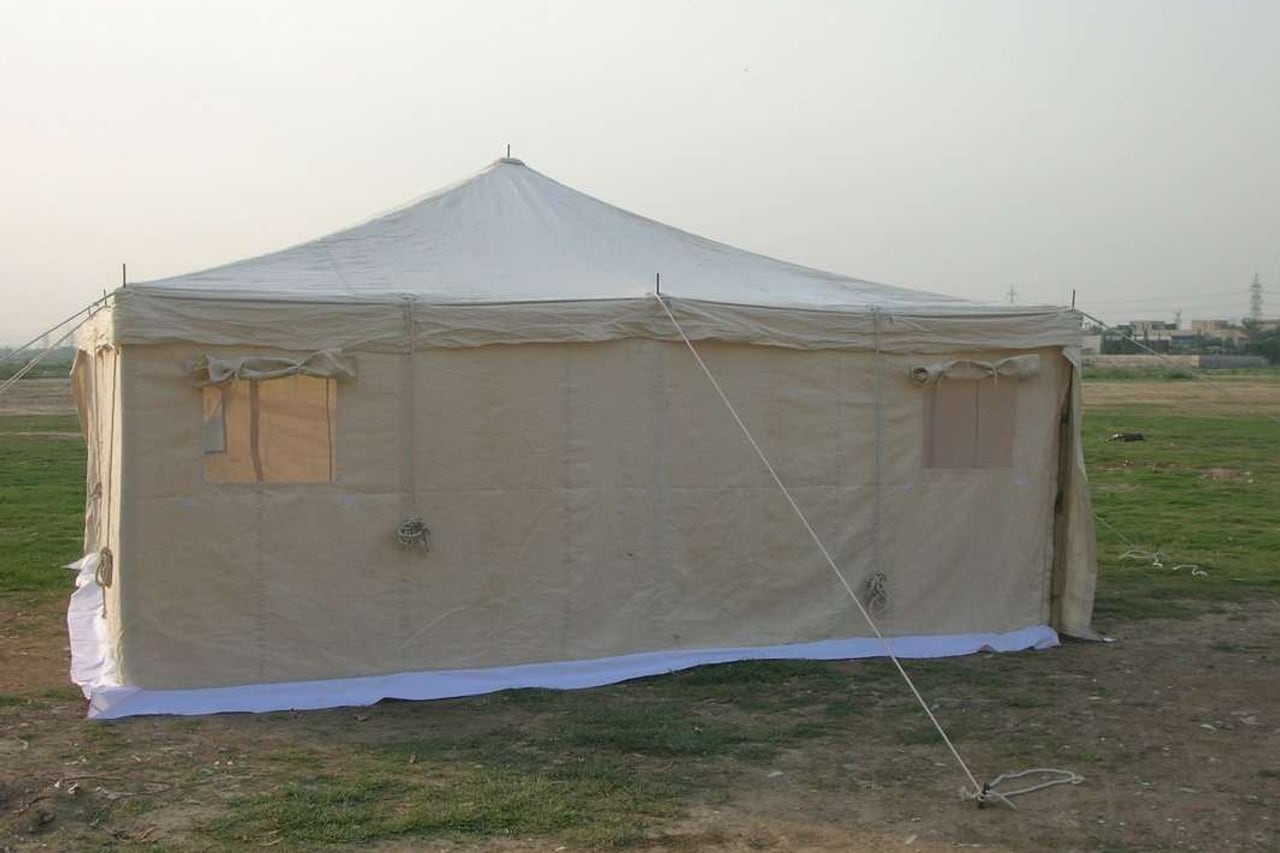
Our Winterised Relief Tent is our family shelter rebuilt for cold: 420 gsm cotton-polyester canvas, a quilted insulating liner, a snow-rated galvanised frame and a flued stove port with a heat-shield collar.
| Feature | Family Relief Tent | Winterised Relief Tent |
|---|---|---|
| Outer fabric | 380 gsm cotton-polyester canvas | 420 gsm cotton-polyester canvas |
| Insulation | Air gap of the double fly | Quilted insulating liner |
| Frame | Galvanised steel pole set | Snow-rated galvanised frame |
| Heating | Not designed for a stove unless specified | Flued stove port with heat-shield collar |
| Price, ex works | On enquiry | On enquiry |
Insulating the walls, roof and floor of a relief tent
Heat leaves a tent through every surface, but the ground is the one people underestimate. Frozen soil draws heat out of bodies and bedding all night. An insulated floor, whether a closed-cell mat layer, a raised platform or a thick groundsheet over a dry base, often does more for comfort than extra wall insulation.
Liners work by trapping still air. They only work while dry, so ventilation is still needed in winter. Condensation from breathing, cooking and drying clothes collects on cold surfaces; a liner that becomes wet loses much of its value. High and low vents, opened a little even in cold weather, keep moisture moving out.
The double fly helps here too. An air gap between outer and inner layers acts as insulation in its own right and gives condensation somewhere to form other than on the occupants. Keep the fly taut so the layers do not touch; where they touch, cold and damp pass straight through.
For the fuller technical picture, read our guide to insulating a canvas tent for winter.
Snow load and the tent frame
Snow is heavy, and wet snow is heavier still. A frame specified for rain will not carry a deep fall. Winterised tents use stiffer frames, closer pole spacing and steeper roofs that shed snow more readily. Occupants should still clear snow from roofs after heavy falls, and camp managers should include that in household briefings.
Guying matters more in winter, because frozen ground and wind-driven snow together put sustained loads on pegs. Use pegs suitable for frozen or rocky ground, and check tension regularly as the fabric contracts and relaxes with temperature.
Where the ground is too hard or too deep in snow for pegs, guy lines can be tied to buried “deadman” anchors such as sandbags, logs or bundles of brush. Site layout helps as well: pitching tents in the lee of a slope or a windbreak, and pointing doors away from the prevailing wind, reduces both heat loss and snow drifting against the entrance.
How to heat a relief tent safely
A stove in a tent needs a proper flue that passes through a heat-resistant collar, sits clear of fabric and rises above the roof. It needs a non-combustible base, clearance from bedding and walls, and fuel stored outside. Carbon monoxide is invisible and odourless; ventilation must never be blocked to save heat.
- Use only stoves designed for the tent’s flue port, and supply flue sections with every stove.
- Brief every household on fire safety, ventilation and what to do if someone feels dizzy or sick.
- Space tents to the firebreak distances in your planning guidance.
- Provide fire extinguishers or sand points across the camp.
Bedding and the rest of the winter kit
Winterisation programmes typically pair the tent with blankets or sleeping bags, insulated mats, warm clothing, fuel and sometimes cash for heating. A warm tent with inadequate bedding still leaves people cold at night, when temperatures are lowest.
For field teams and staff, a proper cold-rated sleeping bag such as our Nimbus −15°C Expedition Down is worth its cost. For households in large numbers, agencies generally use blankets and synthetic bags that tolerate damp and rough handling better than down.
Where we have worked in the cold
We have supplied cold-weather tents to the Indian Army for deployment in Ladakh, and the Himalayan winter has shaped how we build our winterised range. Each cold-climate order still starts from the buyer’s specification and destination, because a winter in the mountains of Central Asia and one on a windswept plain call for different trade-offs.
Send your specification, destination and quantities through our contact page. See the full emergency relief tents range for the tents we build alongside it.
Questions buyers ask
What makes a relief tent winterised?
An insulating liner, a frame strong enough for snow, a safe stove port and attention to floor insulation and ventilation. Most programmes add bedding, fuel and a stove.
Can I add winterisation to an existing family tent?
Partly. Liners, floor insulation and extra bedding can be added, but a frame not designed for snow and a tent without a flue port remain limiting. For hard winters a purpose-built tent is safer.
How much space per person is needed in cold climates?
More than the 3.5 m² Sphere guideline for most climates, because people cook and spend more time indoors. Check the current Sphere Handbook for the cold-climate guidance.
How much does a winterised relief tent cost?
Our Winterised Relief Tent is priced on enquiry, ex works. Stoves, flue sections, bedding, packing, freight and duties are additional and vary by order.
When should winter shelter be ordered?
Well before winter, ideally in late summer. Fabric weaving and frame production take time, and stock has to reach the camp before the first hard frost.
Is it safe to use a stove in a canvas tent?
Only with a tent designed for it, a proper flue through a heat-resistant collar, clearance from fabric and bedding, and ventilation kept open. Households should be briefed on carbon monoxide risk.