Tents for LARP and reenactment events
For LARP, choose a tent that looks right from a few metres, pitches quickly and survives a wet week; for reenactment, add the period details your group inspects, such as hand-worked eyelets, natural rope and hidden modern kit. In both cases treated cotton canvas of 400 gsm or more, a shape that suits how you live in camp, and a plan for drying the tent afterwards matter more than decoration.
6 min read · Updated
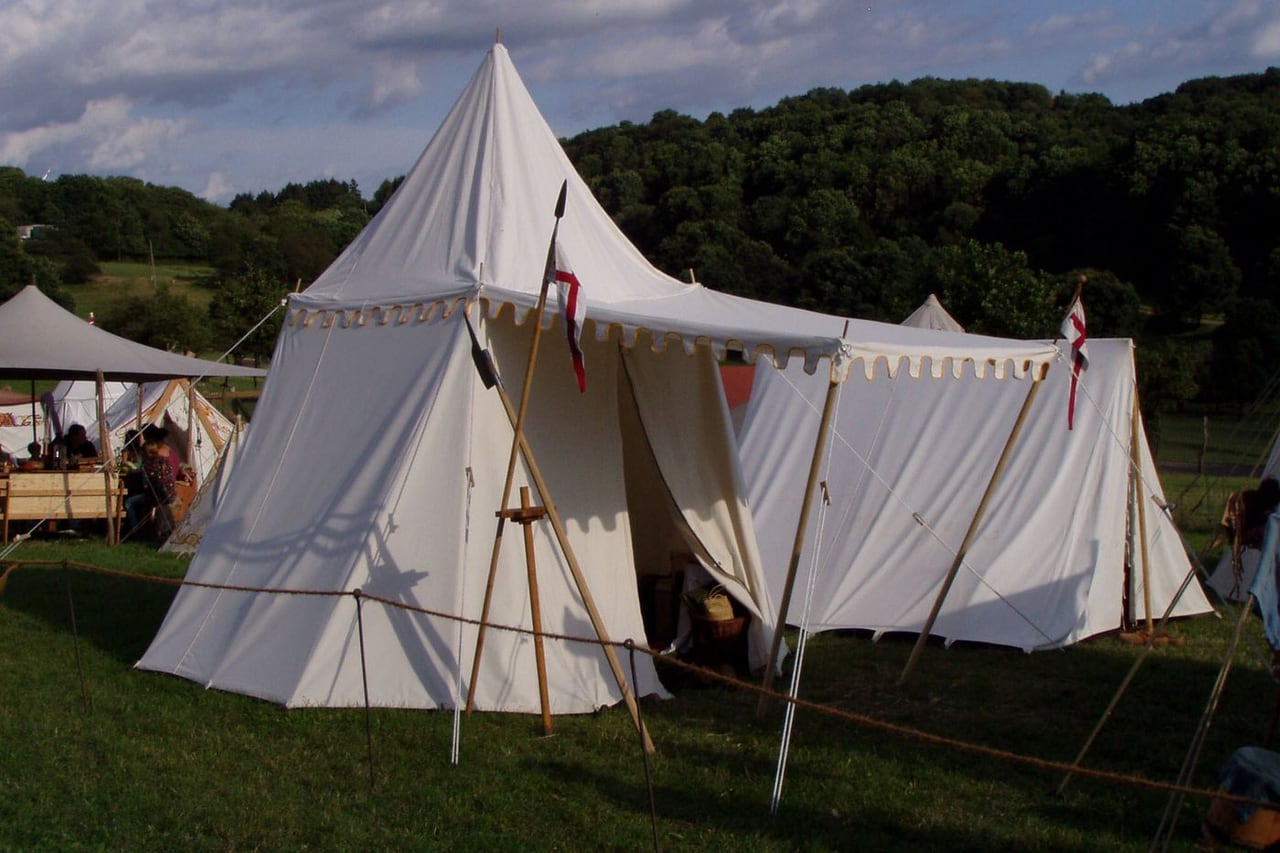
LARP vs reenactment tents: what each needs
The two hobbies share fields and often share tents, but the standards are different. Reenactment and living history are judged against a period, sometimes by an authenticity officer with a checklist. LARP is judged against a game world. A fantasy kingdom does not have to match a manuscript, but players still want the camp to feel immersive after dark.
That difference decides where to spend. A reenactor pays for visible period detail. A LARPer pays for comfort, speed and durability, and gets the look from silhouette and colour.
| LARP | Reenactment and living history | |
|---|---|---|
| Silhouette | Should look right in the game setting | Should match the period portrayed |
| Fittings | Brass eyelets and zips usually fine | Hand-worked eyelets and ties often expected |
| Rope | Any natural-looking rope | Natural fibre such as hemp |
| Modern kit | Hidden during play | Hidden during public hours, often all day |
| Typical tent | Round pavilion, wedge, Viking | Depends on period, from A-frame to bell-ended pavilion |
| Priority | Dry, warm, quick to pitch | Accurate, then dry and durable |
What a week in a field does to a tent
Most event tents fail from weather and handling, not age. A week of rain, a muddy strike and a tent packed wet into a car boot does more damage than a season of sunshine. Choose the cloth for the worst week you expect.
Our Round Medieval Pavilion is cut from 400 gsm treated cotton, and the Viking Tent from 440 gsm, built to stand through a festival season. The treatment resists rot, mould and UV, and the water-repellent finish works with the natural swelling of cotton. Weather a new tent before its first event by wetting and drying it once or twice, so the seams and needle holes close up.
Cotton shrinks a little when wet and relaxes as it dries. Slacken guy lines when rain starts and tighten them again in the morning; tents that rip at an eyelet overnight are usually tents left drum-tight in a downpour.
Choosing a shape for how you live in camp
If you will spend evenings inside with friends, a walled pavilion gives you somewhere to sit upright at the edge. If the tent is only for sleeping and the life of the camp is outdoors, a wedge or A-frame is lighter, cheaper and quicker. The Wedge Medieval Tent starts from $175 ex-works and packs into a single bag.
Groups often settle on one large shared tent for meals and wet weather, plus smaller sleeping tents for each household. Our guide to medieval tent sizes and shapes compares usable floor by shape.
Furnishing a tent you will live in
Get off the ground first. A raised bed keeps you away from cold and damp and frees floor space underneath for boxes. Lay a loose groundsheet, then rugs or fleeces on top, and keep the groundsheet edges inside the walls so rain running down the canvas does not pool under your bed.
Folding wooden furniture survives event life better than flat-pack. A Folding Camp Stool in hardwood and cotton duck passes at most LARP events and many reenactment ones after hours. For light, a battery lantern in a brass housing is safer than a candle; our Brass Camp Lantern uses a warm LED behind glass.
Fire safety and event rules
Cotton canvas burns, and an encampment is a field full of it. Keep open fires, braziers and cooking well away from the walls, and never leave a candle or oil lamp burning in a tent unattended. Many events set a minimum distance between fires and tents, require a fire extinguisher or bucket at each pitch, and limit open flame inside tents altogether. Read the event handbook before you pack.
Some public events and venues ask for fire-retardant tents. If you are buying for a group that trades or performs at public events, ask about fire-retardant cloth and the certificate that comes with it when you order, and confirm with the organiser which standard they accept.
Transport, storage and drying
Plan the packed size before you buy. Canvas folds into a bag; poles do not fold. A centre pole for a round pavilion is the longest single item most members will carry, so check it against the inside length of the car with the seats down, or ask whether the pole can be made in two sections joined by a sleeve. Keep pegs, mallets and spare rope in their own bags so they do not abrade the cloth.
Drying is the one job nobody can skip. Canvas packed wet will mildew within days in warm weather, and mildew stains are permanent. If you strike in the rain, unpack within a day or two and pitch or hang the tent until it is dry through, including the seams and the bottom of the walls.
Buying LARP and reenactment tents for a group
A group order gives a matched camp and spreads one freight cost across members. It also means every tent arrives with the same pole fittings and rope, so spares can be shared across the camp and a broken part does not end someone’s event.
Collect sizes and shapes, agree a single cloth colour and valance style, and send the list through our contact page. If a member needs something non-standard, such as a longer rectangular hall, use the custom tent configurator.
Questions buyers ask
What is the best tent for LARP?
For most players, a round pavilion or a wedge in 400 gsm treated cotton. It looks right, pitches quickly and copes with a wet event.
Can I use a medieval tent at a reenactment and a LARP?
Yes, if it meets the stricter of the two standards. Buy the period details for reenactment and the tent will pass at a LARP.
How do I keep a canvas tent dry at a wet event?
Weather it before the event, keep the roof tensioned, slacken guys in heavy rain and keep bedding off the canvas walls.
Can I have a fire inside a medieval tent?
Not in these tents. They have no stove jack or smoke hole, and event rules usually forbid open flame inside canvas.
Are your medieval tents suitable for winter events?
They can be used in cold weather with heavier canvas, a raised bed and good bedding, but they have no stove provision. For winter camping with heat, look at a tent designed for a stove.
How long will a cotton medieval tent last?
With weathering, dry storage and repairs as needed, many years of regular events. Damp storage is what shortens a tent’s life most.