Tent manufacturing lead times: what decides how long an order takes
There are three production clocks: stocked pieces leave first, made-to-order catalogue tents follow, and bespoke structures start only once a drawing is approved. Freight and customs then add weeks, not days, for sea shipments. Every order’s date is confirmed in writing, so plan back from your opening date with a margin rather than from the first figure you hear.
5 min read · Updated
Stocked, made-to-order and bespoke lead times
Lead time depends on whether the piece is already made, made to a standing pattern, or designed from scratch, and a single order can include all three. A resort package might combine a stocked accessory range, made-to-order cottages and one bespoke dining structure, and the bespoke piece sets the date for the whole shipment unless you split it.
| Order type | Examples | Clock starts at |
|---|---|---|
| Stocked | Accessories, groundsheets, some fabrics and smaller tents | Payment |
| Made to order | Catalogue bell tents, safari tents, Swiss cottages, tipis, pavilions | Order and advance payment |
| Bespoke | Custom commissions, architect designs, resort packages | Written approval of the technical drawing |
What happens during production
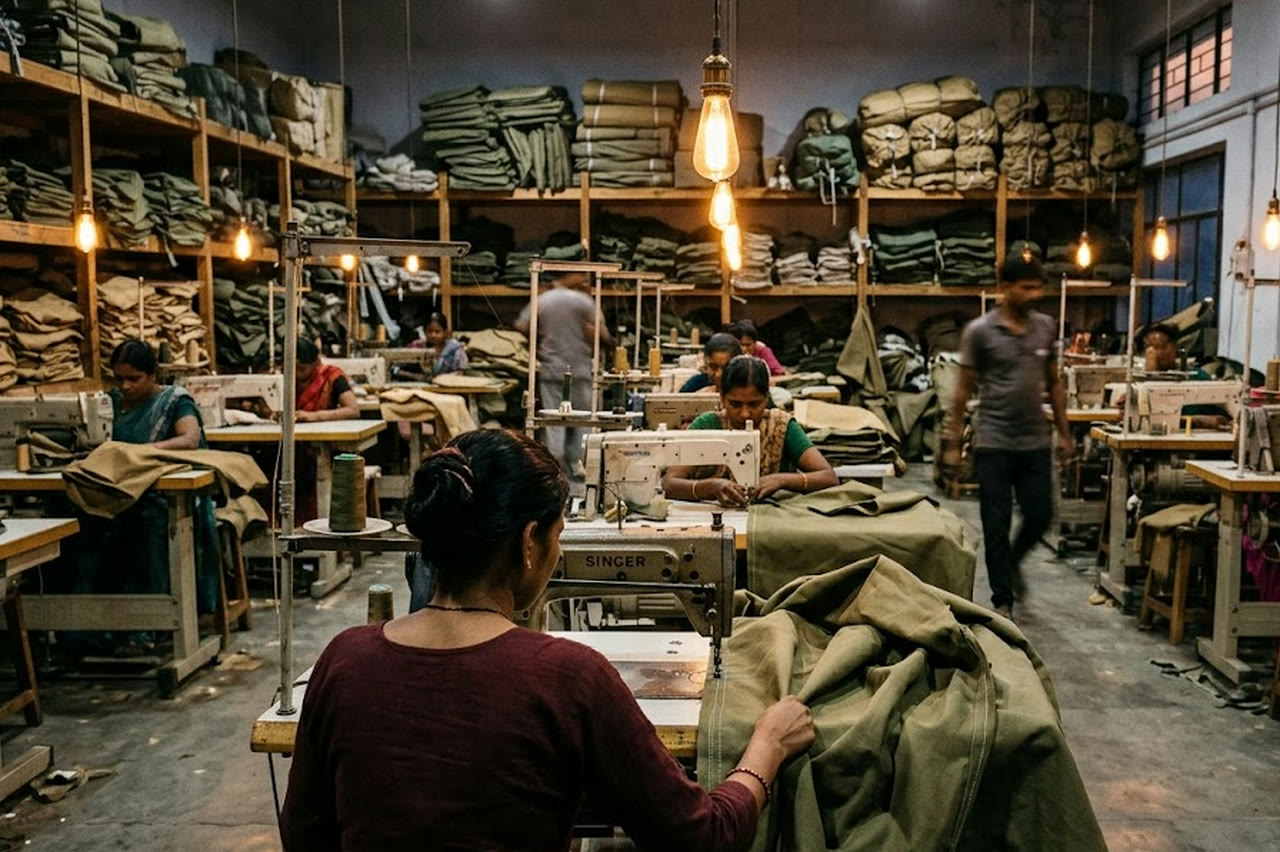
For a made-to-order tent such as a Swiss Cottage 10 × 20, the time goes on drawing cloth from the right lot, cutting panels against the pattern, sewing, fitting hardware, fabricating and finishing the frame, checking, and packing dry. Frames and canvas are made in parallel, so a frame finish such as hot-dip galvanising, which happens outside the sewing room, is often what sets the date.
Bespoke work adds the stages before cutting: the technical drawing, your approval, and prototyping of any junctions new to the design. That is why the clock for a custom commission starts at drawing approval rather than at order. The quicker the drawing comes back approved, the sooner the cloth is cut.
What makes an order take longer
Most delays are predictable, and almost all can be planned around if they are raised at the quotation stage.
- A drawing that waits for comments pushes delivery back by the same amount.
- Custom colours or prints need a strike-off made and approved before the run.
- Fire-retardant fabric is supplied with a lot test certificate, and the lot must be ready before cutting.
- Hand work such as block printing, appliqué and hand-painted linings, as on a Rajasthani Shamiana, are made at the pace of the craft.
- Large runs take longer: fifty cottages take longer than five, though not ten times longer.
- A change after cutting means remaking panels.
Freight and customs clearance time
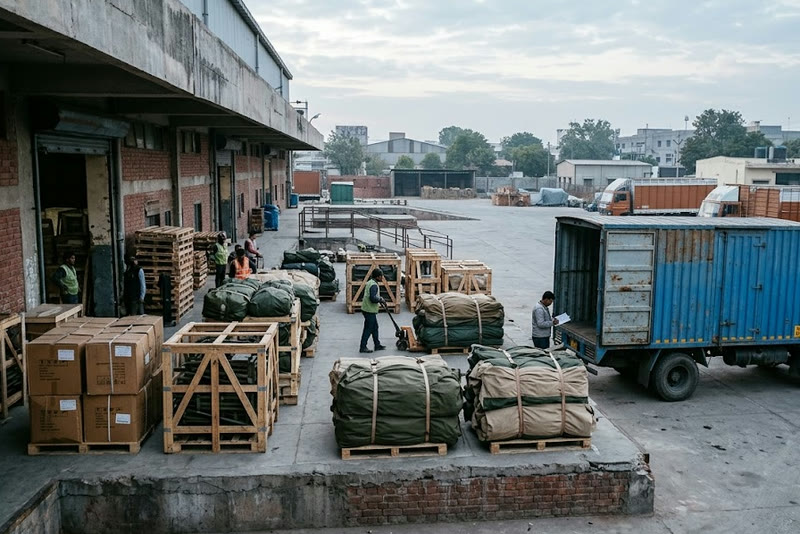
Production is only part of the wait. For a sea shipment, add time to get the goods from New Delhi to the port and loaded, then the voyage. Port-to-port transit to Europe, North America and Australia typically runs from about three to six weeks depending on the route and any transhipment, and your forwarder confirms the schedule when the booking is made. At your end, allow for unloading, customs clearance and delivery to site, which can take days or, if papers are incomplete, longer.
Air freight cuts transit to days and suits samples, spares and small orders, but it is rarely economic for framed structures. Shipping tents internationally covers the trade-offs.
Planning back from your opening date
Work backwards. Start with the date guests arrive, then subtract installation and snagging, delivery and clearance, transit, production, and approvals. Add a margin at the end, because a missed sailing can cost a week or more. As a rule of thumb, a sea-freighted made-to-order order is best placed at least three months before it is needed, and a bespoke project four to five months before, longer if your installation also involves decks, plumbing and electrics.
Here is how that looks for a five-unit resort package of safari tents for a summer opening. Each figure is an illustration, not a promise.
- Brief, quotation and drawing approval: as quick as comments come back.
- Production: as confirmed in the quotation, from approval.
- Inland haulage, port handling and sailing: about four to seven weeks.
- Clearance and delivery to site: about one week, with papers prepared in advance.
- Installation and fit-out: one to three weeks, depending on decks and services.
Repeat orders, spares and replacement parts
A repeat order of a structure you have bought before is usually quicker to turn round than the first. The pattern, the drawing and the frame setup already exist, the cloth and colour are known, and there is nothing new to approve. Quote the original order reference and say whether anything should change; if nothing does, production can start as soon as the order is confirmed.
Spare parts run on a different clock again. Zips, guy lines, pegs, pole sections and replacement panels for catalogue structures are small, light and often go by air, and we confirm the timing for each request. A spare already on your shelf is faster still. Operators running ten or more tents generally keep a kit of the parts that wear first, and some hold one complete spare canvas for their most-booked unit so a damaged tent can be re-skinned in an afternoon. Ask for a recommended spares list with your first order.
How to shorten a lead time
Choose catalogue structures where they work, and save bespoke design for the one piece that needs it. Approve drawings and samples promptly. Fix the cloth and colour at the quotation stage. Ship the finished items in stages if one bespoke piece is holding up the rest. Have your customs broker appointed, and your site ready, before the goods sail. If you have a hard date, tell us at the start: we will say honestly whether it can be met and confirm the schedule in writing.
Questions buyers ask
How long does it take to make a glamping tent?
It depends on the tent, the quantity and the cloth. A catalogue tent made to order is quicker than a bespoke design, whose clock starts at the approved drawing. The date is confirmed in writing with each quotation.
Do you keep tents in stock?
Some pieces and accessories are held in stock and leave first. Most structures are made to order so the cloth and finish can be matched to your site.
When should I order tents for a summer opening?
For sea freight, allow at least three months for made-to-order structures and four to five months for bespoke work, before adding time for decks, plumbing and electrics.
Can you rush an order?
Sometimes, depending on cloth availability and the current workshop schedule. Ask at the quotation stage and we will tell you plainly what is possible.
Does a larger order take much longer?
Longer, but not in proportion. Cutting and sewing scale with quantity, while drawings, approvals and frame setup happen once.
Is a repeat order quicker than the first?
Usually, yes. The pattern, drawing and cloth specification already exist, so there is nothing new to approve and production can start once the order is confirmed.