How to choose a tent manufacturer
Choose a tent manufacturer on evidence you can check. Confirm they make the tents themselves, ask for specifications with numbers and test standards attached, get the same request quoted by every supplier so the prices compare, and look at how they handle drawings, samples and spares. A supplier who answers technical questions plainly and in writing is usually the one who will deal with problems the same way.
6 min read · Updated
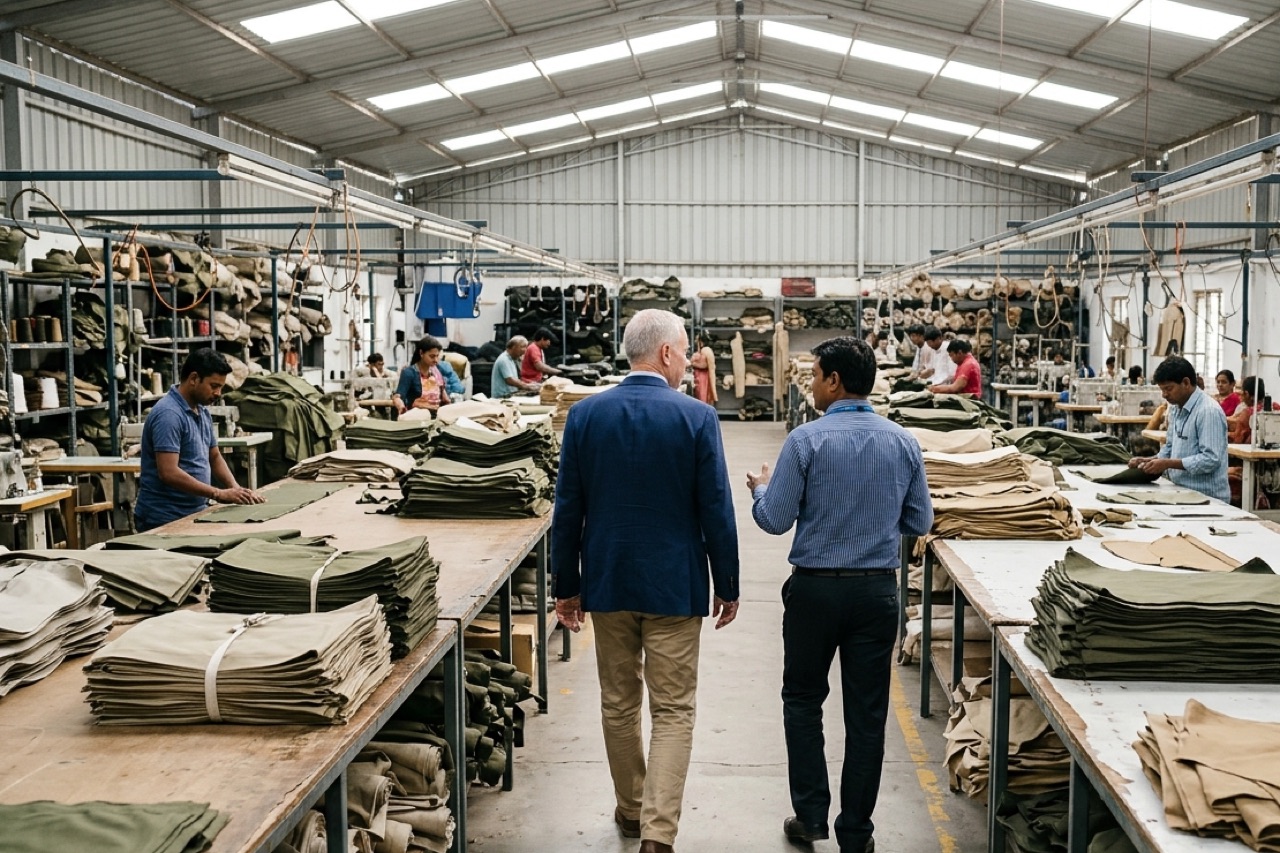
Maker or trader: find out who sews the tent
Many companies selling tents online do not make them. A trader can be perfectly good, but they add a margin and a link in the chain, and when something goes wrong they have to ask someone else what happened. A manufacturer can tell you which cloth lot your tents were cut from and send a photograph of your order on the cutting table.
Ask directly. Where is the workshop? Who cuts, sews and fabricates the frames? Can you see it, in person or on a live video call, on a normal working day? We have made canvas tents in New Delhi since 1984 and our company profile sets out what we make in-house; any manufacturer should be able to answer the same questions without hesitation.
Tent specifications with numbers attached
Vague words such as “heavy-duty”, “waterproof” and “premium canvas” tell you nothing. A serious specification gives figures and says how they were measured.
- Cloth: fibre, weight in gsm, and treatment. For example, 360 gsm treated cotton canvas, mill-treated for rot, mould and UV, or 480 gsm ripstop poly-cotton.
- Water resistance: hydrostatic head in millimetres, tested to ISO 811.
- Fire retardancy, where required: the standard it was tested to and a certificate for the lot.
- Frame: material, wall thickness and finish, such as hot-dip galvanised steel.
- Hardware: solid brass or stainless eyelets, zip type, guy rope material.
- Dimensions: footprint, wall height, ridge height and packed volume and weight.
What evidence to ask a manufacturer for
Ask for evidence that relates to what you are buying. A certificate on the wall says little about your order. Useful evidence includes test results for the actual fabric lot, a description of routine checks (ours are on the quality assurance page), photographs of finished seams and guy points, and examples of similar projects. For us that includes cold-weather tents for the Indian Army in Ladakh, resort tents across Rajasthan and Jammu & Kashmir, and export work to London, the Netherlands, Ottawa, California and, most recently, medieval-style pavilions for First Warrior Productions in Sydney.
Then test the claims yourself on a sample. Weighing a 10 × 10 cm square of cloth to check its gsm takes a minute, and pitching a Luxury Safari Tent or bell tent for a week tells you more than any brochure. Tent samples and quality inspection has a full checklist.

Comparing tent quotes like for like
Two quotes for “a 5 m bell tent” can describe very different products. The cheaper one may use lighter cloth, a sewn-in rather than zip-in groundsheet, steel eyelets that rust, or no storm skirt. Send every supplier the same written request and ask each to quote against it line by line. For reference, our 5M Bell Tent is from $350 ex-works in 360 gsm treated cotton with a 540 gsm PVC zip-in groundsheet and solid brass eyelets.
Check that each quote states the Incoterm, and that freight, insurance and packing appear as separate lines. A low unit price with freight hidden inside, or freight left out entirely, only looks lower.
Questions that sort good suppliers from risky ones
These questions are quick to ask, and the answers say a lot about how the supplier works.
| Question | A good answer | A warning sign |
|---|---|---|
| What is the hydrostatic head, and to what standard? | A figure in mm, tested to ISO 811 on the fabric lot | “Fully waterproof” with no number |
| Can I see the workshop? | Yes, in person or on live video | Excuses, or stock photos only |
| What happens before cutting a custom design? | A measured drawing for your written approval | Production starts from a sketch or email |
| Which parts can be replaced later? | A spares list: zips, panels, poles, guy lines | Replace the whole tent |
| What does the quote include? | Unit price, packing and freight as separate lines | One all-in figure that cannot be broken down |
| Who has bought this structure before? | Comparable projects, described honestly | Vague claims of “thousands of happy clients” |
Drawings, communication and after-sales support
Watch how a supplier handles the first exchange. Do they answer the question you asked? Do they ask about your site, climate and use before recommending a cloth? Do they put dimensions and specifications in writing? A supplier who is careful at the quotation stage is usually careful in production.
After-sales matters more with canvas than with most products, because canvas is repairable. A torn panel can be patched, a zip replaced, a pole section reordered. Ask how long the supplier keeps patterns, whether they will supply parts for a tent bought several years earlier, and how quickly spares ship.
Payment terms and how to protect yourself
Staged payment is normal in the trade. Our commission terms are 50% in advance, 40% before dispatch and 10% after installation, which keeps part of the payment tied to delivery of what was agreed. Be cautious of any supplier asking for the full amount before production on a large order with no track record between you. Larger buyers sometimes use a letter of credit through their bank, or a pre-shipment inspection before the balance is released.
Start with a small order or a sample unit, then scale up once the first delivery matches what was promised. With no minimum order, that costs you very little. When you are ready, send us your specification and compare our quote with the others on the same terms.
Questions buyers ask
How can I tell if a tent supplier is a real manufacturer?
Ask to see the workshop in person or on live video during a working day, and ask who cuts, sews and makes the frames. A manufacturer can show your order in production; a trader usually cannot.
Why do tent quotes vary so much?
Usually because the products differ: cloth weight and treatment, groundsheet type, hardware and frame finish. Send every supplier the same written specification so the quotes compare.
What certifications should a tent manufacturer have?
Ask for test results tied to your order, such as water column to ISO 811 and a lot fire certificate where your venue or authority requires one. Confirm locally which standards are accepted.
Is it safe to pay a tent manufacturer in advance?
Staged payment is normal, such as a deposit, a payment before dispatch and a balance on completion. Start with a small order or a sample to build a track record before committing large sums.
Should I choose the cheapest quote?
Only if it matches the specification line by line. A cheaper tent that has to be replaced in year three costs more than a better one bought once.