Storage shelters and warehouse tents: a buyer’s guide
A storage shelter is a wide-span framed tent, usually covered in PVC-coated polyester, that gives quick covered space for stores, vehicles, workshops and relief goods. Size it to the goods and the vehicles that serve it, specify the frame for local snow and wind loads, and choose ground anchors or ballast to suit the surface. Ventilation and drainage decide whether the stock stays dry.
6 min read · Updated
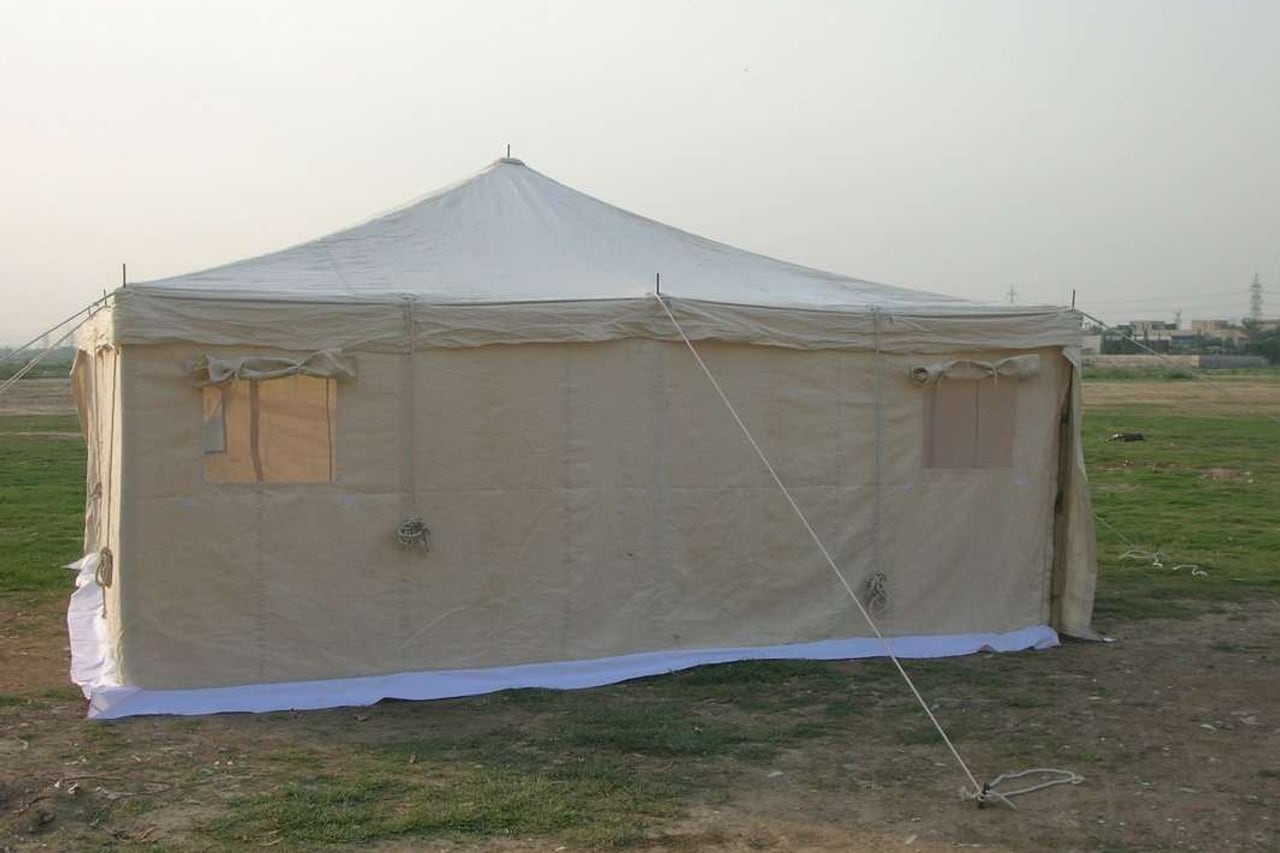
What storage shelters are used for
Military units use storage shelters for equipment, vehicle maintenance and workshops. Relief agencies use them as forward warehouses for tents, food and hygiene kits. Industrial users put them up for overflow stock, seasonal produce or machinery during a building project. In each case they want covered space within days instead of months, and a structure that can move when the need moves.
Our Military Storage Shelter uses 650 gsm PVC-coated polyester on a hot-dip galvanised frame, with roll-up gable doors wide enough to drive a vehicle through. It is priced on enquiry, ex works.
Sizing a storage shelter
Start from what goes inside and how it moves. Pallets, racking, forklifts and trucks all need clearances. Measure the largest vehicle that must enter, with its load, and add margin for turning and for people working around it. Height matters for racking and for vehicles with cabs or cranes.
Allow more room than the stock alone requires. Goods arrive in uneven batches, and a shelter packed to the walls cannot be inspected, ventilated or cleared quickly in an emergency. Leave aisles wide enough for the handling equipment you will use and a clear zone along the walls so the fabric is not damaged by pallets pushed against it.
- Door width and height: the largest vehicle or load, plus clearance.
- Eave height: racking height, forklift mast height or vehicle height.
- Length: storage bays plus aisles, extended in standard bays if the frame allows.
- Floor: existing hardstanding, a laid base or a groundsheet over compacted ground.
- Access: a second door at the other gable allows drive-through loading.
Fabric: PVC-coated polyester or canvas
Most storage shelters use PVC-coated polyester because it is fully waterproof, stable over long spans, easy to clean and available in flame-retardant grades. The downside is condensation: a sealed cover over cold goods or damp ground will drip unless the shelter is ventilated.
Treated cotton canvas breathes and reduces condensation, which is why a cotton canvas tarpaulin is still used over produce, hay and machinery. For a large shelter, canvas is heavier and needs more maintenance, so it is less common. A PVC waterproof tarpaulin with welded seams is the right cover for open stacks that must stay completely dry.
Colour affects the interior. White or translucent roof fabric lets in daylight, which reduces the need for lighting during the day but raises the temperature under strong sun. Darker or opaque fabric keeps the space darker and cooler, and suits stores where goods are sensitive to light or heat. In hot climates, a lighter colour with good ventilation is usually the better balance.
| Option | Material | Best for | Price |
|---|---|---|---|
| Military Storage Shelter | 650 gsm PVC-coated polyester on galvanised frame | Vehicles, stores, forward warehouses | On enquiry |
| Exhibition Clear-Span Hall | 650 gsm PVC-coated polyester, FR-certified, aluminium frame | Large warehouses, extendable in 3 m bays | On enquiry |
| PVC Waterproof Tarpaulin | 650 gsm PVC-coated polyester, welded seams | Covering open stacks | On enquiry |
| Cotton Canvas Tarpaulin | 450 gsm treated cotton canvas | Breathable cover over produce and machinery | On enquiry |
Snow, wind and anchoring
A storage shelter is a large, light structure with a big surface for wind and snow. The frame must be designed for the loads expected at the site, and those vary enormously between a coastal plain, a desert and a mountain valley. For permanent or long-term installations, local building rules may require engineering calculations; check with the local authority.
Anchoring depends on the ground. Ground anchors or stakes work in soil. On concrete or asphalt, ballast feet or bolted base plates are used. Our shelter can be ground-anchored or ballasted depending on the surface. Under-anchoring is the most common cause of shelter failure in storms; follow the anchoring schedule supplied with the structure.
For more detail, read our guide to wind-rated tents and guying.
Ventilation, drainage and keeping stock dry
Most damage to stored goods in shelters comes from condensation, not from rain getting in. Warm days and cold nights condense water on the underside of the roof, and it drips onto the stock. Gable vents and opening doors on dry days keep air moving. Pallets keep goods off the floor.
Site the shelter on ground that drains, and dig a perimeter drain on the uphill side. A groundsheet over compacted ground reduces rising damp. Canvas goods, including stored tents, must go into storage completely dry; our guide to storing a canvas tent explains why.
Security, fire safety and maintenance
A fabric shelter is not a secure building. Lockable doors help, but high-value goods need a guarded perimeter or containers inside. For fire, specify flame-retardant fabric where rules require it, keep fuel and hot work away from the shelter and install extinguishers. Our fire-retardant tarpaulin is supplied with lot test paperwork for hot-work screening.
Inspect anchors, frame connections and fabric tension regularly, especially after storms. Small tears repaired early stop large failures later.
Keep a simple log for each shelter: the date it was pitched, inspections, storm events and repairs. It costs nothing, shows when fabric or fittings are nearing the end of their life, and tells the next team what the structure has been through when it is moved to a new site.
Ordering a storage shelter
Tell us the footprint, door sizes, eave height, the ground surface and the location, so we can consider wind and snow. We will recommend a frame and fabric and quote ex works; freight, duties, anchoring hardware and any site engineering add to the delivered cost.
Send your requirements through our contact page, or see the rest of the army and military tents range.
Questions buyers ask
What is a storage shelter tent?
A wide-span framed tent, usually covered in PVC-coated polyester, used as a temporary warehouse, workshop or vehicle store.
Do storage shelters need planning permission?
It depends on the country, the site and how long the shelter stands. Check with the local planning or building authority before installing one for an extended period.
Can a storage shelter go on concrete?
Yes. On hard surfaces they are anchored with ballast or bolted base plates rather than ground stakes.
How do I stop condensation in a storage tent?
Ventilate through gable vents and doors on dry days, keep goods on pallets and site the shelter on well-drained ground.
Can a storage shelter be moved?
Yes. A framed shelter can be dismantled, packed and pitched again on a new site, which is one of its main advantages over a fixed building.
How long does a PVC storage shelter last?
With good anchoring, regular inspection and prompt repairs, many years. UV exposure and storm damage are the main limits on fabric life.