High-altitude tents: expedition shells and static camps
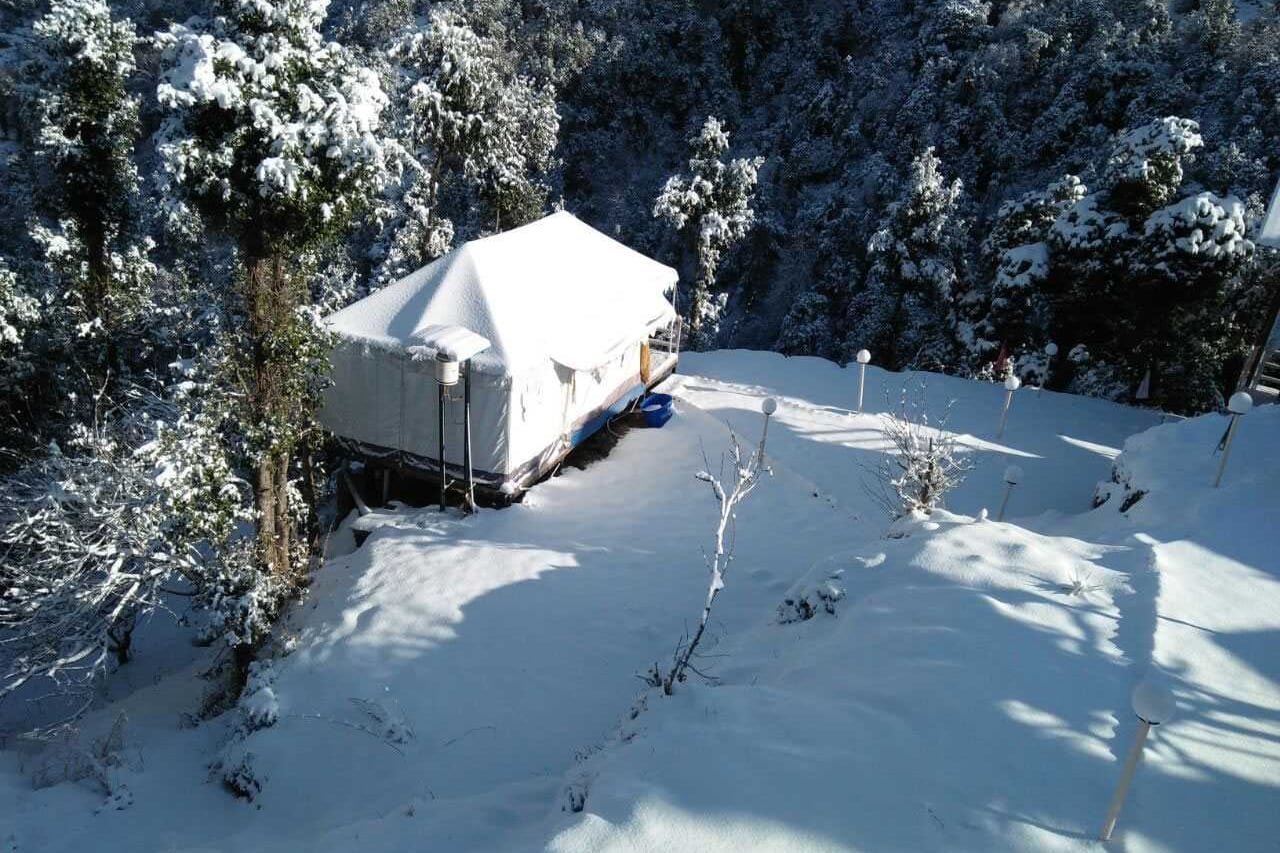
At altitude a tent has to cope with stronger UV, lower temperatures, harder wind and often snow, while being carried by people or pack animals. Parties on the move should use four-season expedition tents with sleeved alloy poles, snow valances and plenty of guy points. Static camps such as base camps, army posts and high lodges are better served by heavy canvas tents with insulating liners, snow-rated frames and flued stove ports, used with carbon monoxide alarms.
6 min read · Updated
What changes as you climb
Air temperature falls with height, by roughly 6 to 7 °C per 1,000 m as a rule of thumb, and wind on exposed ground is stronger and harder to predict. UV rises too. A commonly cited figure is around 10% more UV for every 1,000 m of altitude, and fresh snow reflects much of it back up at the tent. That combination ages fabric and coatings faster than at sea level and wears out a light fly sooner.
Thinner air affects the people and anything that burns. Stoves and heaters burn less efficiently, which can increase carbon monoxide output, while the people sleeping nearby are already short of oxygen, so at altitude ventilation is first a safety requirement.
Expedition tents for parties on the move
Where the tent moves every day or two, weight and pack size rule. Our expedition tents use silicone-PU ripstop nylon, far lighter than canvas for the strength, on 7075-T6 alloy sleeved poles. The Vanguard 3P Expedition is the standard load for a guided high-altitude party, with a deepened vestibule for a stove and packs. The Summit Pro 4P Expedition is a five-pole, double-wall shell meant to stand for weeks at a base camp. What to look for in any mountain tent:
- Sleeved poles, so the fly cannot separate from the frame in a gust.
- A full-perimeter snow valance that can be weighed down with snow or rocks.
- Plenty of guy points anchored into structural seams; our expedition shells have sixteen.
- A floor rated to 10,000 mm hydrostatic head, because kneeling on wet snow drives water through lighter floors.
- A second entrance on larger tents, so one door is usable whatever the wind direction.
Canvas tents for static high camps
For a camp that stays put for a season, canvas earns its weight. It breathes, so frost and condensation are less troublesome than in a sealed nylon shell, it is quieter in wind, and it can be mended with a needle. We have supplied cold-weather tents to the Indian Army for Ladakh, where tents stand through long winters at high altitude, and tents to clients in Jammu & Kashmir.
The Winterised Relief Tent is built for exactly this work: 420 gsm cotton-polyester canvas, a quilted insulating liner, a snow-rated galvanised frame and a flued stove port with a heat-shield collar. For trekking lodges and high-altitude glamping, a yurt or framed tent on an insulated deck is more comfortable; see our guide to tents for snow and cold climates.
Expedition tent or canvas camp: a comparison
Many high-altitude operations use both: light nylon shells for the upper camps and canvas for the base where people live for weeks.
| Expedition tent (nylon) | Canvas tent | |
|---|---|---|
| Typical use | Mobile parties, high camps | Base camps, army posts, lodges |
| Weight | Light; carried by climbers | Heavy; moved by vehicle or pack animal |
| Condensation | Higher; vent constantly | Lower; the cloth absorbs and passes moisture |
| Heating | Usually none; rely on bedding | Flued stove or electric heating possible |
| Wind | Low profile, sleeved poles | Depends on the frame and guying |
| Field repair | Patch kit and pole splint | Needle, thread and canvas patches |
| Catalogue price | On enquiry (Vanguard 2P) | On enquiry (Winterised Relief Tent) |
UV, cold and what they do to the fabric
The higher the camp, the more a tent ages from sunlight. Choose lighter colours for long-standing canvas, use a separate fly where you can so the main cloth sits in shade, and strike and store tents that will not be used for months rather than leaving them out. Nylon flies lose strength under heavy UV, so an expedition tent that has spent several seasons at altitude should be checked for brittle fabric and lifting seam tape before the next trip.
Cold stiffens some materials. PVC groundsheets and coatings can crack if folded at very low temperatures, so let them warm in the sun before striking where possible. Zips and buckles ice up; clear them gently and never force a frozen slider.
Heating and carbon monoxide at altitude
Any combustion inside a tent needs a proper flue through a stove jack, a carbon monoxide alarm and constant ventilation. At altitude the margin is smaller, because stoves burn less cleanly and people are already short of oxygen. Never cook or run a heater inside a sealed tent, and never bring a smouldering stove or barbecue inside to warm up. Make sure everyone in camp knows the early signs of CO poisoning, including headache, dizziness and nausea, and that they are easily mistaken for altitude sickness. If in doubt, get the person into fresh air and seek medical help. Our guide to using a wood stove in a canvas tent safely covers jacks and clearances.
Sleeping systems carry much of the load at height. The Nimbus −15°C Expedition Down uses 800 fill-power hydrophobic-treated down and a hood that closes to a breathing hole.
Packing, transport and ordering
At altitude every kilogram is carried by someone. Ask for packed weights and dimensions per load, and say how the tents will travel, whether by porter, mule, yak or truck, so pole lengths and bags can be cut to suit.
For army and agency buyers we can quote to a tender specification; see our army and military tents range. For everything else, contact us with the altitude, season, number of occupants and how long the camp will stand. Catalogue prices are ex-works guide figures; freight, duties and finishing change the landed cost.
Questions buyers ask
What tent is best for high altitude?
For parties on the move, a four-season expedition tent with sleeved alloy poles, a snow valance and plenty of guy points. For a camp that stays put, a heavy canvas tent with an insulating liner and a snow-rated frame.
Why do tents get so much condensation at altitude?
Cold outer walls meet warm, moist air from breath and cooking. Keep vents open, cook outside or in a vestibule where it is safe to, and choose canvas for long-stay camps because it handles moisture better than sealed nylon.
Is it safe to use a stove in a tent at altitude?
Only with a proper flue and stove jack, constant ventilation and a working carbon monoxide alarm. Stoves burn less cleanly in thin air, so the risk is higher than at sea level.
Does UV damage tents faster at altitude?
Yes. UV intensity rises with height and snow reflects much of it, so fabrics and coatings age faster. Light colours, a fly and storing tents when they are not needed all help.
Can you supply high-altitude tents for the army?
Yes. We have supplied cold-weather tents to the Indian Army for use in Ladakh and can quote against a tender specification.