Adding tented rooms to an existing hotel or resort
Tented rooms let a hotel add keys, a distinctive room type or seasonal capacity without a new building. The hotel already has reception, housekeeping, a kitchen and utilities, so the tents can focus on the room itself. For hotel rates, choose framed units with standing height and an ensuite, such as a safari tent or Swiss cottage, on decks connected to the main services. Check with your planning and fire authorities early, and pilot two or three units before committing to a full row.
6 min read · Updated
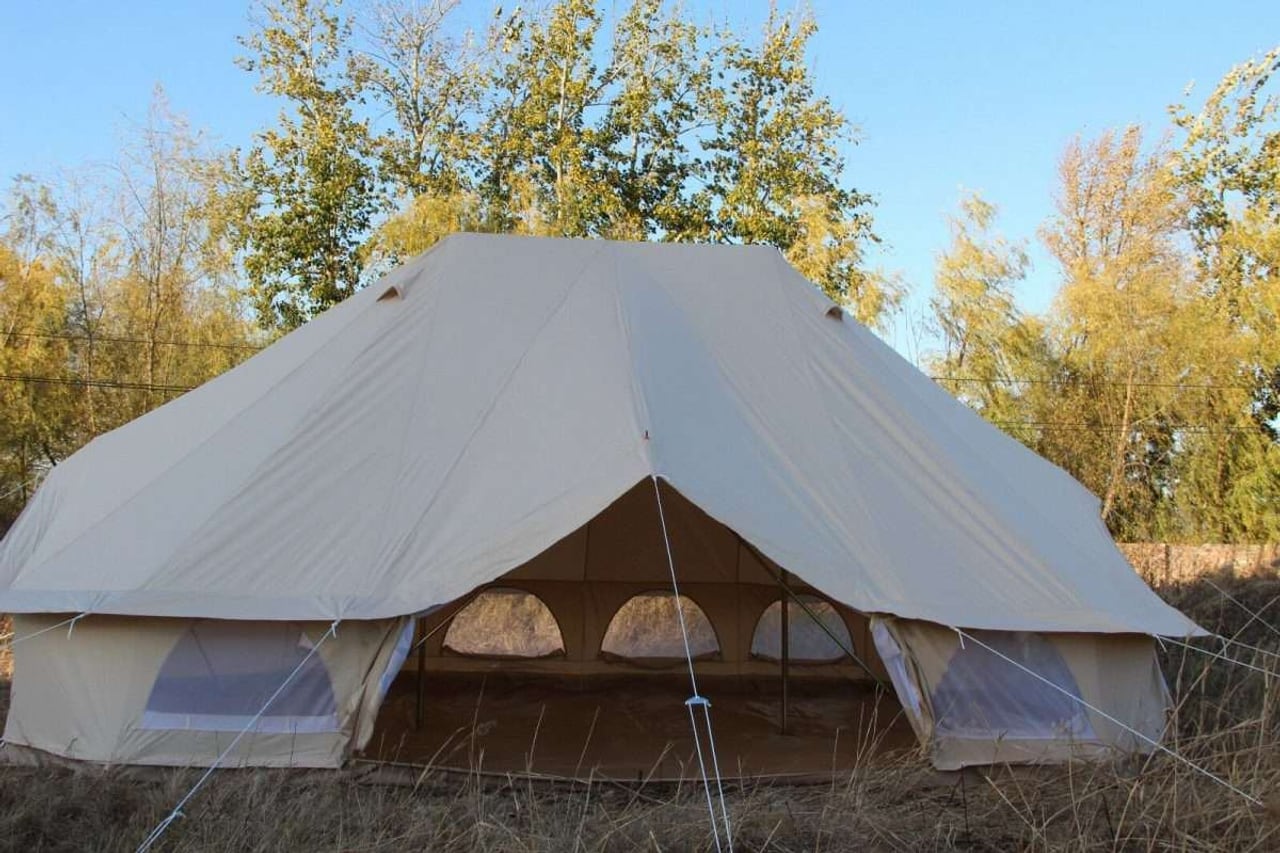
Why hotels add tents
The usual reasons are capacity, product and speed. A hotel with spare grounds can add rooms in weeks of installation rather than months of construction. Canvas rooms give a property something to sell that the competition does not have, such as a riverside safari tent or a garden suite for honeymooners. Because tents can be struck, they also suit properties that want extra capacity for a peak season or a wedding calendar without carrying it all year.
Most of the hard work in starting a standalone glamping site, such as reception, food, laundry and utilities, is already done at an existing hotel. That makes the economics of a few tented keys very different from a greenfield camp.
Choosing a tent for hotel rates
Guests booking through a hotel compare the tent with the hotel’s own rooms. They expect to stand up anywhere, to have their own bathroom and to sleep in a proper bed in a room that is warm or cool enough. That points to framed structures:
- Safari Suite Tent, from $1,200: standing height throughout, a covered veranda and a plumbing-ready rear annexe.
- Luxury Safari Tent, from $1,385: full ensuite annexe, double-skin roof, blackout roof liner and a ridge high enough for a ceiling fan.
- Swiss Cottage 14 × 28, $780: a partitioned bedroom, sitting room and internal bathroom pod. Suits premium and accessible keys.
- Yurt 20 FT, priced on enquiry: quiet and solid-feeling, good for wellness suites and cooler climates.
- Maharaja Durbar Suite, priced on enquiry: a linked bedroom, sitting room and dressing annexe with painted interiors, for palace and heritage hotels building a suite outdoors.
Where to put the tents
The best sites are close enough to the hotel to share services and staff, yet far enough to feel separate. Look at lawns beyond the main garden, an orchard, a riverbank or a wooded edge. Avoid places next to kitchens, plant rooms, car parks or event lawns, because canvas does not block noise. If you host weddings, keep the tents out of earshot of the dance floor, or block them out on event nights.
Walk every route a guest and a housekeeper will use: from reception with luggage, to breakfast in the rain, from the laundry with a trolley. Level, lit paths matter as much as the tent. For accessible keys, plan step-free routes and a deck at path level from the start.
Connecting tents to the hotel’s water, power and drainage
Running water, drainage and power from the main building to a row of tents is usually the biggest single cost after the decks. Get a services engineer to check the capacity of the existing water supply, hot water, electrical supply and wastewater system before you settle on a number of units. Run trunk services to every future pitch in the first phase, even if you only install some units.
Decide early how the tents will be heated and cooled. A double-skin roof, as on the Luxury Safari Tent, reduces heat gain in sun; insulated liners help in cold weather. Our guide to air conditioning and heating in glamping tents covers the options and their power demands.
Permissions, fire safety and insurance
An existing hotel licence or planning consent rarely covers new accommodation in the grounds. Speak to the planning authority about whether the tents need fresh consent or a variation, and to the fire authority about separation distances, escape routes, alarms and whether the canvas must meet a flammability standard. If it must, we can make the tents in fire-retardant canvas supplied with the test certificate for the lot.
Tell your insurer what you are adding before it goes up. Tented rooms change the risk profile, and insurers will want to know about the fabric, the heating, the wind exposure and security.
Running tented rooms inside a hotel operation
Set the tents up as their own room type in the property management system and on booking channels, with their own photographs and a clear description. Price them against your rooms by what they offer, not by what they cost; a well-sited safari suite often sells above a standard room.
Train housekeeping for canvas: air the room daily, keep zips clean, never pull a zip against a slack wall and report damp or damage at once. Plan for security, because canvas walls and zips do not lock like a door; an in-room safe fixed to the deck or a safe at reception covers valuables. Add the tents to the night porter’s rounds and to your weather procedure, so someone checks guy lines, closes vents and contacts guests when a storm is forecast. Give guests a short note on what to expect: it is quieter than a hotel corridor at night, but it is closer to the weather.
Matching the hotel’s design
Canvas colour, liners, window layout, veranda depth and interior finishes can all be matched to the property. Heritage properties often choose a Mughal Darbar Pavilion, with cusped arches and a hand-painted or block-printed interior. If your architect has a design of their own, our Architect & Designer Commission covers prototyping and production to their drawings.
Start with a pilot of two or three units, run them through a season and then order the rest from the same specification. Send us a site plan and photographs through the contact page and we will suggest units and a layout.
Questions buyers ask
Can a hotel add tents without planning permission?
Usually not for regular paid accommodation, though rules vary. Check with the planning authority whether a new consent or a variation is needed.
Do tented hotel rooms need their own bathrooms?
At hotel rates, guests generally expect one. Safari tents and larger Swiss cottages are designed to take an ensuite.
How quickly can tented rooms be installed?
Once decks and services are ready, framed tents go up quickly. The longer parts are permissions, groundworks, manufacturing and freight.
Can tents be used for hotel restaurants or spas too?
Yes. Dining marquees, poolside cabanas and yoga pavilions are common additions alongside tented rooms.
Will tented rooms suit a hot climate hotel?
Yes, with a double-skin roof, shade, cross-ventilation and cooling sized for the space. Specify for the climate when ordering.
Should tented rooms be priced above or below standard rooms?
Price them on what they offer. A well-sited ensuite safari tent with a private veranda often sells above a standard room, while a simpler unit can fill a lower price point the hotel does not currently cover.