Importing tents from India: a step-by-step guide
Importing tents from India runs in seven stages: a written specification, a quotation with freight and duties shown separately, samples or a drawing approval, production, export documents, shipping under an agreed Incoterm, and customs clearance at your end. Most delays come from the first and last stages, not the factory. Prepare the specification properly and appoint a customs broker before the goods sail, and the rest is routine.
6 min read · Updated
What to have ready before you ask for a quote
A useful quotation needs about a page of information. Without it, a manufacturer either guesses or sends back a list of questions, and a week disappears. We ask for the same things on every export enquiry, and any serious maker should.
If you are still deciding on the structure itself, browse the luxury glamping tents first, or sketch dimensions in the custom tent configurator, which produces a starting specification you can send with your enquiry.
- The structure and size, by catalogue name or by drawing, and the number of units.
- The site: country, climate, altitude, exposure to wind or snow, and whether tents stay up all year.
- The cloth, if you have a preference, or the use, so we can recommend one.
- Any fire-retardancy or certification requirement from your venue, insurer or local authority.
- The delivery point: your nearest seaport, an inland address, or collection by your own forwarder in India.
- Who will act as importer of record at your end.
Step 1: specification and quotation
A good quote separates the unit price from packing, freight, insurance and any destination charges, so you can see what each part costs. We quote freight and duties as separate line items for that reason; it is also the only way to compare one supplier with another honestly.
Catalogue prices are ex-works guide figures in US dollars. A 5M Bell Tent is from $350 and a Safari Suite Tent from $1,200. Freight, duties, taxes and any change of cloth or finish all move the landed figure, so treat the catalogue as a starting point and the written quotation as the number to budget on.
Step 2: samples and approval
For catalogue structures, a fabric swatch kit and the technical deck are usually enough to confirm the cloth. Qualified trade enquiries receive these at no cost. Buyers placing a larger first order often buy one finished unit to pitch on their own site before committing to the rest, and because there is no minimum order, that is a normal purchase.
For anything made to your dimensions, nothing is cut until you approve a measured technical drawing. The full process is set out in the custom tent design process, and what to look for in a sample is covered in tent samples and quality inspection.
Step 3: payment and production
For commissions our terms are 50% in advance, 40% before dispatch and 10% after installation. Stocked pieces leave first, made-to-order catalogue items follow, and bespoke structures take longest because the clock starts at drawing approval. The date for your order is confirmed in your quotation. Each order’s date is confirmed in writing when it is placed, because cloth availability and the size of the run both affect it.
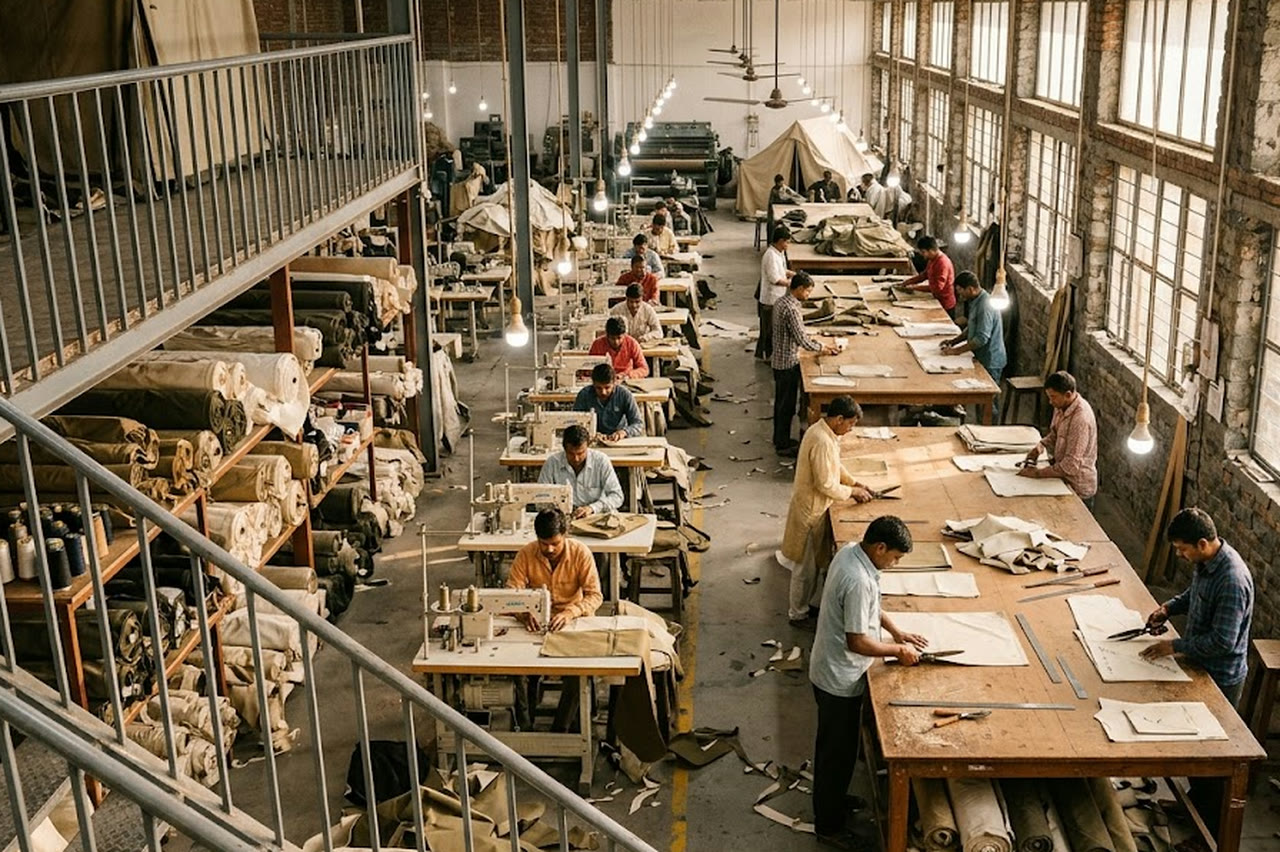
During production, ask for photographs at the stages that matter to you: cut panels, a finished seam at a guy point, the frame before packing. A manufacturer who makes the tents in its own workshop can send these the same day.
Step 4: export documents
Your customs broker will need a standard set of papers, and it is worth agreeing in advance who prepares which. We issue the commercial invoice and packing list, and the shipping line or airline issues the transport document.
- Commercial invoice: seller, buyer, description, quantity, unit value, total value, currency and Incoterm.
- Packing list: every package numbered, with contents, dimensions and gross weight.
- Bill of lading for sea freight, or air waybill for air, issued by the carrier or forwarder.
- Certificate of origin: needed when you want to claim a preferential duty rate under a trade agreement, and sometimes on request otherwise.
- Test certificates: for fire-retardant cloth, the lot certificate; for water resistance, the ISO 811 result for the fabric lot.
Step 5: shipping under an agreed Incoterm
The Incoterm on the invoice decides where our responsibility ends and yours begins: who books the main freight, who insures it, and at what point the risk of loss passes to you. Under EXW or FCA you or your forwarder take over in India; under CIF we pay freight to your port; under DAP we deliver to your address and you clear customs; under DDP the seller also clears import and pays duties.
Most first-time importers choose a term that matches their own experience. If you have a forwarder you trust, FCA keeps control with you. If you have never imported before, a delivered term with a quoted landed price is simpler. The detail is in shipping tents internationally.
| Stage | Who acts | Typical timing | What you receive |
|---|---|---|---|
| Specification and quote | Buyer and manufacturer | A few days | Written quotation with separate freight lines |
| Samples or drawing | Manufacturer | Confirmed in the quotation | Swatch kit, sample unit or drawing for approval |
| Production | Manufacturer | Confirmed in the quotation, by order type | Progress photographs, then packing list |
| Export and sailing | Forwarder | Several weeks at sea | Bill of lading or air waybill |
| Import clearance | Customs broker | Days, if papers are in order | Release from customs |
| Delivery and pitching | Buyer, or our installation team | Site-dependent | Installation drawing and spares list |
Step 6: customs clearance at your end
Your customs authority needs the goods classified under its tariff, valued, and declared by an importer of record. Tents fall within chapter 63 of the Harmonized System, but the exact national code and any duty depend on material and how the goods are presented, so let a licensed broker make the call. Rates and rules are published officially: the US HTS and CBP, the UK Trade Tariff, the EU’s TARIC database and the Australian Border Force tariff. We explain the system in tent import duties and HS codes.
Appoint the broker before the goods sail, send them our invoice and packing list as soon as we issue them, and most clearances are uneventful.
Step 7: receiving, checking and pitching the tents
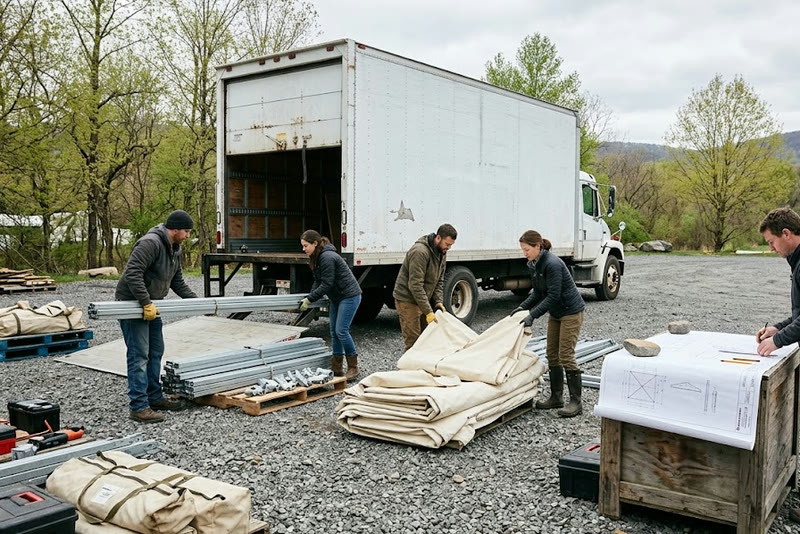
When the shipment arrives, count packages against the packing list before signing, and photograph any damage to crates or bags on the delivery note itself. Then open one unit of each type and check it against the approved specification before the installers start. Framed structures such as safari tents and the Swiss Cottage 10 × 20 are delivered with an installation drawing; larger projects can include an installation visit. Keep the spares list with the drawings, because the zips, pegs and guy lines are the parts you will reorder first.
Questions buyers ask
Can I import just one tent from India?
Yes. Nothing in our catalogue carries a minimum order, so a single unit ships the same way as fifty. Freight per unit is higher on a single piece, which is why small orders often go by air or as part-load sea freight.
Do I need an import licence to bring tents into my country?
Tents are not usually a licensed category, but you do need to be registered as an importer: an EORI number in the UK and EU, for example, or a customs bond for formal entries in the US. Your customs broker will confirm what applies to you.
Who pays the import duty?
Under most Incoterms the buyer pays duty and import taxes on arrival. Only under DDP does the seller take that on, and the cost is then built into the delivered price.
How long does it take from order to delivery?
Add the production time confirmed in your quotation to freight and clearance. By sea, a total of two to four months from order is a typical planning range; we confirm dates for each order.
What currency do you invoice in?
Export quotations and invoices are normally in US dollars, which is how catalogue prices are shown. Ask at the quotation stage if you need another arrangement.