Bell tent vs safari tent: which is right for your glamping site?
A bell tent is a single-pole cotton canvas room that pitches in an hour and costs from $350 for the 5m size; a safari tent is a steel-framed suite with standing height, a veranda and room for a bathroom, from $1,200. Choose bell tents for seasonal sites, low build cost and flexibility. Choose safari tents when you want to sell a hotel-grade room with an en-suite and charge a hotel-grade rate.
6 min read · Updated
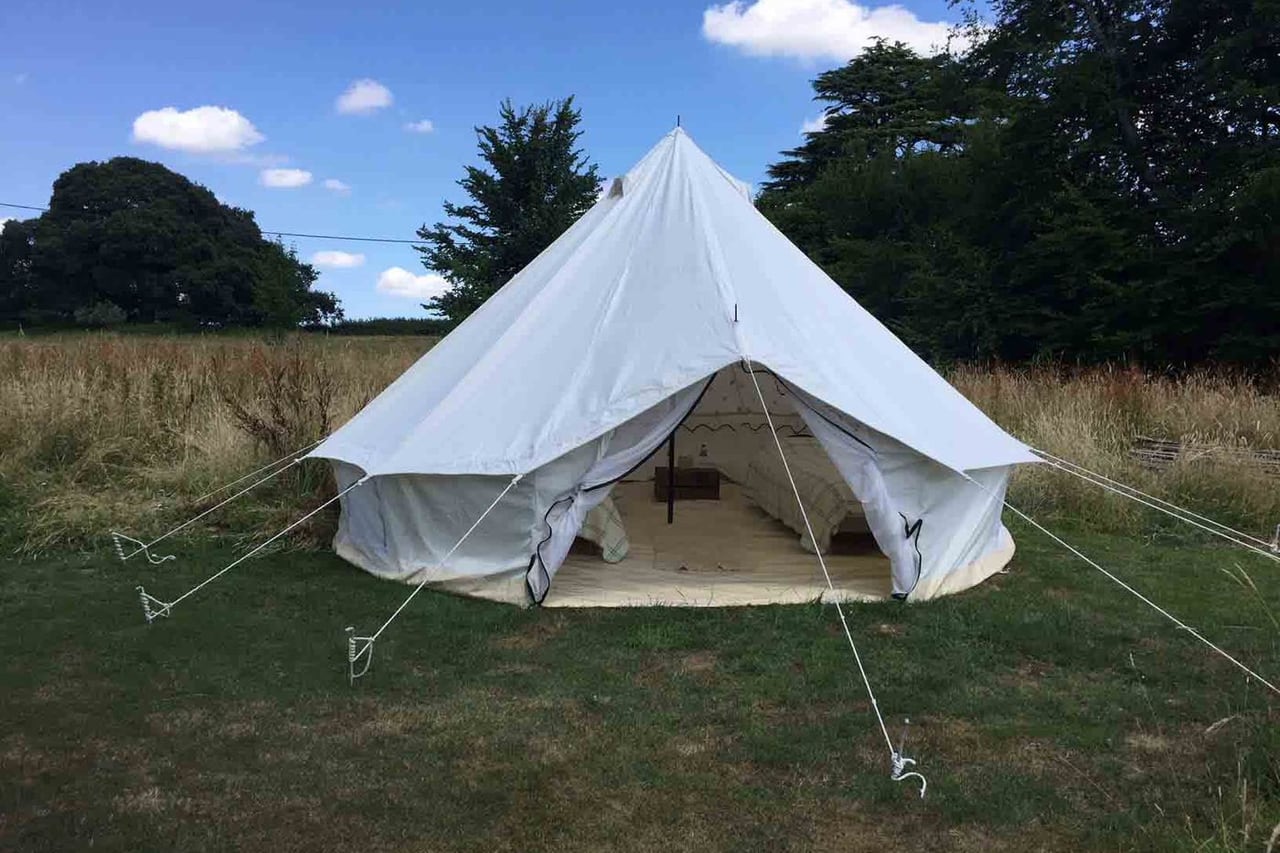
How a bell tent and a safari tent are built
A bell tent is a cone of canvas on a short circular wall, held up by one centre pole and an A-frame over the door, then tensioned by a ring of guy ropes. Our 5M Bell Tent uses 360 gsm treated cotton canvas, a galvanised steel pole set and a 540 gsm PVC groundsheet that zips in, so the floor and walls form one sealed shell.
A safari tent is a building made of steel tube and cloth. A hot-dip galvanised frame carries the roof and walls, the canvas is tensioned over it, and the whole thing normally sits on a raised timber deck. The Safari Suite Tent is cut from 440 gsm ripstop poly-cotton and has standing height wall to wall, a covered veranda and a rear annexe ready for plumbing.
That structural difference affects cost, installation time, what fits inside and what a guest will pay.
Cost: the tent and everything around it
The tents themselves are not far apart compared with the full build. The bigger gap is in what each one needs underneath and behind it. A bell tent can go on level grass or a simple circular deck. A safari tent wants an engineered platform, drainage, power and, in most cases, water and waste for its bathroom.
The figures below are our ex-works catalogue guide prices. Freight, import duties, decking, interiors and local labour all change the landed and installed cost, often by more than the tent itself. For a fuller breakdown see how much a glamping tent costs.
| Bell tent (5m) | Safari tent | |
|---|---|---|
| Price from | $350 | $1,200 (Safari Suite), $1,385 (Luxury Safari) |
| Canvas | 360 gsm treated cotton | 440-480 gsm ripstop poly-cotton |
| Structure | Centre pole, A-pole, guy ropes | Hot-dip galvanised steel frame |
| Floor | Zip-in PVC groundsheet | Timber deck (built on site) |
| Standing height | Near the centre only | Throughout |
| En-suite | No (shared facilities) | Annexe ready for one |
| Pitch time | About an hour for two people | Days, including deck and services |
What the guest gets, and what you can charge
A bell tent is sold as a simple, romantic outdoor stay. Guests expect a good bed, rugs, lanterns and a short walk to a shower block. The 5m size takes a king bed, two chairs and a luggage rack without crowding, which is enough for a couple on a two-night stay.
A safari tent is sold as a room. Guests expect their own bathroom, a door that locks, a fan or air conditioning and a veranda to sit on. The Luxury Safari Tent adds a full en-suite annexe, a double-skin roof with a blackout liner and a ridge high enough for a ceiling fan. That is the specification that lets a property price against hotel rooms rather than against campsites.
Which rate your market will bear is a local question. Look at what comparable sites within a couple of hours’ drive charge for shared-facility tents versus en-suite tents, and run both through your build budget.
Site, ground and installation
Bell tents need a level circle a little larger than their diameter plus room for guy ropes. As a rule of thumb, allow about a metre and a half beyond the wall all round, more on exposed sites. Two people can pitch one in roughly an hour once they have done it a few times, and strike it just as fast at the end of the season.
Safari tents need a planned platform. Deck height, fixings and drainage are worked out before the tent arrives, and the frame is bolted to the deck. Our platform and deck design guide covers this in detail. Expect several days per unit for a first build, faster once your crew has the drawing in their heads.
- Sloping or rocky ground: safari tents, because the deck takes up the slope.
- Leased land or a trial season: bell tents, because nothing permanent is left behind.
- Planning-sensitive sites: bell tents are easier to argue as temporary, but rules vary, so ask your local authority early.
Climate and season
Cotton canvas breathes, which keeps a bell tent comfortable in dry heat and cuts condensation in cool weather. It must be weathered when new (wetted and dried so the threads swell and close up) and dried before it is packed. The 360 gsm cloth on our 4m and 5m bells suits a spring-to-autumn season in most temperate and dry climates.
Poly-cotton ripstop on a safari frame is more dimensionally stable, dries faster and stands up better to a monsoon or a long wet season. The double-skin roof on the Luxury Safari Tent keeps the inner ceiling cooler in strong sun. If you plan to trade year-round, a safari tent with insulation and climate control is the more practical starting point.
Lifespan and upkeep
Treated canvas on either tent lasts several seasons with sensible care: dry before storage, clean off bird lime and tree sap, re-proof when water stops beading. Bell tents are usually struck for winter, which protects the cloth but costs labour twice a year. Safari tents often stay up for years with only the canvas skin replaced when it wears, while the steel frame carries on.
Spare parts matter more than people expect. Ask any supplier for replacement canvas panels, zips and groundsheets by part, not only complete tents.
Running both on one site
Many profitable sites mix the two. A few safari tents carry the premium rate and the families who want a private bathroom; a ring of bell tents fills the price band below and can be added or taken down as demand moves. Bell tents also make good overflow for weddings and group bookings.
If you are planning a mixed site, send us the layout through the contact page and we will price both types in one consolidated shipment. A full range of hospitality structures is in our luxury glamping tents section.
Questions buyers ask
Is a bell tent or a safari tent better for a first glamping business?
Most first-time operators start with bell tents because the capital cost is low and the tents can be moved or sold on if the site does not work. Move to safari tents once you know your market will pay for en-suite rooms.
Can you put a bathroom in a bell tent?
Not inside one in any practical sense. Operators use a shared shower block or a small private bathroom cabin beside each tent.
How long does it take to set up a safari tent?
The tent frame and canvas go up in a day or two with a trained crew, but the deck, drainage and plumbing come first and usually take longer than the tent itself.
Which lasts longer, a bell tent or a safari tent?
The steel frame of a safari tent outlasts any canvas, so a safari unit can be re-skinned and run for many years. Canvas life on both depends far more on care and climate than on tent type.
Are bell tents warm enough for winter?
With a wood stove, an insulated floor and a liner, a bell tent can be used in cold weather, but most sites close their bells in deep winter. Safari tents with insulation and heating are easier to run year-round.